How to Childproof Sharp Corners Around the House
Roving Cove Safe Edge and Corner Cushion covers the most furniture per pack and includes pre-taped 3M adhesive. Jool Baby Corner Protectors suit glass tables where clear guards matter. Bebe Earth guards hold their shape best on dense stone edges.
Roving Cove Safe Edge and Corner Cushion is the practical default, pairing long edge strips with matching corners. Glass tables favor Jool Baby Corner Protectors instead. Hard stone edges hold up best under Bebe Earth guards.
Adhesive strength and clean removal pull in opposite directions, and foam thickness affects both. We compared foam density, strip length, tape type, and finish colours, then weighed what parents report about guards falling off warm surfaces and leaving residue on wood veneer.
What we recommend
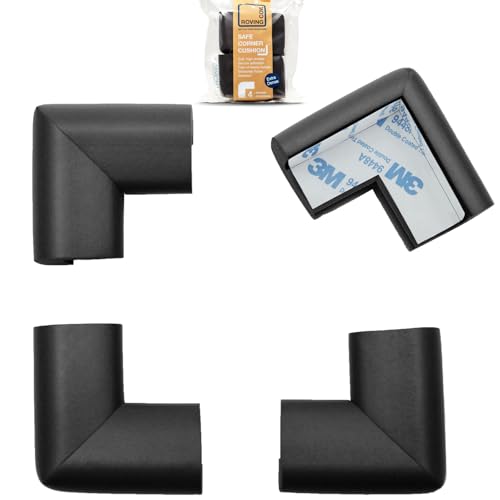
Roving Cove Safe Edge and Corner Cushion
Each pack combines a long edge strip with separate corner cushions, covering a whole coffee table in one purchase. Pre-applied 3M adhesive holds on wood, laminate, and stone without extra tape. Foam is dense enough to absorb a head knock yet soft enough to cut with scissors for a custom fit.
Pros
- One pack covers a full table rather than corners only
- 3M tape holds on textured and stone surfaces
- Cuts cleanly with household scissors
Cons
- Adhesive can lift thin veneer on removal
- Edge strip shows a visible seam at joins

Jool Baby Products Clear Corner Protectors
Clear silicone-style guards disappear against glass tables and light stone tops. They flex enough to wrap a rounded corner instead of sitting proud like rigid plastic. Double-sided tape ships pre-attached, with spare tape squares included for a second attempt.
Pros
- Almost invisible on glass and light surfaces
- Spare adhesive squares allow a second attempt
- Flexes to fit rounded corners
Cons
- Thinner cushioning than dense foam guards
- Clear material yellows slightly in direct sun

Bebe Earth Baby Proofing Edge and Corner Guard Set
Firmer foam holds its profile on a hard granite or marble edge where softer guards flatten out. Eighteen feet of edge cushion and eight corner pieces cover a kitchen island plus a hearth. Colour options in black, brown, and off-white sit against common stone finishes.
Pros
- Firm foam keeps shape on stone edges
- Enough length for an island and a hearth
- Colour options blend with dark stone
Cons
- Firmer foam is harder to bend around tight corners
- Adhesive needs a fully degreased surface on kitchen stone

Skip Hop Vibrant Village Table Edge and Corner Guards
Bright colours make these guards part of the room instead of something to hide, suited to a playroom or nursery. Soft foam pairs with pre-cut corner pieces for standard square tables. Coverage per pack runs smaller than the Roving Cove set, so measure before ordering.
Pros
- Colours suit a playroom instead of hiding
- Soft foam is gentle on knees and elbows
- Pre-cut corners need no trimming
Cons
- Less coverage per pack than budget sets
- Bright colours clash with living room furniture

Wittle Baby Proofing Edge and Corner Guards
A long continuous roll plus corner pieces covers several rooms in one order. Foam density sits in the middle of the range, soft enough for comfort and firm enough to hold shape on wood. Extra adhesive tape included helps in humid rooms where factory tape releases early.
Pros
- Enough length for several rooms
- Spare tape included for humid areas
- Mid-density foam suits most furniture
Cons
- Only four corner pieces in the pack
- Roll needs cutting for every corner join

Toddleroo by North States Furniture Corner Guards
Corner-only pieces suit anyone who needs the four dangerous points covered and nothing else. Installation takes about a minute per corner, well suited to a fireplace hearth or a low bookcase. No edge strip ships in the pack, so long table sides stay uncovered.
Pros
- Fastest install of anything here
- Minimal visual impact on furniture
- Suits hearth corners where edges are already low
Cons
- No edge protection between the corners
- Small pack size for a whole-home project
Cardior Corner Protectors for Baby Proofing
Slim clear guards add little bulk, aimed at furniture where a chunky foam block would look out of place. They cushion a stumble rather than a hard fall, so pairing them with edge strips helps on the sharpest tables. Removal stays straightforward on glass and sealed laminate.
Pros
- Low profile keeps furniture looking normal
- Comes in larger multi-packs for whole homes
- Peels off glass without residue
Cons
- Thin cushioning compared with dense foam
- Adhesive struggles on rough or unsealed wood
Side by side
| # | Model | Coverage | Best for | Score | Price |
|---|---|---|---|---|---|
| 1 | Roving Cove Safe Edge and Corner Cushion | Edge strip plus 4 or 8 corner cushions | Best overall | 9.4 | Check price |
| 2 | Jool Baby Products Clear Corner Protectors | Clear flexible plastic | Best for glass furniture | 9.2 | Check price |
| 3 | Bebe Earth Baby Proofing Edge and Corner Guard Set | 18 feet | Best for stone and granite edges | 9.0 | Check price |
| 4 | Skip Hop Vibrant Village Table Edge and Corner Guards | Coloured foam edge and corner set | Best for playrooms | 8.7 | Check price |
| 5 | Wittle Baby Proofing Edge and Corner Guards | Roughly 20 feet | Best value | 8.5 | Check price |
| 6 | Toddleroo by North States Furniture Corner Guards | 4 corner guards | Best for quick corner-only fixes | 8.3 | Check price |
| 7 | Cardior Corner Protectors for Baby Proofing | Clear flexible plastic | Best for clear low-profile coverage | 8.0 | Check price |
What matters most
What to look for in corner guards Foam density, adhesive quality, and coverage per pack decide the outcome. Dense foam absorbs a knock without bottoming out on a hard edge. Adhesive needs to be 3M-grade tape or equivalent, since generic tape releases in warm rooms. Measuring table edges in feet before ordering avoids the common surprise of a pack covering less than expected.
Matching guards to the furniture surface Clear guards such as Jool Baby or Cardior disappear against glass and light stone. Colour-matched foam works better on wood and laminate. Granite and marble need the firmest foam available, since softer material flattens against a hard square edge, which is exactly what Bebe Earth guards are built for.
Covering edges as well as corners Corners cause the worst injuries, but a toddler learning to walk hits table edges just as often. Sets that include both, like the Roving Cove pack, avoid a second order. Corner-only packs such as the Toddleroo set fit a hearth well, where the edge sits low and the corners stick out.
Installing cleanly and removing later Cleaning and drying the surface comes first, followed by a wipe with rubbing alcohol to remove polish residue. Pressing for thirty seconds and waiting a few hours before letting a child near it locks the bond in place. At removal time, warming the tape with a hairdryer and pulling slowly along the surface, not away from it, protects thin veneer, the material most likely to lift.
Questions worth asking
Do corner guards actually prevent injuries?
They convert a sharp point into a padded one, turning cuts into bruises. Dense foam does more than thin plastic. Nothing replaces supervision, but guards remove the worst hazard from a coffee table.
Which corner guards work best on glass tables?
Clear options such as Jool Baby or Cardior blend into the glass and peel off cleanly. Foam guards work but stay highly visible. Cleaning the glass with alcohol first helps the tape bond.
Will corner guards damage furniture when removed?
Strong 3M tape can lift thin veneer or unsealed paint. Warming the adhesive with a hairdryer and pulling slowly parallel to the surface reduces the risk. Sealed laminate and glass almost always release cleanly.
How much edge guard do I need for a coffee table?
Measuring all four sides and adding a foot for cutting is the safe approach. A typical coffee table needs about 12 feet. Packs of 18 to 20 feet cover a table plus one extra piece of furniture.
What is the difference between foam and plastic corner guards?
Foam absorbs more impact and comes in thicker profiles. Clear plastic guards stay less visible but cushion less. Foam suits the sharpest hazards, while clear guards work where appearance matters more.
Can corner guards go on a fireplace hearth?
Yes, and dense foam is the right choice for stone. Bebe Earth guards hold shape on granite and hearth edges. Keeping guards away from surfaces that get hot matters more on a hearth than anywhere else.
At what age do kids need corner guards?
Most parents install them once a child pulls to stand, around eight to ten months. They come off when the child stops falling into furniture, often around age three. Cruising toddlers are the highest risk group.
Do corner guards stay on in humid rooms?
Factory tape can release in bathrooms and warm kitchens. Sets that include spare adhesive, such as the Wittle pack, hold up better there. Degreasing the surface first makes the biggest difference.
Corner guards vs edge guards, do I need both?
Corners cause the sharpest injuries, but edges get hit just as often during early walking. Combination packs like Roving Cove cover both in one order, which is simpler than buying separately.
Are corner guards safe for a child to chew on?
Most foam and plastic guards use non-toxic materials, but check the listing for specific safety claims. Guards are not designed as teething items, so supervise a child who mouths furniture edges.
Our pick
Roving Cove Safe Edge and Corner Cushion covers the most furniture per pack and sticks reliably on wood and stone. Glass tables look better with the near-invisible Jool Baby guards. For granite islands and hearths, the firmer Bebe Earth foam keeps its shape the longest.


