6 Countertop Blenders for Smoothies and Soups
Vitamix 5200 wins overall for blending consistency, motor durability and easy repairs. Ninja BN701 Professional Plus delivers most of that performance for far less money, especially on ice and frozen fruit. Blendtec Classic 575 suits buyers who want automatic preset cycles instead of managing blade speed by hand.
Vitamix 5200 still earns the top spot for anyone who wants one blender for the next decade. Its tall jar and variable dial produce smooth results with almost no grit. Ninja BN701 gets most of that performance for a fraction of the price. Prefer pressing a button and walking away? Blendtec Classic 575 runs preset cycles that stop on their own.
Blender listings lead with watts, and wattage barely predicts whether a smoothie comes out silky or gritty. We compared jar geometry, blade design, program options, published noise behavior and what owners report about longevity and cleanup, then ranked seven machines spanning every budget.
What matters most
What actually makes a blender produce smooth results? Jar shape matters as much as motor wattage. A tall narrow jar creates a strong vortex that pulls ingredients down repeatedly, which is what breaks down fiber and ice into a smooth texture. Wide jars are easier to clean and fit under cabinets, but they need more scraping and tamping to blend evenly. Watts on the box will not tell you which experience you are buying.
Dial control or preset programs: which fits your routine? A variable speed dial hands you control over texture and lets you stop the moment it looks right. Preset programs run a timed cycle and shut off automatically, which suits anyone who makes the same drink every morning and would rather not stand over the machine. Neither approach is objectively better; it depends on how much you want to manage each blend.
Will a high performance blender fit under your cabinets? Tall jars on machines like the Vitamix 5200 often will not clear a standard wall cabinet, so the jar has to lift off the base for storage or the whole machine sits out. Short wide jars, like the one on the Blendtec Classic 575, solve this directly. Measure the gap before ordering rather than after unboxing.
How much noise should you plan for in an open kitchen? Powerful blenders run genuinely loud, and an early smoothie in an open plan home can wake the rest of the house. Load sensing motors, like the one in the KitchenAid K400, run noticeably quieter than high performance machines. Anyone with a blender near a bedroom or home office should weigh this before chasing raw power.
What we recommend

Vitamix 5200
A tall narrow jar paired with an aircooled motor lets the 5200 push through hot soups, frozen fruit and nut butters without stalling. Variable speed control offers more precision than any preset button. Owners routinely report a decade or more of daily use, and replacement parts stay available for repair.
Pros
- Smoothest results in this lineup
- Exceptional long term durability
- Serviceable with available parts
Cons
- Loud at full speed
- Tall jar may not fit under cabinets

Ninja BN701 Professional Plus Blender
Stacked blades crush ice quickly, and preset programs handle smoothies and frozen drinks without guesswork. Cleanup takes less effort than a tall narrow jar, since the wide pitcher is easier to reach into. Fibrous greens leave slightly more pulp than a Vitamix produces, though the price gap explains why.
Pros
- Handles ice and frozen fruit easily
- Useful preset programs
- Jar cleans up quickly
Cons
- Leaves more fiber than premium blenders
- Stacked blades need care when washing
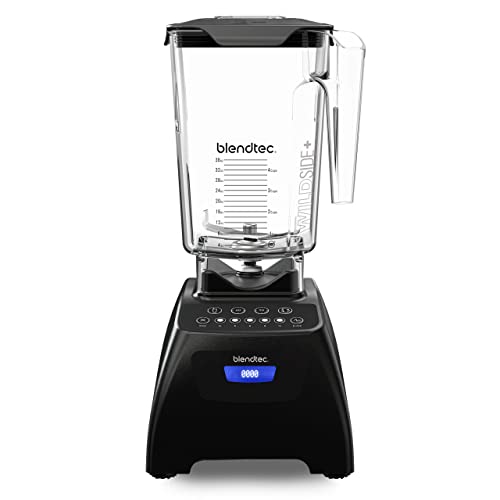
Blendtec Classic 575
Blendtec relies on a blunt wingtip blade spinning at high speed rather than sharp edges. Preset cycles run and shut off automatically, so there is no dial to watch. A short wide jar tucks under most cabinets, which taller Vitamix jars cannot always manage.
Pros
- Cycles run and stop unattended
- Fits under standard cabinets
- Blunt blade is safer to clean around
Cons
- No tamper included with the standard jar
- Very loud at high speed

Vitamix A3500 Ascent Series Blender
A touchscreen adds programmed settings and a built in timer to the same blending platform as the 5200. Self detecting containers adjust program length automatically once locked into place. Blending quality matches the classic dial model, so the extra spend buys automation and a lower profile jar rather than raw power.
Pros
- Blending quality with hands off programs
- Lower profile jar fits more kitchens
- Flat touchscreen wipes clean easily
Cons
- Highest cost in this roundup
- Touchscreen is less tactile than a dial

KitchenAid K400 Variable Speed Blender
An intelligent motor adjusts power to hold speed steady as ingredients change under the blades. Noise stays noticeably lower than the high performance machines here, which matters for an early morning smoothie. Daily sauces and drinks are well within range, though repeated heavy duty batches are not what it is built for.
Pros
- Noticeably quieter than premium blenders
- Attractive build and finish
- Good everyday blending performance
Cons
- Not built for continuous heavy batches
- Struggles more with dense nut butters
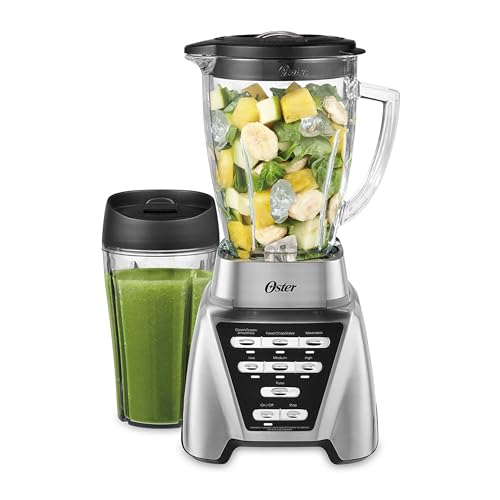
Oster Pro 1200 Blender
Dual direction blades reverse to clear jams that would stall a single direction motor. Many bundles throw in a personal blending cup and a food processing attachment for the same price. Smoothies and sauces come out well within its class, and build quality sits above entry level units without reaching premium territory.
Pros
- Good performance for the price
- Useful bundled attachments
- Reverse blade action clears jams
Cons
- Base can walk on the counter at high speed
- Not for daily heavy duty use

Hamilton Beach Power Elite Wave Action Blender 58148A
A wave shaped jar pulls contents down into the blades continuously, cutting down on manual scraping. A pour spout lets drinks out without lifting the lid first. Dense loads and heavy ice push past what the motor comfortably handles, which is the trade for a genuinely low entry price.
Pros
- Lowest cost option here
- Pour spout avoids removing the lid
- Glass jar resists scratching
Cons
- Not suited to nut butters or heavy ice
- Motor is noticeably weaker
The lineup, side by side
| # | Model | Control | Best for | Score | Price |
|---|---|---|---|---|---|
| 1 | Vitamix 5200 | Variable speed dial | Best overall | 9.4 | Check price |
| 2 | Ninja BN701 Professional Plus Blender | Preset programs plus manual speeds | Best value | 9.2 | Check price |
| 3 | Blendtec Classic 575 | Preset cycles plus manual speeds | Best for programmed blending | 9.0 | Check price |
| 4 | Vitamix A3500 Ascent Series Blender | Touchscreen with programs and timer | Best premium | 8.8 | Check price |
| 5 | KitchenAid K400 Variable Speed Blender | Variable speed with presets | Best for everyday kitchen use | 8.6 | Check price |
| 6 | Oster Pro 1200 Blender | Preset programs and speeds | Best mid range value | 8.3 | Check price |
| 7 | Hamilton Beach Power Elite Wave Action Blender 58148A | Multiple speed buttons | Best budget | 8.0 | Check price |
Good to know
How many watts do I need in a blender?
Wattage is a rough guide at best; jar design and blade geometry shape the result just as much. Machines around a thousand watts and above handle ice and frozen fruit comfortably, while lower powered blenders suit soft ingredients and simple drinks.
Can a countertop blender replace a food processor?
Only partly. Liquids, purees and emulsions are a blender’s strength, while dry chopping, slicing and dough are not. Some bundles include a processing attachment that helps, though a dedicated food processor still does those jobs better.
Why do my smoothies come out gritty?
Usually the blade speed or jar vortex is not strong enough to fully break down seeds, skins and fibrous greens. Adding liquid first, blending longer and using a tamper all help. Genuinely smooth results with tough greens are where high performance machines separate themselves from the rest.
Glass or plastic jar: which lasts longer?
Glass resists scratching and holds no odors, but it is heavy and can break if dropped. Plastic jars are lighter and safer to handle, and modern versions resist clouding well. High performance blenders mostly use plastic, since glass cannot handle the forces a strong motor generates.
What is the best way to clean a blender?
Fill the jar part way with warm water and a drop of dish soap, run it for about thirty seconds, then rinse. This clears most residue without disassembly. Thick nut butters or dried on ingredients respond better to a short soak than to scrubbing around the blades.
Can blenders handle hot soup safely?
High performance machines are built for it, and some even heat soup through friction alone. On other blenders, hot liquid builds steam pressure that can force the lid off, so let contents cool first, fill only part way and vent the lid before blending.
Is a tamper necessary for everyday blending?
A tamper pushes thick mixtures into the blades without stopping the motor, which matters for nut butters, frozen desserts and very thick smoothies. Anyone making mostly drinkable smoothies with plenty of liquid will rarely need one.
Which blender is best for a small household?
The KitchenAid K400 or a budget model like the Hamilton Beach 58148A cover daily smoothies without the size or cost of a Vitamix. Both fit easily on a small counter and run quieter than the high performance machines here.
How long should a good blender last?
Premium machines commonly run for a decade or more with normal household use, and replacement parts are available for many of them. Budget blenders typically last a few years, with the motor coupling or jar seal usually failing first.
The verdict
Vitamix 5200 remains the blender worth buying for anyone who wants one machine that does everything and lasts, and its blending consistency still sets the benchmark. Ninja BN701 Professional Plus delivers most of that practical performance for far less money. Blendtec Classic 575 fits better if you would rather press a preset and walk away.


