Thin, Medium or Gel: Picking the Right CA Super Glue
Loctite Super Glue Ultra Gel Control leads as the most forgiving all purpose CA. Starbond EM-150 Medium suits woodworkers who want a known viscosity. Gorilla Super Glue Gel handles vertical and porous repairs that would run with a thinner formula.
Loctite Super Glue Ultra Gel Control covers the widest range of household and workshop repairs among these seven. Starbond EM-150 Medium gives woodworkers and hobbyists a viscosity they can actually plan around. Gorilla Super Glue Gel stays put on vertical breaks that a thinner CA would run straight off.
Every bottle says super glue, yet the chemistry inside varies enormously between thin, medium and gel grades. Thin CA wicks into hairline cracks in seconds and runs off anything upright, while thicker grades trade some speed for gap filling and control. We compared published viscosity ratings, set and cure times, gap filling claims, applicator design and what owners report about bottles clogging or losing potency in storage.
The shortlist, ranked
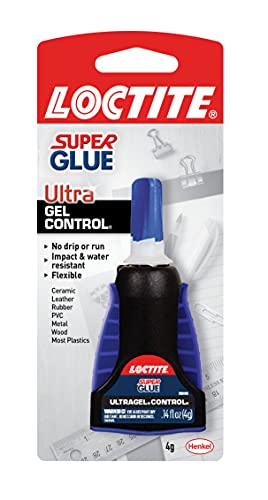
Loctite Super Glue Ultra Gel Control
Rubber toughened formula plus a side squeeze bottle give real control over the bead. Gel viscosity keeps it in place on vertical repairs and tolerates some vibration and impact once cured. Household jobs across wood, metal, ceramic, leather and most plastics all suit this bottle well.
Pros
- Rubber toughened formula resists impact and flex
- Side-squeeze bottle avoids flooding the joint
- Works on wood, metal, ceramic, leather and most plastics
Cons
- Gel is too thick to wick into hairline cracks
- Nozzle needs wiping after every use

Starbond EM-150 Medium Thick CA Glue
Starbond sells CA by viscosity rather than marketing name, and EM-150 sits in the sweet spot for turning blanks, filling small voids and gluing model parts. Spare tips and a plugged cap ship in the box, the detail that keeps a bottle usable months later. Owners report it stays fluid in storage far longer than typical hardware store bottles.
Pros
- Consistent viscosity you can actually plan around
- Accessory tips and plugs prevent clogging
- Larger bottle sizes suit regular shop use
Cons
- Needs an accelerator for the fastest workflow
- Bottle is easy to overfeed until you learn it
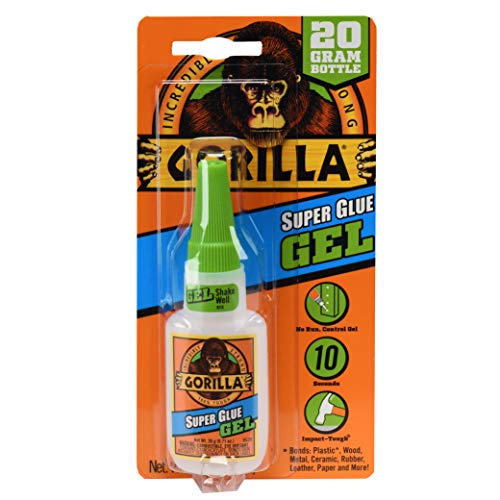
Gorilla Super Glue Gel
Gorilla adds rubber particles to a gel base, giving the joint some tolerance for bending and knocks. No run consistency lets it sit on an upright break long enough to position parts correctly. Owners report the anti clog cap genuinely extends how long a partly used bottle stays usable.
Pros
- Does not run on vertical or overhead joints
- Impact resistant once cured
- Widely available in small and larger bottles
Cons
- Slower to grab than a thin CA
- Gel can leave a visible bead on clean joints
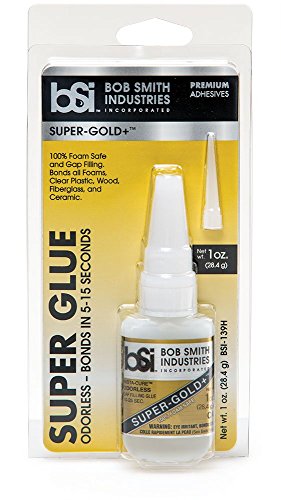
Bob Smith Industries BSI-157H Super-Gold+ Odorless CA
Super-Gold+ brings an odourless, non blooming formula that model builders reach for around foam, clear canopies and painted surfaces. Standard CA fogs clear plastic and attacks certain foams, problems this formula avoids on both counts. Based on specifications it runs medium viscosity with a few seconds of positioning time.
Pros
- No fogging on clear plastic parts
- Safe on most foams that standard CA melts
- Minimal fumes in a closed workshop
Cons
- Weaker initial grab than standard CA
- Harder to find in local shops
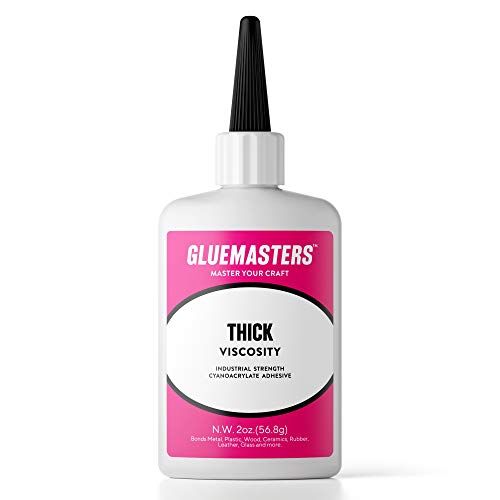
GLUE MASTERS Professional Grade Thin CA Glue
A genuinely thin CA behaves nothing like a gel, wicking into cracks barely visible to the eye through capillary action alone. Stabilising a split turning blank, closing a hairline crack in a handle, or locking a threaded part all suit this bottle. Owners report it sets almost instantly, so parts need alignment before the glue ever touches them.
Pros
- Wicks into cracks other glues cannot reach
- Very fast grab on tight fitting parts
- Good bottle size for regular workshop use
Cons
- Runs everywhere if you overapply
- No working time to reposition parts

FastCap 2P-10 Medium CA Adhesive
The 2P-10 system pairs a medium CA with an activator spray, so a joint reaches handling strength in seconds without clamps. Cabinet makers use it to hold jigs, templates and trim while a slower glue cures underneath. Based on specifications the pairing is the point, so skipping the activator gives up most of the advantage.
Pros
- Near-instant hold when used with activator
- Ideal for temporary jigs and templates
- Bottle stands upright and dispenses cleanly
Cons
- Activator is a separate purchase to track
- Activator has a strong smell in a closed shop

Krazy Glue All Purpose Original
Single use style tubes explain why this one survives in kitchen drawers everywhere. Each tube seals well enough for a second use yet stays small enough that a dried out bottle is no real loss. A snapped mug handle or a loose eyeglass pad gets exactly what it needs from this tube.
Pros
- Cheap enough to keep in several places
- Small tubes rarely go to waste
- Fine for tight fitting household repairs
Cons
- No gap filling on rough breaks
- Runs freely on vertical surfaces
How to pick the right one
What CA glue viscosity should you buy? Cyanoacrylate comes in thin, medium and thick or gel grades, usually rated in centipoise. Thin CA runs near 5 cps, behaves like water, and wicks into hairline cracks almost instantly. Medium sits around 100 to 200 cps, giving a few seconds to position parts while filling small voids. Gel stays put on vertical joints and bridges gaps that thin CA would simply run past. Matching grade to joint matters more than picking a brand.
Why do some CA joints fail even with good glue? CA cures through a reaction with trace surface moisture, which explains why it grabs fast on humid days and drags on dry ones. Clean, dry, lightly abraded surfaces bond far better than glossy ones, and any oil or release agent causes failures that look like bad glue. Thin joints outperform thick ones, so pressing parts firmly together beats leaving a fat bead between them.
Should you use a CA accelerator or skip it? An accelerator spray triggers the cure on demand, turning a thirty second hold into two seconds and letting thick fillets build up in layers. That speed costs a slightly more brittle bond and, on some formulas, a whitish bloom around the joint. Structural work generally comes out stronger left to cure on its own, so save accelerator for jigs, fillets and awkward holds.
How do you stop a CA bottle from clogging? An unopened bottle typically keeps for a year or more, while an open one thickens within weeks as moisture creeps in. Wiping the nozzle before capping, storing upright, and keeping the bottle cool make the real difference. Refrigeration extends life for larger shop bottles, though the bottle needs to reach room temperature before opening or condensation cures the tip shut. Sealed extension tips and cap plugs, included by Starbond and a few others, are the practical fix for clogging.
How they stack up
| # | Model | Viscosity | Best for | Score | Price |
|---|---|---|---|---|---|
| 1 | Loctite Super Glue Ultra Gel Control | Gel | Best overall | 9.4 | Check price |
| 2 | Starbond EM-150 Medium Thick CA Glue | 150 cps medium | Best for woodworking and hobby use | 9.2 | Check price |
| 3 | Gorilla Super Glue Gel | Gel, no-run | Best value | 9.0 | Check price |
| 4 | Bob Smith Industries BSI-157H Super-Gold+ Odorless CA | Medium, odourless | Best for foam and delicate materials | 8.8 | Check price |
| 5 | GLUE MASTERS Professional Grade Thin CA Glue | Thin, water-like | Best for hairline cracks | 8.6 | Check price |
| 6 | FastCap 2P-10 Medium CA Adhesive | Medium | Best for quick shop jigs | 8.3 | Check price |
| 7 | Krazy Glue All Purpose Original | Thin liquid | Best budget | 8.0 | Check price |
Common questions
What is the difference between cyanoacrylate and super glue?
None chemically. Super glue is simply the common name for cyanoacrylate adhesive, and every product on this list is a CA. Viscosity, rubber toughening additives, and odourless or non blooming formulation are what actually vary between bottles.
Which CA viscosity should I buy first?
Medium grade earns the most use as a single bottle, filling small gaps while still flowing into a joint. Gel suits vertical surfaces on household repairs better. Thin CA stays a specialist tool for hairline cracks and tight fitting parts.
Does cyanoacrylate work on plastic?
It bonds rigid plastics such as ABS, acrylic and PVC well. Polyethylene, polypropylene and PTFE resist it almost entirely without a dedicated plastic primer. Standard CA also fogs clear plastic, so canopies and lenses need an odourless non blooming formula instead.
How strong is a CA joint compared with epoxy?
CA delivers high shear strength on a tight, clean joint but stays more brittle than epoxy and tolerates peel forces, vibration and heat less well. Structural repairs that will be loaded or knocked around suit epoxy or a polyurethane adhesive better long term.
How do you unstick fingers glued together?
Do not pull them apart. Soak the area in warm soapy water and work the skin apart gently, or try acetone based nail polish remover on skin that tolerates it. Debonder products sold alongside CA do the same job faster, and eyes or eyelids need medical help rather than a home fix.
Why did my glue turn white around the joint?
That is blooming, caused by CA vapour settling on nearby surfaces and reacting with moisture in the air. Better ventilation, using less glue, and choosing an odourless non blooming formula all cut it down. Accelerator sprays tend to make blooming more noticeable.
Can CA glue fill a visible gap?
Gel and thick grades bridge small gaps, and woodworkers often pack a void with sanding dust before wicking thin CA into it. Anything wider than roughly a millimetre suits a two part epoxy or filler far better.
Is CA glue safe on food surfaces or skin?
Standard cyanoacrylate is not food safe and is not intended for wound closure. Medical grade formulations exist separately and differ chemically. Keep repairs to non contact areas of kitchen items and follow the ventilation guidance printed on the bottle.
Final word
Loctite Super Glue Ultra Gel Control covers the most situations, pairing a controllable applicator with enough toughness for repairs that get handled daily. Anyone gluing regularly in a workshop gets more from Starbond EM-150 Medium, which offers a known viscosity plus accessories that keep the bottle usable. Gorilla Super Glue Gel remains the easy pick for vertical breaks and rough surfaces.