Top Impact Drivers for DIY Projects and Home Repairs
For most DIYers, the DeWalt Atomic 20V MAX Impact Driver is the top pick. It delivers a great balance of power and size, making it easy to drive screws in tight spaces. Its main limitation is the lack of a hog ring for quick bit changes, but for typical home projects, that is a minor inconvenience.
Impact drivers are essential for any DIY enthusiast. They make driving screws and fasteners effortless, reducing strain on your wrist. But with so many options, choosing the right one can be overwhelming.
We compared the top models from leading brands to help you decide. Whether you are assembling furniture, building a deck, or hanging drywall, there is an impact driver that fits your needs.
The best picks, ranked
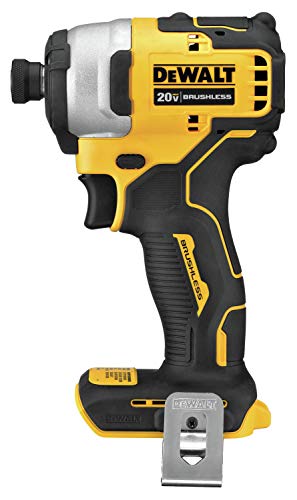
DeWalt 20V MAX Atomic Impact Driver (DCF809B)
The DeWalt Atomic is the best all-around impact driver for DIYers. It is 20% smaller and 25% lighter than standard drivers, yet it delivers up to 1,500 in-lbs of torque. Users report it easily handles deck screws and lags. The 3-speed control helps with precision tasks. One downside is that it uses a friction ring instead of a hog ring, which may allow bits to slip occasionally.
Pros
- Compact and lightweight
- Excellent power for size
- Three speed settings for control
Cons
- No hog ring, bits can slip
- Tool only, battery sold separately

Milwaukee M18 Fuel 1/4″ Impact Driver (2853-20)
Milwaukee’s M18 Fuel impact driver is a powerhouse. It churns out 2,000 in-lbs of torque, making it ideal for the toughest DIY jobs. The compact design fits into tight spaces, and the battery life is impressive. However, it is more expensive than other options, and some users find the trigger a bit sensitive for delicate tasks.
Pros
- Massive torque for heavy jobs
- Durable construction
- Great battery life (with M18 battery)
Cons
- Higher price point
- Can overpower small screws

Makita 18V LXT Impact Driver (XDT19Z)
Makita’s XDT19Z is known for its excellent speed control. It features a 4-speed setting plus a T-mode for self-tapping screws. The brushless motor delivers up to 1,550 in-lbs of torque, which is plenty for most DIY projects. The LED light is bright and helps in dark areas. A minor drawback is the lack of a belt clip in the box.
Pros
- Excellent speed control for precision
- T-mode for self-tapping screws
- Reliable battery platform
Cons
- Heavier than some competitors
- Belt clip not included

Bosch 18V EC Brushless Impact Driver (GDX18V-1800B)
The Bosch GDX18V-1800B is a unique 2-in-1 impact driver and wrench. It has a 1/4-inch hex collet and a 1/2-inch square drive, allowing you to swap between screws and sockets. It produces 1,800 in-lbs of torque and is well-balanced. However, the dual head makes it slightly longer, and some users find the mode selection switch on the side a bit stiff.
Pros
- Two tools in one
- Powerful motor
- Good ergonomics
Cons
- Longer length
- Mode switch stiff

Craftsman V20 Brushless Impact Driver (CMCF820B)
The Craftsman V20 impact driver is a budget-friendly option that does not skimp on performance. It has 1,500 in-lbs of torque and a variable speed trigger. The tool is well-built and comfortable to use. While it lacks some of the advanced features of pricier models, it is a solid choice for basic DIY tasks. Owners report it works well for years.
Pros
- Affordable price
- Good power for the cost
- Comfortable grip
Cons
- Battery and charger sold separately
- No brushless motor in some versions

Ryobi 18V One+ Impact Driver (P238)
Ryobi’s P238 is perfect for beginners. It offers 1,400 in-lbs of torque, which is enough for most small projects. The tool is lightweight and comes with a built-in LED light. It is part of the One+ system, so batteries are interchangeable with many other Ryobi tools. The main downside is the lack of a brushless motor, which reduces efficiency and battery life.
Pros
- Very affordable
- Lightweight design
- Large battery ecosystem
Cons
- Brushed motor less efficient
- Not as powerful as others

Porter-Cable 20V MAX Impact Driver (PCCK640LB)
The Porter-Cable PCCK640LB is a complete kit that comes with a driver, two batteries, charger, and a bag. It’s a great value for those starting out. The tool delivers 1,450 in-lbs of torque, which is decent for light to medium tasks. However, it is bulkier and heavier than other models, and the build quality feels less premium.
Pros
- Includes batteries and charger
- Good for beginners
- Reasonable price
Cons
- Bulkier design
- Less refined build
Before you buy
How they compare
| # | Model | Max Torque | Best for | Score | Price |
|---|---|---|---|---|---|
| 1 | DeWalt 20V MAX Atomic Impact Driver (DCF809B) | 1,500 in-lbs | Compact power | 9.4 | Check price |
| 2 | Milwaukee M18 Fuel 1/4″ Impact Driver (2853-20) | 2,000 in-lbs | High torque | 9.2 | Check price |
| 3 | Makita 18V LXT Impact Driver (XDT19Z) | 1,550 in-lbs | Speed control | 9.0 | Check price |
| 4 | Bosch 18V EC Brushless Impact Driver (GDX18V-1800B) | 1,800 in-lbs | Versatility with 2-in-1 head | 8.8 | Check price |
| 5 | Craftsman V20 Brushless Impact Driver (CMCF820B) | 1,500 in-lbs | Budget friendly | 8.6 | Check price |
| 6 | Ryobi 18V One+ Impact Driver (P238) | 1,400 in-lbs | Starter DIYers | 8.4 | Check price |
| 7 | Porter-Cable 20V MAX Impact Driver (PCCK640LB) | 1,450 in-lbs | Kit with battery and charger | 8.0 | Check price |
Good to know
What is a good torque rating for a DIY impact driver?
For most DIY projects, a torque rating of 1,200 to 1,500 in-lbs is sufficient. This can handle deck screws, drywall screws, and furniture assembly. If you plan to drive large lag bolts or work with hardwoods, consider a model with at least 1,800 in-lbs.
Can an impact driver be used for drilling?
Impact drivers are designed for fastening, not drilling. They lack a chuck that accepts standard drill bits. However, you can use hex shank drill bits with an adapter, but it is not recommended for precise drilling. For drilling, use a drill driver.
What is the difference between an impact driver and an impact wrench?
An impact driver uses a 1/4-inch hex collet and is designed for screws and small fasteners. An impact wrench uses a square drive (usually 1/2-inch) and is meant for lug nuts and bolts. Some tools, like the Bosch model, combine both.
How many RPM should an impact driver have?
Most impact drivers have a maximum RPM between 2,800 and 3,600. Higher RPM allows faster driving but may reduce control. Look for a variable speed trigger, which gives you more control for precise work.
Are brushless motors worth the extra cost?
Brushless motors are more efficient, provide more power, and last longer than brushed motors. They also tend to be more compact. For frequent use, they are worth the investment. For occasional DIY, a brushed motor may suffice.
What is the best voltage for a DIY impact driver?
18V and 20V are the most common, providing a good balance of power and weight. 12V drivers are lighter but less powerful, suitable for light tasks. For general DIY, 18V or 20V is recommended.
Can I use an impact driver to remove screws?
Yes, impact drivers are excellent for removing screws, especially stripped or rusted ones. The impact action helps break them loose. Just set the tool to reverse.
What is the average battery life of an impact driver?
Battery life varies based on the battery capacity (Ah) and the load. A 2.0 Ah battery can drive around 100 to 200 screws on a full charge, while a 4.0 Ah battery can last longer. Higher torque tasks drain the battery faster.
Do impact drivers come with a case?
Some models come with a case, especially kits that include batteries and charger. Bare tools often come without a case. Check the product description to see if a case is included.
How do I choose between two brands?
Consider the battery platform you already own, the warranty, and the feel of the tool. Read user reviews for reliability. Price is also a factor, but remember that the tool is an investment.
The bottom line
For most DIYers, the DeWalt Atomic offers the best combination of power, size, and value. If you need maximum torque for heavy tasks, the Milwaukee M18 Fuel is worth the extra cost. On a budget, the Craftsman V20 is a reliable choice. Avoid models with brushed motors if you plan to use the tool frequently.