How to Choose a Deshedding Tool for Heavy Shedders
FURminator’s Undercoat deShedding Tool leads for double coated breeds, since its stainless edge reaches loose undercoat beneath the topcoat. Hertzko’s Self-Cleaning Slicker Brush offers the better everyday value across coat types. Safari’s Dog Shedding Blade covers short, smooth coats for owners who want a simple, low cost option.
FURminator’s Undercoat deShedding Tool leads this comparison because its fine stainless edge reaches the loose undercoat beneath the topcoat, the layer that ends up on furniture. Hertzko’s Self-Cleaning Slicker Brush works better as an everyday pick across most coat types. Safari’s Dog Shedding Blade stays the straightforward budget choice for short, smooth coats.
Coat structure decides the right tool, not breed size or price. A blade that transforms a Husky’s coat can irritate a short haired Beagle, and a slicker suited to a Doodle does little on a Labrador. We compared tooth design and spacing, coat type suitability, handle ergonomics, hair release mechanisms and owner feedback on topcoat condition to shortlist these seven.
The top picks, ranked
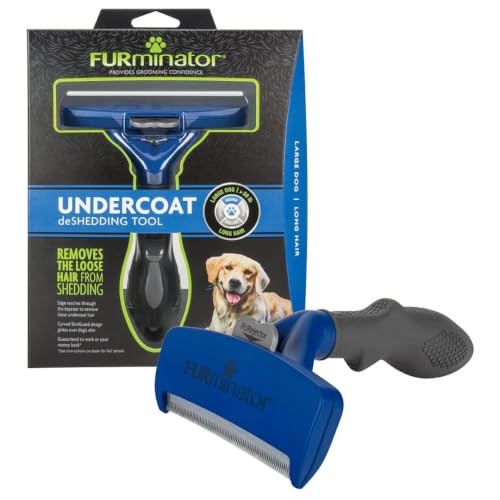
FURminator Undercoat deShedding Tool for Dogs
A stainless steel edge reaches beneath the topcoat to pull out loose undercoat, the layer responsible for most hair on furniture. Pressing the FURejector button clears collected fur from the head in one motion, so hands stay clean between passes. Owners of double coated breeds such as Huskies, German Shepherds and Golden Retrievers report the clearest difference from this tool style.
Pros
- Reaches dense undercoat that brushes and combs miss
- FURejector button clears the head without touching loose fur
- Sized versions cover breeds from small to giant
Cons
- Frequent heavy use can thin the topcoat over time
- Not suited to single coated or fine coated dogs

Hertzko Self-Cleaning Slicker Brush
Fine bent wire pins lift loose hair from most coat types while working through light tangles. Pressing a retract button pulls the pins back through the pad, so collected hair wipes off in seconds. Daily use suits this brush better than heavier tools, since the pins stay gentle enough for short, frequent sessions.
Pros
- Suits most coat types, including curly and wavy hair
- Retractable pins clear the pad in one motion
- Gentle enough for daily brushing without irritation
Cons
- Handles dense undercoat less thoroughly than a rake
- Pins can bend under pressure on heavy matting

Andis Pet Premium Deshedding Tool
A wide carbon steel blade covers more surface per pass than narrow rake heads, which suits large dogs with heavy coats. Andis builds this tool along professional grooming lines rather than as a casual household accessory. Based on specifications, the blade slides beneath the guard hairs to remove undercoat while leaving the outer coat intact.
Pros
- Wide blade head covers large dogs in fewer passes
- Contoured handle stays comfortable through longer sessions
- Built to professional grooming specifications
Cons
- Too aggressive for thin or single coated dogs
- No ejector button, so the blade needs manual clearing

Oster ShedMonster De-Shedding Tool
Rounded tooth tips replace the sharp edge found on blade style tools, which owners report as easier for sensitive dogs to tolerate. Separate short hair and long hair versions match tooth spacing to the coat being groomed. A soft ergonomic grip keeps this among the more comfortable handles in daily use.
Pros
- Rounded tips suit dogs that flinch at blade tools
- Coat specific versions match tooth spacing to hair length
- Ergonomic grip reduces wrist strain during long sessions
Cons
- Works slower than a blade on very thick undercoat
- Teeth require manual clearing between passes

Chris Christensen Big G Slicker Brush
Long, flexible pins set at a 45 degree angle reach the base of long, drop and curly coats where mats start. A cushioned pad flexes against the dog’s body, which keeps the oversized head comfortable across a large coat. Professional groomers favor this brush because the pins work through fluff without the snapping that cheaper slickers show.
Pros
- Long pins reach the base of heavy, thick coats
- Cushioned pad flexes to follow body contours
- Durable pins resist bending during regular use
Cons
- Lacks a self cleaning or retract mechanism
- Oversized head handles awkwardly on small dogs

Maxpower Planet Pet Grooming Undercoat Rake
One side carries nine widely spaced teeth built for breaking apart mats, while the other holds seventeen closer teeth for thinning and general undercoat removal. Flipping between sides takes a tangled coat from matted to finished with a single tool. Owners reach for this rake when a slicker brush alone stops making progress on a matted coat.
Pros
- Two tooth spacings cover both dematting and thinning
- Rounded tooth ends limit scratching against skin
- Cuts through mats that slicker brushes cannot reach
Cons
- Requires a careful, gentle hand to avoid pulling skin
- Coat still needs a finishing brush after use

Safari Dog Shedding Blade
A looped steel blade with serrated teeth lies flat against a short coat to lift dead hair close to the skin. Labrador, Beagle and other smooth coated owners have relied on this design for years. The loop separates into a straight blade for larger surfaces, and there is little on it that can break or wear out.
Pros
- Works effectively on short, smooth coats
- Converts between looped and straight for different reach
- Requires no maintenance beyond an occasional rinse
Cons
- Does little for long or double coated dogs
- Uncoated handle feels less comfortable than moulded grips
How to pick the right one
Match the tool to the coat, not the breed Double coated breeds like Huskies and German Shepherds carry soft undercoat beneath coarse guard hairs, so they need a rake or deshedding edge that reaches underneath. Short, smooth coats shed just as much hair, but from a single layer, which makes a shedding blade or rubber curry the better match. Curly and wavy coats trap shed hair instead of dropping it, a job suited to a slicker brush and comb. Choosing by breed name alone often leads to the wrong tool for the actual coat.
Session length and pressure matter more than tool choice Most complaints about deshedding tools trace back to heavy pressure or overly long sessions. Light passes in the direction of hair growth work best, and a few minutes usually clears most loose hair. Excessive pressure on a blade style tool can cut guard hairs and leave a dull, patchy coat. Stop once the yield of loose hair drops off rather than pushing for a perfectly clean pass.
Shedding season changes how often a tool gets used Double coated dogs typically blow their coat heavily twice a year, in spring and autumn, and that window is when an undercoat rake earns its place. Outside those months, a lighter weekly brush with a slicker usually covers normal shedding. Owners report better coat condition from saving aggressive tools for shedding season rather than raking year round. Coat texture and condition often signal when the heavier tool is needed again.
Check the skin before reaching for any tool Running hands over a dog before grooming reveals scabs, hot spots, lumps or tender spots that need gentler handling. Persistent heavy shedding, bald patches or irritated skin are worth a veterinary visit rather than a longer grooming session. A tool removes loose hair from a healthy coat, but it will not resolve an underlying skin or health condition. Grooming and veterinary care work as separate steps toward the same goal.
The lineup, side by side
| # | Model | Type | Best for | Score | Price |
|---|---|---|---|---|---|
| 1 | FURminator Undercoat deShedding Tool for Dogs | Undercoat deshedding edge | Best overall | 9.4 | Check price |
| 2 | Hertzko Self-Cleaning Slicker Brush | Slicker brush | Best value | 9.2 | Check price |
| 3 | Andis Pet Premium Deshedding Tool | Deshedding blade | Best for heavy double coats | 9.0 | Check price |
| 4 | Oster ShedMonster De-Shedding Tool | Deshedding rake | Best for medium coats | 8.8 | Check price |
| 5 | Chris Christensen Big G Slicker Brush | Slicker brush | Best for long and curly coats | 8.6 | Check price |
| 6 | Maxpower Planet Pet Grooming Undercoat Rake | Undercoat rake | Best for matted undercoat | 8.3 | Check price |
| 7 | Safari Dog Shedding Blade | Shedding blade | Best budget | 8.0 | Check price |
Questions worth asking
How often should I use a deshedding tool?
Heavy shedding seasons call for one or two short sessions a week for most double coated dogs. Outside those windows, once every week or two usually keeps shedding under control. Daily aggressive deshedding tends to irritate skin and thin the topcoat rather than reduce shedding further.
Will a deshedding tool damage my dog’s coat?
Light, occasional use rarely causes damage. Heavy pressure or the wrong coat type can lead blade style tools to cut guard hairs, leaving a dull or patchy look. Gentle passes in the direction of hair growth, stopped once loose hair output drops, keep the coat healthy.
Can I use a deshedding tool on a single coated dog?
Undercoat rakes and deshedding blades target a layer that single coated dogs do not have, so results stay minimal while skin irritation risk rises. Poodles, Maltese, Greyhounds and similar breeds respond better to a slicker brush or soft bristle brush.
Should I deshed a dog before or after a bath?
Brushing out loose hair before a bath keeps mats from tightening once wet. A second pass after the coat dries fully often releases noticeably more hair, since washing loosens undercoat. Wet hair tears more easily, so deshedding tools should stay off a damp coat.
Does deshedding reduce dog allergies in the house?
Removing loose hair and attached dander can ease symptoms for some households. Allergens mainly come from dander and saliva proteins, though, not hair itself, so grooming alone will not eliminate a reaction. Regular vacuuming and washing bedding alongside grooming tends to make the bigger difference.
What is the difference between a slicker brush and an undercoat rake?
A slicker brush uses many fine, bent pins across a flat pad to lift loose hair and work out light surface tangles. An undercoat rake uses fewer, longer, widely spaced teeth to reach deep into a thick coat and pull out dead undercoat. Many double coated dogs benefit from owning both tools.
What can I do if my dog hates being brushed?
Short sessions on a tolerated area, like the shoulders, work better than pushing through a full groom. Rounded tooth tools such as the Oster ShedMonster tend to get accepted more easily than sharp blades. Building the habit gradually over several weeks beats trying to finish everything in one sitting.
Are dog deshedding tools safe to use on cats?
Some brands sell cat specific versions with finer teeth and shorter blades, and those are the ones worth choosing. Dog sized tools run too coarse and too wide for feline skin, which is thinner and more mobile than a dog’s. Checking the packaging beats assuming a dog tool will cross over safely.
Which deshedding tool works best for heavy shedding breeds?
Double coated breeds that blow their coat, like Huskies and German Shepherds, respond most to an undercoat specific tool such as the FURminator Undercoat deShedding Tool. Its stainless edge reaches beneath the topcoat where loose undercoat collects. A wide blade tool like the Andis Pet Premium Deshedding Tool also suits large, heavily coated dogs.
Final word
FURminator’s Undercoat deShedding Tool remains the strongest pick for double coated breeds that shed heavily each season. Hertzko’s Self-Cleaning Slicker Brush suits the week to week routine most owners actually keep up, and Safari’s Dog Shedding Blade covers short, smooth coats without added cost. Matching the tool to the coat and keeping sessions short and gentle makes the biggest difference in what ends up on the floor.


