10 Educational Toys Toddlers Actually Stay Interested In
The Melissa and Doug Shape Sorting Cube is our overall pick for teaching shapes and problem solving with no batteries. The VTech Sit to Stand Learning Walker suits new walkers best, while the LEGO DUPLO Classic Brick Box grows with a child for years.
Educational toys work when they invite repetition and let a toddler solve something themselves, which is why simple, open ended designs usually outlast noisy electronic ones. Our overall pick is the Melissa and Doug Shape Sorting Cube for building shape recognition and fine motor control, with the VTech Sit to Stand Learning Walker as the standout for children just finding their feet.
Most toys get marketed as educational regardless of what they actually teach, and many hold attention for a week at best. We ranked these by comparing stated age ranges, the specific skills each toy targets, materials and safety design, and patterns in owner reports about durability and how long children stay interested.
How to pick the right one
What makes a toy actually educational? Educational value lives in what a toy makes the child do, not in what the toy outputs on its own. A shape sorter forces a toddler to test, fail, rotate and retry. A toy that plays a song at the press of a button does most of the work itself. Toys that demand effort tend to hold attention longer and build more skills.
How do I match a toy to my toddler’s current stage? Toddler development moves fast, and a toy pitched too far ahead gets abandoned quickly. Gross motor skills, cause and effect and first words dominate around one year old. Sorting, stacking, pretend play and longer vocabulary take over by age two. Age ranges on packaging offer a reasonable guide, but watch what your child is currently trying to master.
What safety and durability details matter most? Choking risk comes first: check that pieces are too large to swallow, especially with a younger sibling in the house. Solid wood and thick moulded plastic survive being thrown, chewed and stepped on far better than thin plastic. Wipeable surfaces matter more than they sound once a toy has been through a few sticky afternoons.
Are screens and batteries bad for toddlers? Electronic toys are not automatically worse, and the better ones scale content with age. Battery life, volume controls that will not turn down, and toys that entertain passively rather than inviting play are the real issues. A small number of electronic toys alongside open ended items like blocks, which never run out of ideas, strikes a reasonable balance.
The top picks, ranked

Melissa and Doug Shape Sorting Cube
Twelve chunky wooden shapes pair with a solid wood box here, teaching shape matching, colour naming and hand control at once. No batteries or sounds are involved, so feedback comes from solving the puzzle rather than a toy performing for the child.
Pros
- Durable wood survives heavy use
- Teaches shapes, colours, and problem solving
- No batteries or noise
Cons
- Loose shapes go missing easily
- Some toddlers master it quickly

VTech Sit to Stand Learning Walker
An unsteady toddler gets something stable to push here, while a detachable play panel supports separate floor play. Shapes, numbers and music on the panel keep it useful long after walking is mastered.
Pros
- Supports early walking confidence
- Play panel detaches for floor use
- Wide age range of usefulness
Cons
- Rolls quickly on hard floors
- Sounds cannot always be silenced

Fisher-Price Laugh and Learn Smart Stages Puppy
Songs and phrases shift across three levels on this plush puppy, so language stays age appropriate as a child grows. Pressing the paws and ears introduces body parts, colours and counting through repetition toddlers genuinely enjoy.
Pros
- Content scales with age
- Soft and safe for younger toddlers
- Strong for vocabulary building
Cons
- Repetitive for adults nearby
- Plush body is awkward to clean
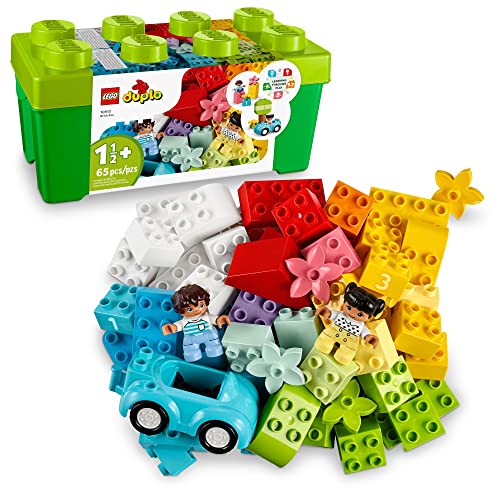
LEGO DUPLO Classic Brick Box 10913
Oversized bricks here are safe for small hands and endlessly recombinable, unlike single purpose toys. This is the item on the list most likely to still see use in three years, since play evolves as the child does.
Pros
- Genuinely open ended play value
- Bricks are too large to swallow
- Compatible with other DUPLO sets
Cons
- Needs adult modelling at first
- Bricks scatter across the room

Learning Resources Spike The Fine Motor Hedgehog
Twelve colourful quills push into holes on this hedgehog, direct practice for the pincer grip used later in writing. Quills store inside the body, making cleanup one of the simplest here.
Pros
- Excellent pincer grip development
- Self contained storage
- Doubles as a colour sorting game
Cons
- Limited play beyond the core action
- Quills can be chewed by younger babies

Hape Pound and Tap Bench with Slide Out Xylophone
Toddlers hammer balls through the top of this bench and hear them play notes on a xylophone that slides out for separate play. Cause and effect links directly to sound here, which keeps children experimenting.
Pros
- Two distinct toys in one
- Solid wood construction
- Great for cause and effect learning
Cons
- Loud during enthusiastic play
- Balls roll away and get lost
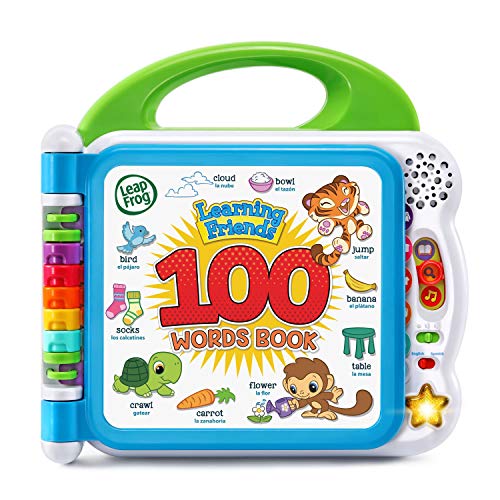
LeapFrog Learning Friends 100 Words Book
Everyday vocabulary spans themed pages in two languages here, with audio for each word a toddler touches. Compact and quiet, this book travels well and builds naming skills through repetition.
Pros
- Strong vocabulary building
- Bilingual audio for every word
- Compact enough for travel
Cons
- Pages can tear with rough handling
- Volume control is limited
Compared at a glance
| # | Model | Age range | Best for | Score | Price |
|---|---|---|---|---|---|
| 1 | Melissa and Doug Shape Sorting Cube | 2 years and up | Best overall | 9.4 | Check price |
| 2 | VTech Sit to Stand Learning Walker | 9 months to 3 years | Best for new walkers | 9.1 | Check price |
| 3 | Fisher-Price Laugh and Learn Smart Stages Puppy | 6 months to 3 years | Best for early language | 8.8 | Check price |
| 4 | LEGO DUPLO Classic Brick Box 10913 | 18 months and up | Best open ended play | 8.6 | Check price |
| 5 | Learning Resources Spike The Fine Motor Hedgehog | 18 months and up | Best for fine motor skills | 8.4 | Check price |
| 6 | Hape Pound and Tap Bench with Slide Out Xylophone | 12 months and up | Best musical toy | 8.2 | Check price |
| 7 | LeapFrog Learning Friends 100 Words Book | 18 months to 4 years | Best for vocabulary | 8.0 | Check price |
Frequently asked questions
What are the best educational toys for a one year old?
At one, focus on push toys, simple stacking and sorting, and cause and effect toys. Chunky blocks and shape sorters cover motor skills and early problem solving well.
What are the best educational toys for a two year old?
At two, toddlers move into sorting, stacking and pretend play, plus longer vocabulary building. The Melissa and Doug Shape Sorting Cube and LEGO DUPLO Classic Brick Box both suit this stage well, since they reward repeated, independent play.
Are wooden toys better than plastic for toddlers?
Wood is generally more durable and quieter, while good plastic toys are lighter, easier to clean, and often more affordable. Both work, so judge each toy on what it asks the child to do.
How many toys should a toddler have out at once?
Fewer than most homes have. Rotating a small selection every week or two keeps toys feeling new and reduces the overwhelm that leads to short attention spans.
Do electronic toys slow language development?
Toys that talk at a child do less for language than adults who talk with them. Electronic toys can support vocabulary, but they work best alongside conversation and shared reading.
What should I check for choking hazards?
Any piece that fits through a toilet roll tube is too small for children under three. Also check for parts that could break off, such as small wheels or eyes.
When can a toddler start LEGO DUPLO?
DUPLO is designed from around 18 months, with bricks sized to be safe for that age. Younger toddlers usually stack and knock down before they start building.
How do I clean toddler toys?
Wipe hard plastic and sealed wood with a damp cloth and mild soap, and let them dry fully. Plush electronic toys usually need surface cleaning only, since the electronics cannot be submerged.
Which toys hold a toddler’s attention the longest?
Open ended toys such as blocks, DUPLO, and pretend play sets tend to last years because the play changes as the child develops. Single purpose toys are often mastered and set aside.
Are Montessori style toys worth the extra cost?
Montessori toys emphasize open ended, self correcting play, similar in spirit to the Shape Sorting Cube on this list. The label is not required for good development, but letting a child solve the toy without adult help is worth prioritizing regardless of price.
Our take
The Melissa and Doug Shape Sorting Cube stays the top overall choice, since it teaches shapes, colours and problem solving through a child’s own effort rather than a soundtrack. Pick the VTech Sit to Stand Learning Walker for a toddler just starting to walk, or the LEGO DUPLO Classic Brick Box for one toy that stays useful for years.


