Push and Pull Toys That Actually Support New Walkers
VTech Sit-to-Stand Learning Walker is the top pick, since its detachable panel works before and after first steps. Radio Flyer Classic Walker Wagon adds real load carrying on a wide wooden base. Fisher-Price Corn Popper is the low cost pull toy toddlers return to again and again.
VTech Sit-to-Stand Learning Walker leads this list because its activity panel detaches for floor play months before a baby stands. Radio Flyer Classic Walker Wagon carries a wider, heavier base that resists tipping under a lean. Fisher-Price Corn Popper earns its spot for cause-and-effect fun at a fraction of the cost.
A toy that rolls too easily can pull a new walker off balance, which makes this category harder to shop than it looks. Base width, wheel friction and handle height matter more than any light-up feature. We compared base dimensions, wheel resistance, materials, stated age ranges and how each toy gets used after walking begins, alongside owner feedback on hardwood floors versus carpet.
What matters most
What to look for in a push or pull toy Stability matters most. A wide wheelbase and some added weight stop a walker shooting forward when a baby leans on it, the leading cause of falls with these toys. Wheel resistance settings or rubber tyres help on hardwood or tile floors. Handle height should let a child stand upright rather than hunch, and it helps if the toy still has a job once walking is mastered.
Push toys versus pull toys: which stage fits Push toys come first, typically used from around nine to fifteen months for support while a baby cruises and takes early steps. Pull toys arrive later, usually past eighteen months, since towing something behind requires balance and the ability to look back while walking. The PlanToys Dancing Alligator and Melissa & Doug Chomp and Clack both suit that second stage.
Best choices for hardwood floors and small homes Smooth floors expose cheap wheels, which slide rather than grip. The VTech Sit-to-Stand and its speed setting, or the Hape Wonder Walker with rubber-trimmed wheels, handle hard floors better than most. Compact pull toys suit small homes since a wagon needs somewhere to store, while deep-pile carpet creates the opposite problem by making light toys hard to push at all.
Safety, materials and how long these toys last Look for compliance with ASTM F963 toy safety standards and water-based paint, as used on the Hape and PlanToys models. Keep pull cords under the recommended length and supervise around babies who might loop them. Wood typically outlasts plastic and passes to siblings, while electronic panels depend on batteries and switches that eventually fail. Retire any toy with loose wheels or a wobbly handle, since instability is what causes falls.
Our top picks

VTech Sit-to-Stand Learning Walker
A phone, gears, piano keys and shape sorters clip onto a detachable activity panel, so a baby plays sitting down long before standing. Once walking starts, the panel reattaches and the frame becomes a push walker. Two rear-wheel speed settings slow the roll for new walkers on hard floors.
Pros
- Panel detaches for months of pre walking play
- Speed switch stops it running away on wood floors
- Shape sorter blocks add a second activity
Cons
- Needs AA batteries for the sound panel
- Plastic frame is lighter than a wooden walker

Radio Flyer Classic Walker Wagon
Solid wood construction on a wide wheelbase gives new walkers something that stays planted when they lean on it. Its open bed holds blocks, books or a doll, keeping the wagon useful well past first steps. Rubber wheel rims and a no-pinch handle protect floors and fingers.
Pros
- Weight and width resist tipping under a lean
- Carrying bed extends the toy’s useful life
- Rubber rims are quiet on hard floors
Cons
- Requires adult assembly out of the box
- Heavier to lift up and down stairs
Fisher-Price Corn Popper
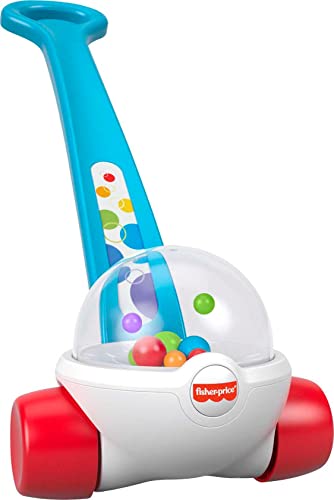
Coloured balls pop inside a clear dome with every push, giving instant feedback for each step a toddler takes. No batteries are involved, since the wheels themselves drive the popping mechanism. Its long handle suits toddlers already steady on their feet rather than those still cruising furniture.
Pros
- No batteries to replace ever
- Immediate sound and motion reward for walking
- Light enough for a toddler to steer alone
Cons
- Offers no support for a wobbly new walker
- Popping noise is loud in a small room

Hape Wooden Wonder Walker Push and Pull Toy
Built from wood with a wide wheelbase and a handle set at toddler shoulder height. Rubber-trimmed wheels grip enough to slow the roll, addressing the top complaint about lighter walkers. Bead rollers and a spinning wheel on the front panel give a child something to do when resting.
Pros
- Rubber trim slows the roll on hard floors
- Water based non toxic paint finish
- Front activities occupy the child at rest
Cons
- No storage bed for carrying toys
- Fixed handle height cannot be adjusted

Melissa & Doug Chomp and Clack Alligator Push Toy
Wooden jaws snap open and shut as the alligator rolls, with wooden balls clacking inside its body. Movement and sound come purely from the wheels, so it works outdoors just as well as inside. Confident walkers get more from this than babies still finding their balance.
Pros
- Mechanical motion holds attention without electronics
- Solid wood survives outdoor use
- Handle detaches for storage
Cons
- Not stable enough to lean on for support
- Clacking is loud on tiled floors

PlanToys Dancing Alligator Pull Toy
Reclaimed rubberwood finished with water-based dyes forms the body of this pull toy. Segmented panels swing side to side as it moves, teaching a toddler that walking speed changes the motion. Its cord pull suits children already walking confidently who want something to tow along.
Pros
- Made from reclaimed wood with water based finish
- Segmented motion rewards changes in walking pace
- Compact enough for small living rooms
Cons
- Pull cord needs supervision around younger siblings
- Provides no walking support at all

Little Tikes Push and Ride Racer
Works two ways: a parent pushes using the removable handle, or the toddler scoots along seated with their own feet. Four wheels set in a wide stance keep it stable on grass and patios. Thick moulded plastic tolerates being left outside between uses.
Pros
- Doubles as a ride on once walking is secure
- Wide stance stays stable on grass
- Handle removes for independent play
Cons
- Too large for small apartments
- Bright plastic fades if left in direct sun
How they stack up
| # | Model | Age guidance | Best for | Score | Price |
|---|---|---|---|---|---|
| 1 | VTech Sit-to-Stand Learning Walker | 9 to 36 months | Best overall | 9.4 | Check price |
| 2 | Radio Flyer Classic Walker Wagon | 12 months and up | Best wooden walker | 9.2 | Check price |
| 3 | Fisher-Price Corn Popper | 12 months and up | Best budget | 9.0 | Check price |
| 4 | Hape Wooden Wonder Walker Push and Pull Toy | 12 months and up | Best for steady support | 8.8 | Check price |
| 5 | Melissa & Doug Chomp and Clack Alligator Push Toy | 2 years and up | Best push toy for older toddlers | 8.6 | Check price |
| 6 | PlanToys Dancing Alligator Pull Toy | 12 months and up | Best sustainable pull toy | 8.3 | Check price |
| 7 | Little Tikes Push and Ride Racer | 12 months and up | Best for outdoor use | 8.0 | Check price |
Frequently asked questions
At what age can a baby use a push toy?
Most babies start using a push walker between nine and twelve months, once they can pull to stand and cruise along furniture. The VTech Sit-to-Stand is rated from nine months partly because its detachable panel works for sitting play before that.
Are push walkers bad for a baby’s development?
Push-along walkers, where the child stands behind and pushes, differ from seated baby walkers on wheels, which paediatric bodies advise against. With a push toy, the child stays in control of their own balance throughout.
What is the difference between a push toy and a pull toy?
A push toy moves ahead of the child and often provides support during early steps. A pull toy trails behind on a cord and suits confident walkers, generally from around eighteen months onward.
Which push toy is best for hardwood floors?
Look for wheel resistance settings or rubber tyres. The VTech Sit-to-Stand offers a two-speed switch, and the Hape Wonder Walker uses rubber-trimmed wheels. Both cut the runaway effect that trips up new walkers.
Do push and pull toys help babies learn to walk?
They encourage practice and give a reason to move, but every baby walks on their own timeline. The value lies in motivation and balance practice rather than accelerating milestones.
Are wooden push toys better than plastic ones?
Wooden toys like the Radio Flyer Walker Wagon and Hape Wonder Walker weigh more, which improves stability, and they tend to last long enough to pass down. Plastic toys cost less, weigh less and tolerate being left outdoors.
How long will a child use a push and pull toy?
Push walkers see heavy use for roughly six months around first steps. Toys with a second purpose, like a wagon that carries items or a ride-on racer, keep earning their space for years.
What safety features matter on a toddler push toy?
Look for a wide wheelbase, a handle without pinch points, non-toxic paint and ASTM F963 compliance. Check cord length on pull toys, and recheck wheel fixings every few months since a loose wheel makes any toy unpredictable.
Is a push toy or a pull toy better for a first birthday gift?
A push toy usually makes more sense at twelve months, since most children are still mastering standing and early steps rather than towing something behind them. Save pull toys for closer to eighteen months.
Final word
VTech Sit-to-Stand Learning Walker is the one to buy first, since the detachable panel earns months of use before a child stands and long after. Families who prefer wood and want real load carrying should choose the Radio Flyer Classic Walker Wagon. Once walking is steady, a simple wheel-driven toy like the Fisher-Price Corn Popper keeps toddlers moving for very little money.