Electric Fences Compared for Keeping Livestock and Pets In
Zareba’s EAC50M-Z mains charger suits long fence runs best, the Parmak Magnum Solar-Pak 12 solves paddocks with no power outlet, and the Patriot P10 handles small enclosures and pet areas affordably. All three deliver low impedance pulses that push through weed contact.
Zareba’s EAC50M-Z is the strongest all-round charger here for long fence runs with mains power available. The Parmak Magnum Solar-Pak 12 solves remote paddocks with no outlet nearby, and the Patriot P10 handles smaller enclosures at a sensible size and cost.
Mile ratings on the box assume a spotless fence, yet real fences touch grass, weeds and wet brush that drain the charge fast. We compared published joule output, rated distances, low impedance design and grounding requirements, alongside what owners report once vegetation grows in. Local regulations and manufacturer instructions on signage, voltage and animal suitability should guide any install.
What we recommend

Zareba EAC50M-Z Low Impedance Electric Fence Charger
Low impedance design pushes a short powerful pulse through weeds and brush that would drain a weaker charger. This mains powered unit is rated for multi-mile fence runs on steel wire, polywire or polytape. Voltage holds steady across long perimeters once the ground rod system is installed correctly.
Pros
- Delivers a strong pulse through weed and brush contact
- Rated for multi-mile fence runs
- Works with wire, polywire and tape fencing
Cons
- Needs a mains outlet and weatherproof mounting
- Requires a correctly installed ground rod system

Parmak Magnum Solar-Pak 12 Electric Fence Charger
Parmak built this as a self contained solar charger, with panel and battery sealed into one weatherproof case. Cloudy stretches do not stop it, since the internal battery carries reserve capacity for extended overcast periods. Remote paddocks and back pastures without mains access are where this unit earns its higher price.
Pros
- Self contained solar and battery in one case
- Keeps running through cloudy weather
- Weatherproof housing suits permanent outdoor mounting
Cons
- Costs more upfront than mains chargers
- Internal battery eventually needs replacing

Patriot P10 Electric Fence Energizer
Small paddocks, garden perimeters and pet enclosures suit the P10 better than large farms. Output stays modest on purpose, since a bigger energizer would cost more without adding benefit on a short run. A pulse indicator light and clearly marked terminals make setup straightforward for a first time owner.
Pros
- Sized correctly for small enclosures and gardens
- Clear terminals and pulse indicator light
- Affordable for the build quality
Cons
- Not enough output for long or weedy fences
- Needs sheltered mounting away from rain
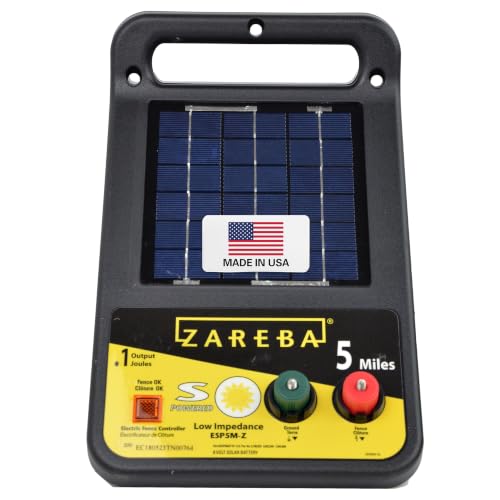
Fi-Shock ESP2M-FS Solar Powered Electric Fence Charger
Entry level solar fencing starts here, aimed at a garden perimeter or one small paddock. An integrated panel tops up the battery, so no wiring runs back to the house. Keep fence runs short and vegetation trimmed away from the wire, since output is limited next to larger solar units.
Pros
- Lowest cost route into solar fencing
- Mounts on a post without any wiring
- Battery tops up automatically from the panel
Cons
- Limited output restricts runs to short distances
- Struggles once weeds touch the wire
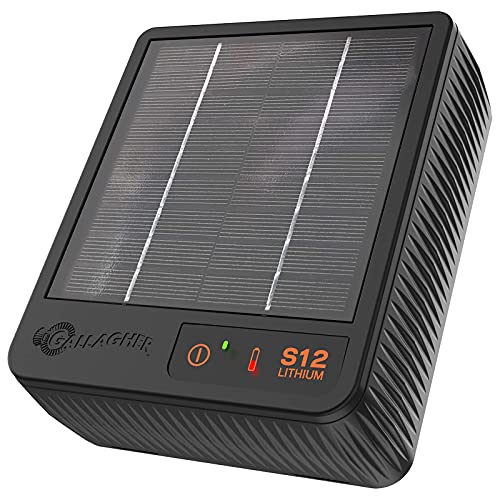
Gallagher S17 Solar Fence Energizer
Rotational grazing setups move fences often, and the S17 is built to move with them. A sealed housing survives permanent outdoor use, yet the whole unit mounts on a standard step in post and carries in one hand. Temporary paddock divisions suit it better than a full farm perimeter, since output is modest.
Pros
- Mounts directly on a step-in post
- Easy to relocate as paddocks rotate
- Sealed housing withstands permanent outdoor use
Cons
- Low output limits total fence length
- Small size makes it easy to misplace
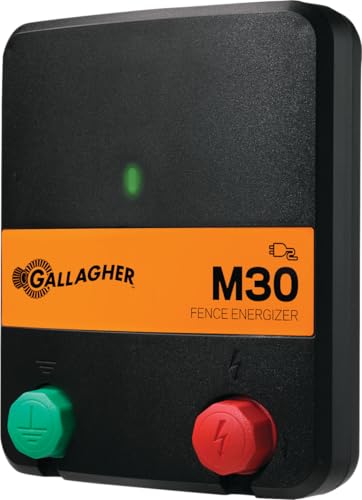
Gallagher M300 Electric Fence Energizer
Thick coated livestock resist a weak pulse, and the M300 carries enough joule output to push through that resistance across a substantial fence. A voltage indicator shows at a glance whether the fence is performing or shorting somewhere along the line. Reaching rated performance depends on a proper multi rod grounding installation.
Pros
- Enough output for thick coated livestock
- Voltage indicator flags problems at a glance
- Handles longer runs than entry level chargers
Cons
- Needs a serious grounding installation
- More capacity than a pet enclosure requires

PetSafe Basic In-Ground Pet Fence
Dogs, not livestock, are what this system is built for, using a buried boundary wire instead of a physical fence line. A receiver collar sounds a warning tone before any static correction, giving the dog a chance to turn back. Flags mark the boundary during training and come included with the transmitter, wire and collar.
Pros
- No visible fence anywhere on the property
- Tone warning teaches the boundary before correction
- Expandable with additional wire and collars
Cons
- Requires consistent training with boundary flags
- Does not keep other animals out of the yard
What matters most
Solar or mains: pick the power source first Mains energizers deliver more output for the money and never run flat, so use one wherever an outlet sits within reach. Solar units solve remote paddocks, portable setups and rotational grazing where running a cable is not realistic. Battery capacity and cloudy weather performance separate a reliable solar charger from one that dies after two overcast days.
Joules decide whether the fence works once weeds grow in Mile ratings printed on the box assume a perfectly clean fence, and no real fence stays that way for long. Joule output is the honest number, since it describes the energy in each pulse and how much vegetation contact the fence can tolerate. Buy an energizer rated well beyond your actual fence length, because a unit that works fine in spring often fails once the grass thickens.
Grounding is where most systems underperform An electric fence completes its circuit through the earth, so the ground rod system matters as much as the charger itself. Manufacturers typically specify several galvanised rods, driven deep and spaced apart, connected with proper clamps rather than twisted wire. Poor grounding is the single most common reason a fence tests low, and adding rods usually fixes it faster than buying a bigger energizer.
Match the system to your animals and check local rules Livestock fencing and pet containment solve different problems with different equipment. A livestock energizer pulses a physical wire, with height and spacing chosen for the species being contained. An in ground pet fence relies on a buried wire, a receiver collar and consistent boundary training instead. Whatever you install, post warning signage where required and check local regulations, since rules on electric fencing vary by area.
The lineup, side by side
| # | Model | Power source | Best for | Score | Price |
|---|---|---|---|---|---|
| 1 | Zareba EAC50M-Z Low Impedance Electric Fence Charger | Mains AC power | Best overall | 9.4 | Check price |
| 2 | Parmak Magnum Solar-Pak 12 Electric Fence Charger | Solar with internal battery | Best solar | 9.2 | Check price |
| 3 | Patriot P10 Electric Fence Energizer | Mains AC power | Best value | 9.0 | Check price |
| 4 | Fi-Shock ESP2M-FS Solar Powered Electric Fence Charger | Solar with internal battery | Best budget solar | 8.8 | Check price |
| 5 | Gallagher S17 Solar Fence Energizer | Integrated solar panel | Best portable | 8.6 | Check price |
| 6 | Gallagher M300 Electric Fence Energizer | Mains AC power | Best for mixed livestock | 8.3 | Check price |
| 7 | PetSafe Basic In-Ground Pet Fence | Buried wire with receiver collar | Best for dogs | 8.0 | Check price |
Common questions
How many joules do I need for an electric fence?
It depends on fence length, vegetation and the animals being contained. A common rule allows roughly one joule per mile of clean wire, with more added where weeds touch the line. Buying beyond the minimum is the safer choice, since output only becomes a problem under load.
Why is my electric fence not shocking properly?
Three causes explain most cases: weak grounding, vegetation shorting the wire, and a broken or loose connection. A fence voltmeter tested at the charger and then along the line finds where voltage drops. Adding ground rods resolves a surprising share of these complaints.
Is solar or mains power better for a fence charger?
Mains delivers more output for the money and never runs down, so choose it wherever an outlet is available. Solar is the practical answer for remote paddocks and portable rotational setups, provided the battery capacity suits cloudy weather.
What is a low impedance fence charger?
Low impedance chargers fire a short, high energy pulse that pushes through vegetation contact instead of being drained by it. Real fences touch grass and weeds, which is why low impedance became the standard design. High impedance units only suit fences kept perfectly clear.
How many ground rods does an electric fence need?
Most manufacturers specify several galvanised rods, driven deep and spaced apart, with more required in dry or sandy soil. Grounding needs scale with joule output, so follow the instructions for your specific charger. A low voltage reading usually means one more rod is needed.
Can electric fencing keep predators out of a yard?
Yes, with wire spacing and height chosen for the species being excluded, and predator fencing typically runs wires closer to the ground than livestock containment does. Check guidance for the specific predator, since a fence built to keep animals in is not automatically built to keep others out.
What is the difference between an in-ground pet fence and a livestock fence?
An in ground pet fence buries a boundary wire and pairs it with a receiver collar that sounds a tone before correcting. A livestock energizer instead pulses a visible physical fence line. The two solve different problems and are not interchangeable.
Do electric fences need warning signs?
In many areas yes, especially where a fence borders a public road or footpath, and requirements shift by jurisdiction. Local regulations and the manufacturer instructions both matter here, since signage rules and permitted output levels differ by location.
Which electric fence charger works best for small pastures or gardens?
A compact mains unit like the Patriot P10 suits short runs and garden perimeters, where a large energizer would add cost without adding benefit. Fi-Shock’s solar version covers a similar sized fence without needing an outlet nearby.
Our pick
Choose the Zareba EAC50M-Z when mains power reaches the fence and weeds are going to grow in regardless. The Parmak Magnum Solar-Pak 12 answers paddocks with no outlet nearby, while the Patriot P10 fits small enclosures and garden fencing at a sensible size. Whichever charger you pick, spend real time on grounding, since that is where most fences fall short.


