Ellipticals for Teens and Kids With Shorter Strides
The Schwinn 411 Compact Elliptical suits teens best thanks to a shorter stride and adjustable resistance, the Sunny Health & Fitness SF-E3607 covers younger users on a smaller frame, and the Cubii JR1 works for seated movement at a desk. Fit matters far more than power at this age.
For teenagers who want a home cardio machine that fits properly, the Schwinn 411 Compact Elliptical is the pick, with the Sunny Health & Fitness SF-E3607 a smaller framed option for younger or shorter users and the Cubii JR1 the choice for gentle seated movement rather than a workout.
The problem with buying an elliptical for a young person is that almost every machine is designed around adult proportions. A 20 inch stride forces a shorter user into an over-extended gait, and pedals spaced for adult hips feel unstable. There is also no widely recognised youth category, so this is really about which adult machines adjust down well. We compared stride length, whether resistance goes low enough to be useful, pedal spacing, frame size and weight ratings. Any exercise programme for a child or teenager should be discussed with a paediatrician or a qualified coach first.
The shortlist, ranked
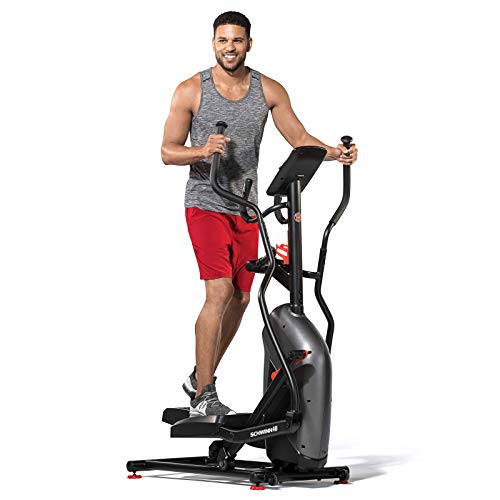
Schwinn 411 Compact Elliptical Machine
The 411 uses a shorter stride than Schwinn’s full sized machines, which is exactly what makes it work for teenagers who find a 20 inch stride awkward. Sixteen resistance levels go low enough for easy sessions and high enough to stay useful as fitness improves. Owners report the compact frame fits into a bedroom or a shared family room without dominating it.
Pros
- Shorter stride suits teens and shorter adults
- Wide resistance range grows with the user
- Small enough for a bedroom or study
Cons
- Too small for taller adults sharing it
- Basic console with limited feedback

Sunny Health & Fitness SF-E3607 Magnetic Elliptical
Sunny’s SF-E3607 keeps the frame low and narrow, which makes stepping on and off less intimidating for a younger user. Sixteen tension levels start gently and the magnetic drive is quiet enough for shared living spaces. Based on specifications it favours accessibility and quiet operation over performance ceiling.
Pros
- Low step-on height is easy for younger users
- Quiet enough for evening use in shared rooms
- Simple tension dial and readout
Cons
- Limited ceiling for a fit older teen
- Console feedback is minimal

Cubii JR1 Under Desk Elliptical
The JR1 sits under a desk and lets a seated user pedal through an elliptical path, which suits homework sessions and restless energy more than structured exercise. It is quiet, needs no assembly to speak of and stores against a wall. Owners report it is best framed as gentle movement rather than as cardio training.
Pros
- Fits under a desk for study sessions
- Very quiet and non-disruptive
- No standing balance required
Cons
- Not a substitute for standing cardio
- Low resistance ceiling

ProForm Hybrid Trainer
The Hybrid Trainer switches between an elliptical stance and a recumbent bike position, which is useful when a household includes people of different ages and abilities. The seated mode lowers the balance demand for younger users. Based on specifications it takes less floor space than owning two separate machines.
Pros
- Two training positions in one machine
- Seated mode suits younger or unsteady users
- Saves space compared with two machines
Cons
- Compromises slightly on both modes
- Assembly is more involved than single mode machines
Fitness Reality E5500XL Magnetic Elliptical Trainer
Older teens who have hit adult height need a longer stride, and the E5500XL provides that along with a high weight rating and a bluetooth enabled console. It is the machine here most likely to stay useful into adulthood. Owners report the frame feels considerably more solid than budget compact models.
Pros
- Stride suits adult height teenagers
- Wide resistance range for progression
- Solid frame with a high weight rating
Cons
- Too large for younger children
- Takes up meaningful floor space
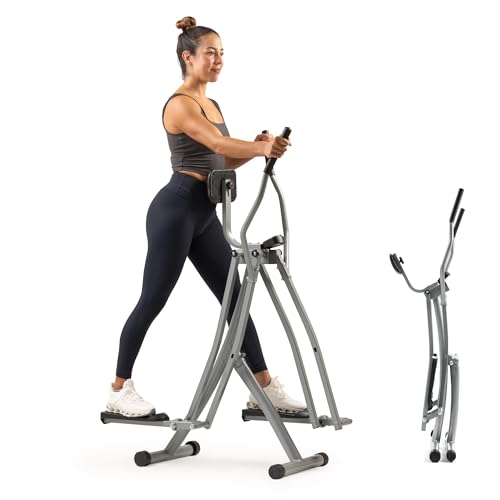
Sunny Health & Fitness SF-E902 Air Walk Trainer
The Air Walk Trainer uses a swinging striding motion with no mechanical resistance, so effort comes from the user’s own pace. That makes it very gentle and impossible to set too hard, which suits a young or deconditioned user. Based on specifications it is a mobility and movement machine rather than a cardio trainer.
Pros
- Impossible to set the resistance too high
- Very low impact striding motion
- Simple and quick to start using
Cons
- No resistance means limited training effect
- Motion is less controlled than a geared elliptical

Body Champ BRM3671 Cardio Dual Trainer
The BRM3671 combines an elliptical path with an adjustable seat so several family members of different heights can use it. The seat adjustment is the feature that matters for a growing teenager. Owners report it is a light duty machine best suited to moderate sessions rather than intensive training.
Pros
- Seat adjusts as a young user grows
- Covers standing and seated training
- Reasonable footprint for a dual machine
Cons
- Light duty frame under intensive use
- Fewer resistance levels than the top picks
What matters most
Stride length is the fit measurement that matters Most full sized ellipticals use an 18 to 20 inch stride designed around adult leg length. A shorter user on that stride either over-reaches at the ends of the motion or shortens the stroke and never uses the machine as intended, both of which feel awkward and discourage use. Compact machines with shorter strides are a better match for teenagers and shorter adults, while an older teenager who has reached adult height will be better served by a standard stride they will not outgrow. If possible, have the young user try the motion before committing.
Resistance range, not maximum resistance For a young or new exerciser, how low the resistance goes matters more than how high. A machine whose lowest setting already feels hard makes the first sessions unpleasant and the machine gets abandoned. Look for a range that starts genuinely easy and extends far enough to remain useful as fitness improves, which usually means 16 levels or more. Magnetic resistance is also quieter and smoother than friction systems, which matters when the machine lives in a bedroom or a shared room.
Safety and supervision at home Home exercise equipment is a recognised source of childhood injuries, most often to fingers and hands caught in moving parts. Manufacturers set minimum ages for their machines, and those should be treated as requirements rather than suggestions. Practical steps include keeping younger siblings out of the room during use, unplugging any powered machine when it is not in use, storing it where it cannot be climbed on, and teaching a proper mount and dismount. Free play, sport and general activity remain the recommended foundation for children, with equipment as a supplement.
Setting expectations for young users Public health guidance for children and teenagers centres on around an hour of varied daily activity, most of it aerobic, with muscle and bone strengthening a few times a week. An elliptical can contribute to the aerobic part, particularly in bad weather or where outdoor space is limited, but it is not a replacement for varied movement and sport. Keep sessions short and enjoyable, avoid framing them around weight, and let a paediatrician or a qualified youth coach guide anything structured, especially where a health condition is involved.
Compared at a glance
| # | Model | Stride | Best for | Score | Price |
|---|---|---|---|---|---|
| 1 | Schwinn 411 Compact Elliptical Machine | Compact stride length | Best overall | 9.4 | Check price |
| 2 | Sunny Health & Fitness SF-E3607 Magnetic Elliptical | Moderate compact stride | Best value | 9.2 | Check price |
| 3 | Cubii JR1 Under Desk Elliptical | Seated under desk elliptical | Best for seated movement | 9.0 | Check price |
| 4 | ProForm Hybrid Trainer | Elliptical and recumbent bike | Best two in one | 8.8 | Check price |
| 5 | Fitness Reality E5500XL Magnetic Elliptical Trainer | Longer stride for taller users | Best for taller teens | 8.6 | Check price |
| 6 | Sunny Health & Fitness SF-E902 Air Walk Trainer | Air walker striding trainer | Best low impact option | 8.3 | Check price |
| 7 | Body Champ BRM3671 Cardio Dual Trainer | Elliptical with adjustable seat | Best for shared family use | 8.0 | Check price |
Questions worth asking
What age can a child use an elliptical?
Manufacturers typically set a minimum age, often in the early teens, and that guidance exists for safety reasons. Younger children are generally better served by active play and sport. Check the specific model’s stated age requirement and speak to a paediatrician before starting any structured programme.
What stride length suits a teenager?
A shorter stride, generally in the compact range rather than the 20 inch adult standard, feels natural for most teens under adult height. An older teen who has finished growing will be comfortable on a standard stride and will not outgrow it, which makes it the better long term purchase.
Is an elliptical safe for growing bodies?
The motion is low impact and keeps the feet in contact with the pedals, which is generally considered gentle on developing joints. The concerns are more about supervision, correct fit and sensible intensity than about the motion itself. Discuss any structured exercise plan with a paediatrician.
How much exercise should a teenager get?
Widely used public health guidance suggests around 60 minutes of moderate to vigorous activity daily for children and teens, including muscle and bone strengthening activities several times a week. Machine cardio can contribute, but varied activity and sport should make up most of it.
Can adults use the same machine?
Compact ellipticals feel cramped for taller adults, and the shorter stride is the limiting factor. If the machine needs to serve both, a model with a longer stride and a high weight rating, or a dual mode trainer with an adjustable seat, is the more practical choice.
How much space does one of these need?
Compact models typically need around four to five feet by two feet plus clearance behind, and ceiling height matters because standing on the pedals adds roughly eight to ten inches to a user’s height. Measure the room, including doorways, before ordering.
Are under desk ellipticals worth it for students?
They suit restless movement during study and are quiet enough not to disturb a household. They should be understood as gentle activity rather than cardio training, since resistance and range of motion are both limited compared with a standing machine.
How do I keep a young user interested?
Short sessions, music or a screen, and a clear end point work far better than open-ended time on the machine. Letting the young person choose the settings and track their own progress helps. Framing it around energy and enjoyment rather than weight is the approach most youth activity guidance recommends.
Our pick
The Schwinn 411 Compact Elliptical is the best fit for most teenagers because the shorter stride matches their proportions and the resistance range leaves room to progress. Younger or shorter users step onto the Sunny Health & Fitness SF-E3607 more comfortably, and the Cubii JR1 is a sensible pick where the goal is gentle movement during study rather than a workout. Whatever you choose, supervision and a word with a paediatrician come first.


