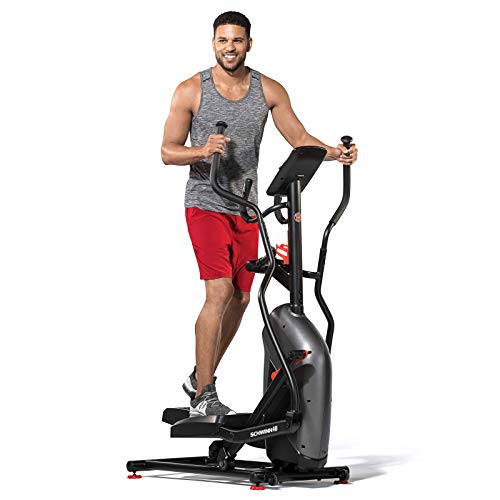
Beginner Friendly Ellipticals for a Gentle Start
The Schwinn 470 Elliptical is our top beginner machine because the stride and resistance range suit new users without feeling limiting later. The Sunny Health SF-E905 is the budget pick, and the Cubii JR1 Under Desk Elliptical suits anyone easing in while seated.
For a first elliptical you will still be using in a year, the Schwinn 470 gives you a natural stride and enough resistance to grow into, while the Sunny Health SF-E905 covers the basics for far less. Anyone starting from a very low base, or recovering from injury, will get more out of the seated Cubii JR1.
Choosing a beginner elliptical is tricky because the specification that decides comfort, stride length, is the one most listings bury, and a short stride turns a smooth machine into an awkward one for taller users. We compared seven currently sold machines based on published specifications, stride and resistance figures, footprint and what owners report about noise, assembly and console usability.
The best picks, ranked

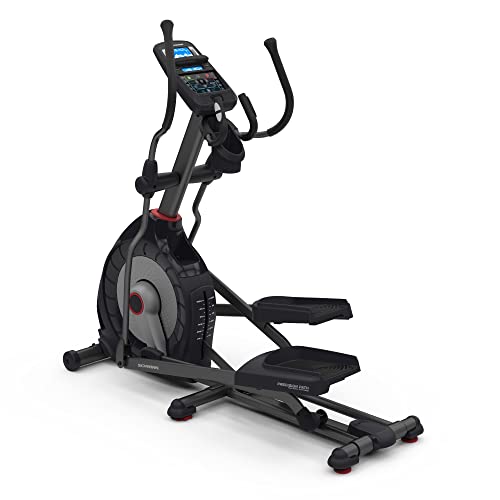
Schwinn 470 Elliptical Machine
The stride here is long enough that most adults never feel cramped, and the resistance range means a beginner will not outgrow it after a few months. Adjustable ramp incline changes which muscles do the work, which keeps sessions from feeling repetitive. Owners report it runs quietly enough for shared spaces.
Pros
- Comfortable stride for most heights
- Wide resistance range suits progression
- Quiet magnetic resistance
Cons
- Large footprint for a spare room
- Assembly takes two people

Sunny Health & Fitness SF-E905 Elliptical
This is the machine to buy when you are not yet sure the habit will stick. It is compact, simple and covers steady state cardio without pretending to be a gym machine. The short stride is the main compromise, and it matters more the taller you are.
Pros
- Low commitment entry point
- Small enough for apartments
- Simple to assemble alone
Cons
- Short stride feels cramped for taller users
- Manual tension rather than digital resistance

Cubii JR1 Under Desk Elliptical
Used from a chair, this removes balance and weight bearing from the equation entirely, which is why it suits people easing back into movement. It fits under a desk and works while you do something else. It will not replace a full elliptical, and it is not trying to.
Pros
- Extremely low impact and low intimidation
- Usable while working or watching television
- Quiet enough for an office
Cons
- No upper body involvement
- Limited intensity ceiling

NordicTrack FS14i FreeStride Trainer
The FreeStride design lets the stride path change between elliptical, treadmill and stepper motions without adjusting anything, so the machine adapts to how you move. Guided sessions on screen give beginners something to follow. It is a bigger investment in both space and money.
Pros
- Stride adapts naturally to your motion
- Guided workouts help build a routine
- Strong build quality
Cons
- Best features rely on a subscription
- Needs substantial floor space

ProForm Carbon EL Elliptical
ProForm builds this around trainer led sessions that adjust the machine for you, which removes the guesswork that stalls a lot of beginners. Resistance changes automatically as the session progresses. Without the app, it works as a competent basic elliptical.
Pros
- Structured sessions remove planning
- Auto resistance keeps intensity honest
- Reasonable footprint
Cons
- Most value is behind the app
- Stride is shorter than premium rivals

Bowflex Max Trainer M6
The compact hybrid motion here is more demanding than a standard elliptical, which suits beginners who are short on time rather than short on effort. Sessions are designed around brief high intensity intervals. The smaller footprint is a genuine advantage in a flat.
Pros
- Effective in short workouts
- Smaller footprint than full ellipticals
- Strong upper body involvement
Cons
- Steeper motion is harder for absolute beginners
- Console is basic compared to touchscreen rivals
Niceday Elliptical Machine
A heavy flywheel and belt drive make this one of the quieter machines you can put in a shared home, which matters if you exercise early or live above someone. Resistance is smooth through the range. The console is basic but does not get in the way.
Pros
- Very quiet in operation
- Smooth resistance changes
- Straightforward to assemble
Cons
- Shorter stride than premium options
- Minimal built in programs
The lineup, side by side
| # | Model | Stride length | Best for | Score | Price |
|---|---|---|---|---|---|
| 1 | Schwinn 470 Elliptical Machine | 20 inches | Best overall | 9.4 | Check price |
| 2 | Sunny Health & Fitness SF-E905 Elliptical | Short, compact design | Best budget | 9.2 | Check price |
| 3 | Cubii JR1 Under Desk Elliptical | Seated under desk elliptical | Best for very low impact | 9.0 | Check price |
| 4 | NordicTrack FS14i FreeStride Trainer | Variable up to 32 inches | Best for varied workouts | 8.7 | Check price |
| 5 | ProForm Carbon EL Elliptical | 18 inches | Best guided training | 8.5 | Check price |
| 6 | Bowflex Max Trainer M6 | Hybrid elliptical and stepper | Best for short sessions | 8.2 | Check price |
| 7 | Niceday Elliptical Machine | 16 inches | Best for quiet use | 8.0 | Check price |
What to look for
Stride length is the comfort spec A stride around 20 inches suits most adults, and shorter strides feel choppy the taller you are. Compact budget machines often use a much shorter stride to save space, which is fine for someone under about five foot six and awkward above it. If one specification decides whether you keep using the machine, this is it.
Resistance range matters for your second month Beginners rarely use high resistance in week one, but a machine with only eight levels becomes limiting quickly once fitness improves. Twenty or more digital levels, as on the Schwinn 470, gives you somewhere to progress. Manual tension knobs also make it hard to repeat a workout at the same intensity.
Flywheel weight controls smoothness and noise A heavier flywheel carries momentum through the stride, which is what makes a machine feel fluid rather than jerky. It also tends to run quieter. This is where budget machines most obviously differ from mid range ones, and it is worth paying for if the elliptical lives in a shared space.
Measure the space, including ceiling height Ellipticals raise you off the floor, so a tall user in a room with low ceilings can hit their head at the top of the stride. Add the pedal height to your own height and check the clearance. Also allow walking room at both sides, since these machines are awkward to squeeze past.
Frequently asked questions
Is an elliptical good for complete beginners?
Yes. The motion is low impact and self limiting, so it is easier on knees and hips than running. Starting with short sessions at low resistance and building duration before intensity is the approach most trainers recommend.
How long should a beginner use an elliptical?
Short sessions of ten to twenty minutes several times a week is a reasonable start. Consistency matters far more than session length early on.
Do I need moving handlebars?
Moving handles bring the upper body into the workout and increase calorie burn, but they also make balance harder at first. Most machines here let you hold the fixed grips instead while you get comfortable.
Are ellipticals loud enough to annoy neighbours?
Magnetic resistance machines with heavy flywheels are quiet, and the Niceday model is among the quietest here. Noise usually comes from the frame flexing or a light flywheel rather than the resistance itself.
How much space does an elliptical need?
Plan for the machine footprint plus roughly two feet of clearance behind and to the sides. Compact models such as the Bowflex Max Trainer M6 are the realistic choice for small rooms.
Is assembly difficult?
Most take one to three hours and are far easier with two people, since the frame sections are heavy. Some retailers offer assembly at checkout, which is worth considering for the larger machines.
Do I need a subscription to use these?
No machine here requires one to function. NordicTrack and ProForm models hold their guided training behind a subscription, but manual workouts still run without it.
Elliptical or treadmill for a beginner?
An elliptical is gentler on joints and generally quieter, while a treadmill better matches everyday walking. If joint comfort is a concern, the elliptical is the safer starting point.
Our pick
The Schwinn 470 is the beginner elliptical we would recommend to most people because the stride and resistance range leave room to improve rather than forcing an upgrade. If budget is the deciding factor, the Sunny Health SF-E905 gets you moving for far less. Anyone needing the gentlest possible start should look at the seated Cubii JR1.