External Hard Drives, from Backup to Console Storage
The WD My Passport 5TB is the best all round external hard drive for most people, balancing capacity and portability. The Samsung T7 Shield 2TB is the pick when transfer speed matters, and the Toshiba Canvio Basics 2TB covers simple, low cost backup duty.
For most people the WD My Passport 5TB is the sensible external hard drive, because it holds years of photos and documents yet still fits in a coat pocket. If you move large video files every day, the Samsung T7 Shield 2TB is faster by a wide margin, and the Toshiba Canvio Basics 2TB handles plain backups without fuss.
External storage is confusing because two drives with the same capacity can behave completely differently, one spinning platter unit crawling along at hard disk speed while a solid state unit finishes the same copy in a fraction of the time. We compared published interface specifications, drive type, bus power requirements, enclosure protection and warranty terms, then weighed those against what owners report about reliability and cable quality over long periods of use.
How to pick the right one
Work out your real capacity need first Buyers routinely overspend on speed and underspend on space. Check the actual size of the folders you plan to copy, add the photos and video sitting on your phone, then double the total to leave room for a few years of growth. A 2TB drive covers a typical documents and photo library comfortably, while 4TB and above starts to make sense once video, game installs or full system images enter the picture.
Solid state or mechanical A mechanical drive gives you the most storage for the money and is perfectly good for archives you touch occasionally. A solid state drive costs considerably more per terabyte but transfers files several times faster and has no moving parts to damage. The rough rule is simple, choose mechanical for backup and bulk storage, choose solid state if you will be editing or launching software directly from the drive.
Check the port and cable you actually have A drive rated at 10Gbps will run at the speed of whatever it is plugged into, so an older USB 2.0 laptop port throttles even the quickest SSD. Look at the connector on the drive as well, since Micro-B and Type-C cables are not interchangeable. Buyers with newer laptops that only carry Type-C ports should confirm a suitable cable is in the box rather than assuming.
Formatting, encryption and backup software Most drives ship formatted for Windows, which means Macs can read but not write to them until you reformat. That takes minutes but wipes the drive, so do it before copying anything. If the contents are sensitive, prefer a drive with built in password protection rather than relying on folder level tricks, and set up an automated backup schedule so the drive is actually used rather than sitting unplugged.
The top picks, ranked

Western Digital WD My Passport 5TB Portable HDD
The My Passport packs a large mechanical drive into a slim shell that draws all its power from a single USB cable. Western Digital bundles backup software and hardware level password protection, which covers the two jobs most buyers actually want. It is the drive to buy when capacity per unit matters more than raw speed.
Pros
- Huge capacity in a pocket sized enclosure
- Password protection and backup software included
- No mains adapter to carry
Cons
- Mechanical speeds feel slow next to an SSD
- Spinning platters dislike knocks and drops
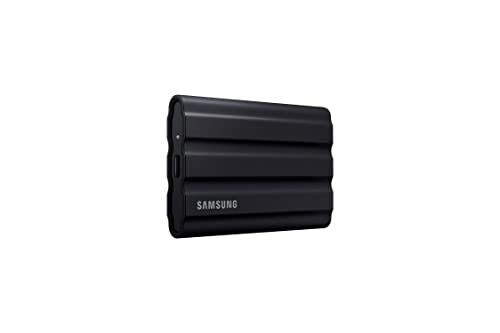
Samsung T7 Shield Portable SSD 2TB
The T7 Shield wraps a fast solid state drive in a grippy rubber skin rated for water and dust ingress. Because there are no moving parts, transfers finish quickly and the unit shrugs off the bumps that would worry a mechanical drive. Owners report it stays usable as a working scratch disk for video editing rather than just an archive.
Pros
- Very fast sequential transfer speeds
- Rubberised IP65 rated body
- Small enough for a shirt pocket
Cons
- Costs far more per terabyte than a mechanical drive
- Maximum capacity trails big desktop drives

Seagate Portable 2TB External Hard Drive STGX2000400
Seagate keeps this one deliberately plain, a 2TB mechanical drive, a cable and nothing else to configure. It mounts on Windows out of the box and reformats for Mac in a couple of minutes. For a second copy of a photo library or a media dump for a smart TV, the simplicity is the point.
Pros
- Plug and play with no setup software
- Slim casing travels well
- Widely stocked and easy to replace
Cons
- Short warranty compared with rivals
- No hardware encryption option

Toshiba Canvio Basics 2TB Portable Hard Drive
The Canvio Basics strips external storage back to the essentials with a matte black shell and a USB cable. There is no bundled suite and no status screen, just capacity that Windows recognises instantly. It suits anyone who wants an offline backup copy sitting in a drawer rather than a daily driver.
Pros
- Among the lowest cost per terabyte here
- Very light and simple to store
- Recognised instantly by Windows
Cons
- Needs reformatting for full Mac use
- Plastic shell offers little impact protection
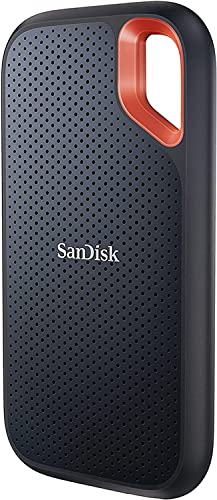
SanDisk Extreme Portable SSD V2 1TB
SanDisk builds this SSD around a silicone shell with a carabiner loop, so it can clip to a camera bag on a shoot. The IP55 rating covers dust and light water spray, which matters more on location than in an office. Speeds sit well ahead of any mechanical drive on this list.
Pros
- Carabiner loop for camera bags and harnesses
- Dust and spray resistant housing
- Fast enough to edit directly from
Cons
- Modest capacity for the money
- Can run warm during sustained writes

WD Elements Desktop 8TB External Hard Drive
This is a full sized desktop drive with its own mains adapter, and that lets Western Digital fit far more storage than any bus powered unit. It is the natural home for a complete system image, a media server library or years of raw footage. It stays on a desk, so treat it as a base station rather than a travel drive.
Pros
- Enormous capacity for whole system backups
- Strong cost per terabyte
- Stable upright footprint
Cons
- Needs a mains socket, so not portable
- Audible spin up and seek noise

LaCie Rugged Mini 2TB External Hard Drive
The orange rubber bumper on the Rugged Mini is not just styling, it absorbs the drops that kill bare mechanical drives in transit. LaCie includes rain and pressure resistance plus a data recovery service offer with the warranty. Photographers and video crews keep buying it because it survives being thrown into a kit bag.
Pros
- Genuinely tough shell for field work
- Recovery service included with warranty
- Bus powered from one cable
Cons
- Slower than any SSD in this roundup
- Bulkier than plain portable drives
How they compare
| # | Model | Capacity | Best for | Score | Price |
|---|---|---|---|---|---|
| 1 | Western Digital WD My Passport 5TB Portable HDD | 5TB | Best overall | 9.4 | Check price |
| 2 | Samsung T7 Shield Portable SSD 2TB | 2TB | Best for speed | 9.2 | Check price |
| 3 | Seagate Portable 2TB External Hard Drive STGX2000400 | 2TB | Best value | 9.0 | Check price |
| 4 | Toshiba Canvio Basics 2TB Portable Hard Drive | 2TB | Best budget | 8.8 | Check price |
| 5 | SanDisk Extreme Portable SSD V2 1TB | 1TB | Best for outdoor use | 8.6 | Check price |
| 6 | WD Elements Desktop 8TB External Hard Drive | 8TB | Best for large backups | 8.3 | Check price |
| 7 | LaCie Rugged Mini 2TB External Hard Drive | 2TB | Best for creative work | 8.0 | Check price |
Common questions
How long does an external hard drive last?
Manufacturers generally quote three to five years of typical use for mechanical drives, and warranties usually run one to three years. Solid state drives have no moving parts and often outlast that in light duty, but neither type should be treated as permanent. Keeping two copies of anything important is the only reliable protection.
Can I use the same drive with Windows and Mac?
Yes, if you format it as exFAT, which both operating systems can read and write. Drives usually arrive formatted as NTFS, which macOS can read only. Reformatting erases the drive, so do it before you copy any files across.
Do I need a mains adapter?
Portable 2.5 inch drives and solid state drives draw all their power from the USB cable, so no adapter is needed. Desktop 3.5 inch drives such as large capacity backup units require a mains supply and are designed to stay on a desk.
Is an SSD worth the extra outlay?
It depends on how you use the drive. For archive copies that you access occasionally, a mechanical drive gives far more capacity for the same outlay. If you edit video, run software or copy very large files regularly, the speed difference is dramatic and worth it.
Will an external drive work with a games console?
Most consoles support USB external storage, though the rules differ by generation. Older titles usually run fine from an external mechanical drive, while the newest generation games often require internal or specified expansion storage. Check your console maker’s current storage guidance before buying.
What does an IP rating on a drive mean?
It describes resistance to dust and water. An IP55 rated drive handles dust and low pressure water jets, while IP65 adds full dust tightness. These ratings apply to the enclosure, not to being submerged, so a rated drive still needs drying before it is plugged in.
Should I unplug the drive when I finish?
Always eject the drive through the operating system before pulling the cable, since a write can still be in progress even when the copy dialogue has closed. Beyond that, leaving a backup drive disconnected between uses reduces its exposure to power surges and to ransomware that spreads across mounted volumes.
Why is my new drive showing less space than advertised?
Manufacturers count a terabyte as one trillion bytes, while operating systems calculate in binary units. That accounting difference makes a 2TB drive report roughly 1.81TB in Windows. Formatting overhead accounts for a small additional amount, and nothing is wrong with the drive.
Our take
The WD My Passport 5TB is the drive most people should buy, offering serious capacity in a bus powered case that travels easily. Choose the Samsung T7 Shield 2TB instead if transfer speed and physical toughness matter more than raw capacity, or the WD Elements Desktop 8TB when the goal is one enormous backup target on a desk.