Fast Portable SSDs for Backups and Video Files
The Samsung T7 Shield is our overall pick for its rugged rubberized shell, dependable speed, and IP65 dust and water resistance. The SanDisk Extreme Pro wins on raw performance with faster read and write rates, while the Crucial X9 Pro offers strong value for anyone wanting a fast, compact drive without overspending.
If you want a fast external drive without decoding spec sheets, the Samsung T7 Shield leads our list for its rugged build and reliable speed, followed by the SanDisk Extreme Pro for raw performance and the Crucial X9 Pro for value. Below we rank 7 real models so you can match one to how you move and back up your files.
Choosing a portable SSD is trickier than it looks because advertised speeds assume the right port, and durability and sustained performance vary more than the headline numbers suggest. To pick these 7, we compared published specifications for read and write speed, interface, ruggedness, capacity, and encryption, then weighed them against how owners report each drive holds up for backups, photo and video work, and travel.
Our top picks
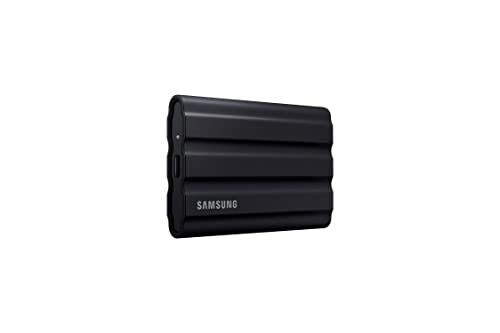
Samsung T7 Shield
The T7 Shield wraps a fast USB 3.2 Gen 2 drive in a grippy rubberized shell rated IP65 for dust and water resistance, and owners report it shrugs off drops and travel well. It delivers dependable read and write speeds for everyday backups and media work, making it a well-rounded pick for most people.
Pros
- Rubberized IP65 shell resists dust and water
- Dependable, consistent read and write speeds
- Compact and light for travel
Cons
- Not the fastest drive for large sustained transfers
- Gen 2 interface is slower than USB4 drives
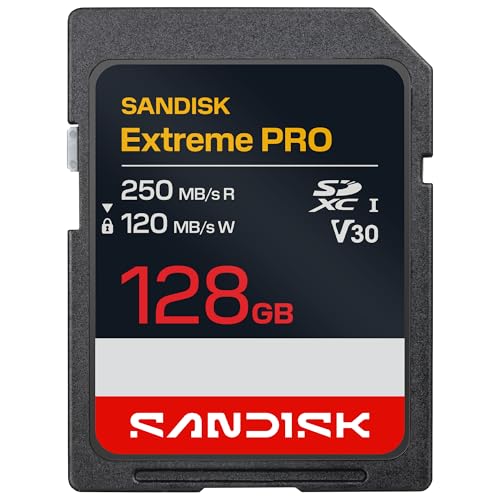
SanDisk Extreme Pro
The Extreme Pro uses a faster USB 3.2 Gen 2×2 interface to push higher read and write rates, which owners report as a real advantage for moving large video files. It carries an IP65 rating and a carabiner loop, though its top speeds require a computer with a matching high-bandwidth port.
Pros
- High read and write speeds for big files
- IP65 rating with a rugged forged shell
- Carabiner loop for clipping to a bag
Cons
- Top speed needs a Gen 2×2 port to reach
- Runs warmer during long transfers
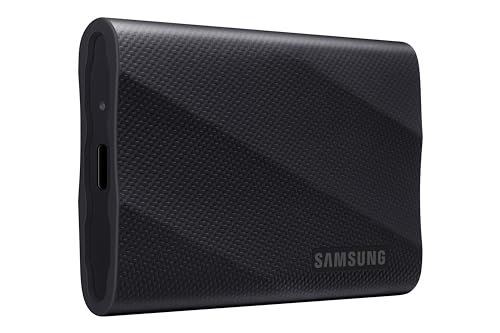
Samsung T9
The T9 steps up to a USB 3.2 Gen 2×2 interface with strong sustained performance, and owners report it holds speed well during long transfers thanks to its heat management. Its rubberized grip and dependable throughput make it a solid choice for photographers and video editors working off an external drive.
Pros
- Fast Gen 2×2 speeds with good heat handling
- Holds performance during long transfers
- Grippy shell that is easy to handle
Cons
- Needs a Gen 2×2 port for full speed
- No formal IP water resistance rating

Crucial X9 Pro
The X9 Pro pairs a compact, pocketable body with a USB 3.2 Gen 2 interface and IP55 dust and water resistance, and owners report reliable speeds for the price. It is a sensible everyday drive for backups and file transfer, offering rugged protection and dependable performance without a premium position.
Pros
- Compact, pocketable design
- IP55 rating for dust and water resistance
- Reliable Gen 2 speeds for the price
Cons
- Gen 2 interface trails Gen 2×2 drives
- No hardware button for encryption

SanDisk Extreme
The SanDisk Extreme delivers solid USB 3.2 Gen 2 speeds in a IP65-rated body with a carabiner loop, and owners report it is a durable, no-fuss travel drive. It sits below the Extreme Pro on speed but keeps the same rugged focus, making it a dependable option for photographers on the move.
Pros
- IP65 rating with a rugged design
- Carabiner loop for easy carrying
- Consistent Gen 2 speeds
Cons
- Slower than Gen 2×2 drives
- No thermal shell for very long transfers
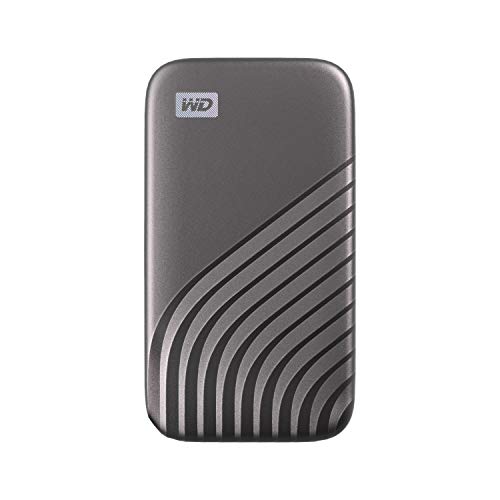
WD My Passport SSD
The My Passport SSD combines USB 3.2 Gen 2 speeds with built-in 256-bit AES hardware encryption and password protection, which owners value for keeping sensitive files secure. Its slim metal body is easy to carry, though it lacks a formal water resistance rating found on rugged rivals.
Pros
- Built-in 256-bit AES hardware encryption
- Password protection with included software
- Slim, pocketable metal design
Cons
- No formal water resistance rating
- Gen 2 speeds trail the fastest drives

Kingston XS2000
The XS2000 is one of the smallest fast drives here, pairing a USB 3.2 Gen 2×2 interface with a tiny body and a removable rubber sleeve. Owners report high speeds in a truly pocketable size, though the compact shell can warm up and its small footprint makes it easy to misplace.
Pros
- Very high Gen 2×2 speeds in a tiny body
- Removable rubber sleeve adds protection
- Extremely pocketable and light
Cons
- Small shell can run warm on long transfers
- Compact size is easy to misplace
Side by side
| # | Model | Read speed | Best for | Score | Price |
|---|---|---|---|---|---|
| 1 | Samsung T7 Shield | Up to 1050 MB per second | Best overall | 9.4 | Check price |
| 2 | SanDisk Extreme Pro | Up to 2000 MB per second | Best for speed | 9.2 | Check price |
| 3 | Samsung T9 | Up to 2000 MB per second | Best for creators | 9.0 | Check price |
| 4 | Crucial X9 Pro | Up to 1050 MB per second | Best value | 8.8 | Check price |
| 5 | SanDisk Extreme | Up to 1050 MB per second | Best rugged budget | 8.6 | Check price |
| 6 | WD My Passport SSD | Up to 1050 MB per second | Best with encryption | 8.4 | Check price |
| 7 | Kingston XS2000 | Up to 2000 MB per second | Best compact | 8.1 | Check price |
How to choose
Speed and interface A portable SSD is only as fast as the slower of the drive and the port it plugs into. Gen 2 drives like the T7 Shield reach around 1050 MB per second, while Gen 2×2 drives like the SanDisk Extreme Pro, Samsung T9, and Kingston XS2000 can hit roughly 2000 MB per second, but only on a matching high-bandwidth port. Check your computer’s ports before paying for speed you cannot use.
Durability and water resistance If you travel or shoot on location, durability matters as much as speed. IP ratings describe dust and water resistance, so an IP65 drive like the T7 Shield or SanDisk Extreme handles dust and light splashes, while an IP55 drive like the Crucial X9 Pro offers slightly less water protection. Rubberized shells and drop resistance also help a drive survive being dropped in a bag or on set.
Capacity and value Portable SSDs come in a range of capacities, and picking the right one depends on your files. Photo and document backups fit comfortably on smaller drives, while 4K video and large game libraries fill space quickly, so a larger capacity is worth it for creators. Per-gigabyte value usually improves at higher capacities, so buying more than you need today can be more economical over time.
Encryption and security If you carry sensitive files, hardware encryption protects your data if the drive is lost or stolen. The WD My Passport SSD includes built-in 256-bit AES encryption with password protection, which is stronger and simpler than relying on software alone. Even without hardware encryption, most operating systems let you encrypt an external drive, so consider security as part of your choice rather than an afterthought.
Common questions
What is the best portable SSD overall in 2026?
Based on specifications and owner feedback, the Samsung T7 Shield is our overall pick. It combines dependable USB 3.2 Gen 2 speeds with a rugged rubberized shell and IP65 dust and water resistance, making it a well-rounded choice for most people.
How fast should a portable SSD be?
Speed depends on the interface and your computer’s port. Gen 2 drives reach around 1050 MB per second, while Gen 2×2 drives like the SanDisk Extreme Pro and Samsung T9 can approach 2000 MB per second, but only on a matching high-bandwidth port.
What does an IP65 rating mean on an SSD?
An IP65 rating means the drive is dust tight and resists low-pressure water jets, so it handles dust and light splashes. The T7 Shield and SanDisk Extreme carry IP65, while the Crucial X9 Pro is rated IP55 for slightly less water protection.
Which portable SSD is best for video editing?
The Samsung T9 is a strong creator pick because its Gen 2×2 interface and heat management hold speed during long transfers of large video files. The SanDisk Extreme Pro is another fast option if your computer has a matching high-bandwidth port.
Do I need hardware encryption on a portable SSD?
If you carry sensitive files, hardware encryption like the 256-bit AES on the WD My Passport SSD protects your data if the drive is lost or stolen. Most operating systems can also encrypt an external drive in software if your drive lacks it.
How much storage capacity do I need?
It depends on your files. Documents and photo backups fit on smaller drives, while 4K video and large game libraries fill space fast, so creators benefit from higher capacities. Per-gigabyte value usually improves at larger sizes, so buying ahead can be economical.
Will a fast SSD reach its top speed on any computer?
No. A Gen 2×2 drive like the Kingston XS2000 only reaches its advertised speed on a Gen 2×2 port. On a slower port it still works but caps at that port’s bandwidth, so check your computer’s ports before buying for speed.
Are portable SSDs durable enough for travel?
Rugged models are built for it. The T7 Shield, SanDisk Extreme, and SanDisk Extreme Pro carry IP65 ratings and rubberized or forged shells that resist dust, splashes, and drops, making them dependable choices for travel and location work.
Can I use a portable SSD with both a laptop and a game console?
Most portable SSDs here work across computers and consoles for storage or backups, though console compatibility and formatting requirements vary by platform. Check your device’s supported file system, and reformat the drive if needed before first use.
Why does my SSD get warm during large transfers?
Sustained transfers generate heat, and compact drives like the Kingston XS2000 warm up more because there is less shell to dissipate it. Drives with better thermal design, such as the Samsung T9, hold speed longer, but brief warmth during big transfers is normal.
The verdict
For most people, the Samsung T7 Shield is the portable SSD to buy, thanks to its rugged IP65 build and dependable everyday speeds. Choose the SanDisk Extreme Pro if you need the fastest transfers for large video files, or the Crucial X9 Pro if you want a compact, rugged drive that delivers reliable performance without overspending.