Fishing Pliers That Cut Braid and Remove Hooks Without Rust
KastKing Cutthroat 7-Inch pliers earn the top spot for tungsten cutters that shear braid cleanly and a coating built to resist salt corrosion. Piscifun Aluminum Fishing Pliers are the lightest option for anglers who wear pliers all day in saltwater. Booms Fishing X1 delivers similar performance for freshwater anglers at a lower cost.
KastKing Cutthroat pliers top this list for all-round strength. Piscifun Aluminum suits anglers who want the lightest saltwater tool. Booms Fishing X1 covers freshwater work for far less money.
Pliers look identical in a product photo, yet one pair cuts braid for years while another seizes after a single salt trip. We compared cutter alloys, frame coatings, jaw geometry and whether the cutters can be replaced. Owners report saltwater exposure is where the real gap between brands shows up, so the ranking weights tools built to survive that.
Our top picks
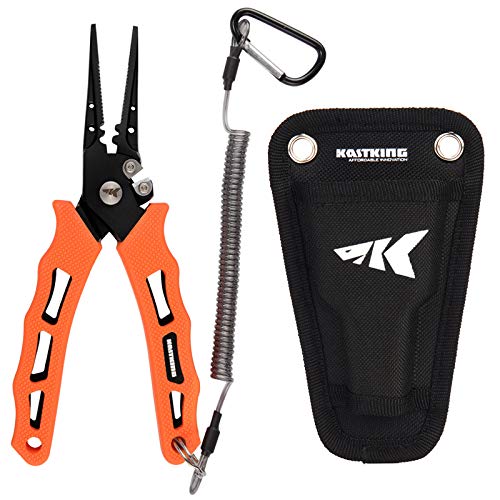
KastKing Cutthroat 7-Inch Fishing Pliers
Tungsten carbide cutters shear braid instead of fraying it. A corrosion-resistant coating holds up better than the price suggests. Owners report the sheath and coiled lanyard are genuinely usable, not throwaway extras.
Pros
- Shears braid without fraying
- Long nose reaches deep hooks safely
- Sheath and lanyard included
Cons
- Heavier than aluminium-framed pliers
- Coating scuffs with rough use

Piscifun Aluminum Fishing Pliers
An anodised aluminium frame keeps this pair light enough for all-day wear. Salt spray beads off far better than it does on plain steel. Replaceable tungsten cutters extend the useful life well past a typical pair.
Pros
- Very light for all-day wear
- Replaceable cutters extend service life
- Split ring tip speeds up lure swaps
Cons
- Aluminium jaws flex under heavy prying
- Anodising marks over time
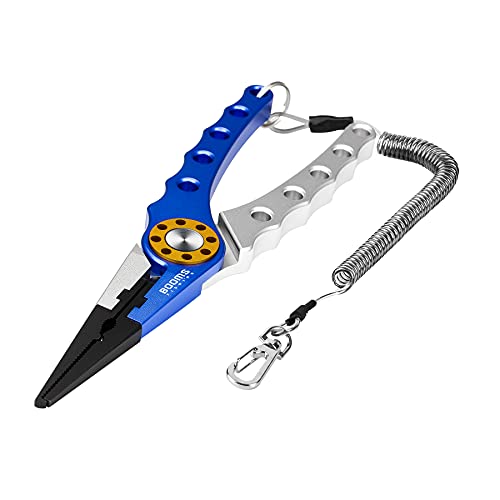
Booms Fishing X1 Aluminum Fishing Pliers
Spring-loaded aluminium jaws handle hook removal, crimping and braid cutting on regular freshwater trips. A coiled lanyard keeps a dropped pair from disappearing over the gunwale. Owners report a quick rinse after saltwater use keeps the action smooth.
Pros
- Strong value for the build quality
- Spring return speeds up repeat use
- Light enough to forget on a belt
Cons
- Needs a rinse after salt exposure
- Not built for heavy offshore work

Rapala Mag Spring Pliers
A magnetic sheath holds these pliers secure and releases them in one motion. That suits anglers constantly swapping hardbaits between casts. Side cutters and spring action cover routine hook and line work without fuss.
Pros
- Fast one-hand draw and return
- Reliable spring action
- Familiar, proven design
Cons
- Cutters are not replaceable
- Less corrosion resistant than anodised alloy

Gerber Magniplier Fishing Pliers
An angled, oversized handle gives more leverage than a straight design offers. That extra torque helps when a hook sits buried in cartilage. Owners report the size is the tradeoff, since it takes up more room in a tackle bag.
Pros
- Strong leverage on stubborn hooks
- Comfortable grip in wet or cold hands
- Tool-grade construction throughout
Cons
- Bulkier than standard pliers
- Heavier to wear on a belt all day

Bubba 7.5-Inch Pistol Grip Pliers
A textured pistol grip stays secure with wet, slimy or gloved hands, where smooth alloy handles slip. Length and jaw strength suit larger species and heavier hardware. It carries more plier than a pond angler needs, which is the point for offshore work.
Pros
- Grip stays secure when wet
- Handles heavy hooks and split rings
- Coating resists corrosion well
Cons
- Long nose is awkward on small hooks
- One of the heavier options here

SAMSFX Fishing Pliers
A basic stainless pair covers hook removal and line cutting for occasional anglers. An included retractor and lanyard stop it going overboard on the first trip. Owners report it suits a spare tackle box rather than daily saltwater use.
Pros
- Cheapest way to get a working pair
- Retractor included
- Fine for occasional freshwater trips
Cons
- Cutters dull faster on braid
- Not a long-term saltwater tool
The lineup, side by side
| # | Model | Length | Best for | Score | Price |
|---|---|---|---|---|---|
| 1 | KastKing Cutthroat 7-Inch Fishing Pliers | 7 inches | Best overall | 9.4 | Check price |
| 2 | Piscifun Aluminum Fishing Pliers | Anodised aluminium | Best for saltwater | 9.2 | Check price |
| 3 | Booms Fishing X1 Aluminum Fishing Pliers | Aluminium | Best value | 9.0 | Check price |
| 4 | Rapala Mag Spring Pliers | Spring-loaded pliers | Best for lure anglers | 8.8 | Check price |
| 5 | Gerber Magniplier Fishing Pliers | Angled ergonomic handle | Best for grip comfort | 8.5 | Check price |
| 6 | Bubba 7.5-Inch Pistol Grip Pliers | 7.5 inches | Best for big fish | 8.2 | Check price |
| 7 | SAMSFX Fishing Pliers | Stainless steel | Best budget | 8.0 | Check price |
How to choose
What cutter material lasts longest on braided line? Braided line destroys soft cutting blades fast. Once cutters fray line instead of shearing it, the pliers become nothing more than an expensive hook remover. Tungsten carbide holds an edge far longer than plain steel. Replaceable cutter heads are worth the extra cost, since a fresh blade restores a worn pair for a fraction of what new pliers cost. Confirm replacement blades are actually sold before counting on that feature.
Aluminium, stainless or coated steel: which frame holds up best? Anodised aluminium is the lightest frame and resists salt well, making it the default for anglers who wear pliers on a belt all day. Stainless steel handles prying and crimping with more strength, though it adds weight and is not automatically rustproof, since many stainless tools still spot over time. Coated carbon steel gives the strongest jaws for the money. It also demands a rinse and a light oil coat after every salt trip.
How does nose shape affect which jobs pliers handle? A long needle nose reaches hooks set deep in a fish’s throat and keeps fingers clear of teeth. That reach is the main safety argument for a longer tool. Shorter, stouter noses give better leverage on split rings and crimps. Split ring tips save real time for lure anglers, though they add bulk to the jaws for everything else.
What sheath, lanyard and rinse routine keeps pliers rust-free? Losing pliers over the side is the most common failure, and corrosion in a damp tackle bag runs a close second. A coiled lanyard and a sheath that drains water solve both problems. Rinse in fresh water at the end of a salt trip, then work the spring a few times to flush the pivot. A drop of light oil on the joint keeps the action smooth. Owners report this routine alone doubles the working life of mid-range pliers.
Common questions
What length of fishing pliers should I buy?
Six to seven inches suits most freshwater and inshore work. Step up to 7.5 inches or longer for toothy species or hooks set deep in the throat.
Do I need tungsten carbide cutters for braid?
Yes, if braid is your main line. Softer blades round off fast and start crushing braid instead of cutting it, leaving frayed ends that will not pass through a guide.
Which fishing pliers are best for saltwater?
Anodised aluminium or coated stainless frames with replaceable tungsten cutters hold up longest against salt spray. The Piscifun Aluminum pair is built specifically around that combination.
Are aluminium pliers strong enough for big fish?
For hook removal, split rings and line cutting, yes. Heavy crimping or prying still favors a steel-framed tool like the Bubba pistol grip.
How do I stop fishing pliers from rusting?
Rinse them in fresh water after every saltwater trip, dry them, then oil the pivot and spring. Never store a wet pair in a closed sheath.
Can fishing pliers crimp leader sleeves?
Many include a crimping notch near the pivot that handles light sleeves. Heavy offshore leader crimps still call for a dedicated crimping tool.
What is a split ring tip used for?
It is a shaped nose that opens split rings without bending them, speeding up hook and lure swaps. Lure anglers rely on it constantly; bait anglers rarely touch it.
Are spring-loaded pliers worth buying?
Yes, for repeated use, since the jaws reopen on their own and free a hand to hold the fish. The spring is also a common failure point, so look for a sealed or replaceable design.
Should fishing pliers come with a sheath or a retractor?
A sheath protects the tool and keeps it accessible on a belt. A retractor stops it from hitting the water. Many anglers run both, clipping the retractor to a vest or belt loop.
Our pick
KastKing Cutthroat 7-Inch pliers deliver the most capability per dollar, with tungsten cutters that keep shearing braid and a nose long enough to keep fingers clear of teeth. Saltwater anglers wanting the lightest belt tool should look at the Piscifun Aluminum pair and its replaceable cutters. Booms Fishing X1 covers occasional freshwater use without a real compromise.