What Makes a Pair of Fishing Waders Actually Keep You Dry?
Frogg Toggs Hellbender Pro is the overall pick for breathable stockingfoot waders, with taped seams and a usable chest pocket. TIDEWE Chest Waders bring the most warmth for cold water. Redington Crosswater is the lightweight choice for long summer walk-ins.
Frogg Toggs Hellbender Pro is the sensible default for most anglers, a breathable stockingfoot wader with taped seams and enough room to layer underneath. TIDEWE Chest Waders add insulated boots for genuinely cold water. Redington Crosswater is the lighter option for walking long distances in summer.
A wader’s failure mode stays invisible on the hanger. Fabric breathability, seam taping, gravel guards and the crotch gusset decide whether a pair lasts three seasons or leaks in three months, and none of that shows in a product photo. We compared construction details, boot versus stocking configurations and insulation levels, then weighted the ranking toward the patterns owners report about where and when their waders start to seep.
The best picks, ranked

Frogg Toggs Hellbender Pro Stockingfoot Chest Wader
Multi-layer breathable nylon, taped seams and neoprene stocking feet pair with wading boots sold separately. It stays light enough to walk in for hours, and the cut is generous enough that a fleece layer underneath will not bind at the knees. Owners report the fabric handles brush and briars better than the weight suggests.
Pros
- Breathable enough for long walk-ins
- Roomy cut leaves space for layering
- Taped seams in the high stress areas
Cons
- Wading boots are an additional purchase
- Breathable fabric needs care around sharp brush

TIDEWE Insulated Bootfoot Chest Waders
Neoprene chest waders come with insulated rubber boots attached, aimed squarely at duck season and early spring wading. Neoprene traps warmth far better than any breathable shell, and the built-in boots mean nothing to pack or lace. Heat and weight are the trade, so these are not the waders for a summer afternoon.
Pros
- Genuinely warm in cold water
- No separate boots to buy or carry
- Tough enough for muddy banks and brush
Cons
- Hot and heavy in mild weather
- Attached boots limit sizing precision
Redington Crosswater Stockingfoot Wader
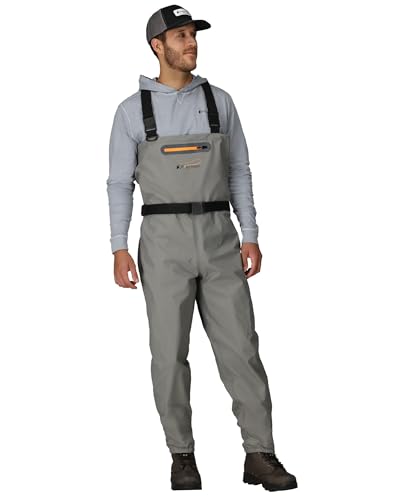
A fly-fishing brand pared this design back to a simple front pocket and a clean seam layout. It packs down small and stays the most comfortable choice here when the air is warm and the water is not. Fewer features means fewer places to fail, which is part of the appeal.
Pros
- Light and packable for hike-in water
- Clean, simple construction
- Good fit range through the torso
Cons
- Thin fabric needs care in thick cover
- Minimal pockets and storage

Frogg Toggs Amphib Bootfoot Chest Wader
Neoprene waders with attached boots target occasional cold-water use rather than every weekend on the water. The body offers real warmth, and the boots handle soft mud without pulling off your foot. Sizing runs generously, which suits layering but calls for careful ordering if you are between sizes.
Pros
- Warm and waterproof without a separate boot purchase
- Handles mud and soft bottoms well
- Hand warmer pocket is genuinely useful
Cons
- Sizing runs large through the body
- Neoprene traps heat on mild days

Compass 360 Deadfall Breathable Stockingfoot Wader
A more generous inseam and torso length solve the crotch-pulling problem taller anglers know well. Construction stays straightforward, with taped seams and a fleece-lined chest pocket. Owners report the fit is the reason they chose it, and the reason they stayed.
Pros
- Better torso and inseam length for tall builds
- Fleece pocket keeps hands functional
- Included wading belt
Cons
- Cut is too long for shorter anglers
- Fabric is not the most breathable here
Hodgman Mackenzie Nylon Bootfoot Chest Wader
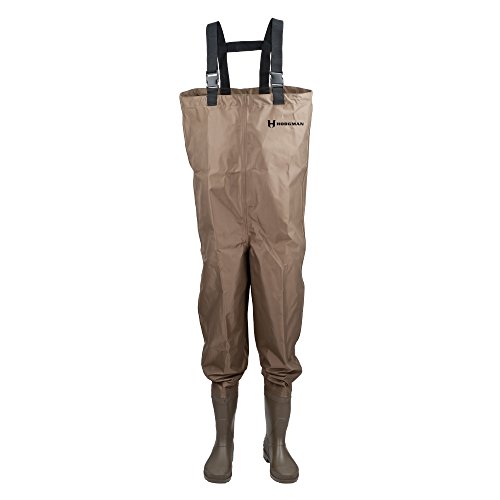
A basic nylon bootfoot wader suits anglers who wade a few times a year and do not want to think about fabric technology. It stays fully waterproof, rinses and stores easily, and costs little enough to keep in the truck. It does not breathe, so expect condensation on a long day.
Pros
- Very simple and easy to maintain
- Fully waterproof out of the bag
- Sensible choice for infrequent trips
Cons
- No breathability, so you get damp from the inside
- Loose fit flaps in current

Caddis Wading Systems Deluxe Breathable Stockingfoot Wader
This is the cheapest way into breathable stockingfoot waders without dropping to coated nylon. Fabric runs thinner than the premium options, so it rewards careful handling around barbed wire and brush. For a few dozen days a season on gentle water, it keeps you dry, which is the job that matters.
Pros
- Real breathability at an entry level
- Light to pack and carry
- Wide size range available
Cons
- Thinner fabric than the higher ranked picks
- Owners report seams need watching after heavy use
The lineup, side by side
| # | Model | Type | Best for | Score | Price |
|---|---|---|---|---|---|
| 1 | Frogg Toggs Hellbender Pro Stockingfoot Chest Wader | Breathable stockingfoot chest wader | Best overall | 9.4 | Check price |
| 2 | TIDEWE Insulated Bootfoot Chest Waders | Neoprene bootfoot chest wader | Best for cold water | 9.2 | Check price |
| 3 | Redington Crosswater Stockingfoot Wader | Breathable stockingfoot chest wader | Best for warm weather | 9.0 | Check price |
| 4 | Frogg Toggs Amphib Bootfoot Chest Wader | Neoprene bootfoot chest wader | Best value bootfoot | 8.7 | Check price |
| 5 | Compass 360 Deadfall Breathable Stockingfoot Wader | Breathable stockingfoot chest wader | Best for tall anglers | 8.5 | Check price |
| 6 | Hodgman Mackenzie Nylon Bootfoot Chest Wader | Nylon bootfoot chest wader | Best for occasional use | 8.2 | Check price |
| 7 | Caddis Wading Systems Deluxe Breathable Stockingfoot Wader | Breathable stockingfoot chest wader | Best budget breathable | 8.0 | Check price |
What to look for
Bootfoot or stockingfoot: which wader type fits your fishing? Bootfoot waders have the boot bonded on, so they go on fast, keep more warmth around the foot and suit cold, muddy conditions. Stockingfoot waders end in a neoprene sock and pair with separate wading boots, giving far better ankle support and a precise fit for walking on rock. Wading rivers and covering ground favors stockingfoot. Standing in cold marsh water favors bootfoot.
Breathable or neoprene: which material suits your season? Neoprene insulates, so it belongs in cold water and cold air. Breathable laminates let sweat vapor escape, keeping you far more comfortable when walking or when the air is warm, and you add warmth by layering underneath rather than in the wader itself. Most anglers fishing across seasons end up with a breathable pair and warm base layers, since one set covers more of the year.
Where do wader leaks actually start? The crotch seam and the seam where the leg meets the stocking foot fail most often, because both flex constantly. Buy roomy enough that squatting does not stretch the crotch tight, and always wear a wading belt so a fall does not fill the legs. Gravel guards keep grit out of the boot, where it wears fabric from the outside in.
What care routine doubles wader lifespan? Rinse waders in fresh water after each trip, especially after salt or silty water, then hang them inside out until fully dry before storing them right way out. Never store them folded in a hot vehicle, since heat and creases break down laminates. A patch kit and a spray-on water repellent restore surface performance long before the wader itself is finished.
Common questions
How do I find a leak in my waders?
Turn them inside out in a dark room and run a flashlight inside, then mark any pinholes visible from the outside. For slow seeps, spray the outside with rubbing alcohol and watch for dark spots appearing on the inside fabric. Most leaks turn up at seams or in the knee and crotch area.
Should I size up waders for layering?
Yes, if you fish in cold weather. You want room for a fleece or base layer without the fabric pulling tight when you kneel or step up a bank. Pay attention to stocking foot size too, since a tight sock cuts circulation and makes your feet cold faster than the water does.
Do I need a wading belt?
Always. A belt cinched at the waist limits how much water can enter if you go in, keeping the waders from becoming a weight. It is the single most important safety habit in wading, and many waders now include one for that reason.
Are breathable waders warm enough for winter fishing?
On their own, no. Breathable waders provide almost no insulation by design. Layered over merino or fleece bottoms with insulated socks, they cover cold conditions well, and many anglers prefer that adaptable system. For sustained standing in near-freezing water, neoprene is still the easier answer.
What boots go with stockingfoot waders?
Dedicated wading boots sized roughly one to two sizes above your normal shoe fit over the neoprene sock. Choose rubber lugged soles for general use and where felt is restricted, since felt soles can transfer invasive organisms between waterways and are banned in some regions.
How long should fishing waders last?
Several seasons is a fair expectation from a mid-range pair with regular use and proper drying, and heavy use in brushy country shortens that considerably. Most waders die from abrasion and seam fatigue rather than fabric failure, so care and careful walking matter more than the initial specification.
Can waders be repaired?
Small punctures and seam seeps repair well with a urethane-based wader repair adhesive, and the fix usually outlasts the surrounding fabric. Clean and dry the area thoroughly first, apply from the inside where possible, and cure fully before use. Widespread delamination is not economically repairable.
Are chest waders better than hip waders?
Chest waders are more versatile, since you can always wade shallower than the wader allows. Hip waders run cooler and quicker for small streams and shallow marsh, but leave no margin if the bottom drops away. Most anglers buying one pair should choose chest waders.
What is the best wader for cold water duck season?
TIDEWE Insulated Bootfoot Chest Waders suit that use best, since neoprene insulation and attached boots handle standing still in cold water longer than any breathable shell.
Our pick
Frogg Toggs Hellbender Pro is the pair most anglers should reach for, since breathable stockingfoot waders cover the widest range of conditions and this pair is built better than its position suggests. When the water turns genuinely cold, the insulated TIDEWE Chest Waders are the more comfortable answer. For summer walk-ins where weight matters most, the Redington Crosswater is the one to pack.