Top Nikon Flashes for Every Shooter
For most Nikon shooters, the Godox V860 III N is the top pick, offering powerful output, fast recycle, and a built-in radio receiver for wireless off-camera use, all at a reasonable price. Its main limitation is the proprietary battery, which requires a dedicated charger.
Choosing the right flash for your Nikon camera can elevate your photography, whether you shoot portraits, events, or macro. The market is crowded with options, from OEM units to third-party alternatives.
We analyzed specifications and owner feedback to bring you a curated list of the best flashes available on Amazon. Our focus is on real-world performance, reliability, and value for money.
Our top picks

Godox V860 III N
The Godox V860 III N is a powerful TTL flash with a built-in 2.4G wireless receiver, making it perfect for both on-camera and off-camera work. Its lithium-ion battery offers fast recycle times and long life.
Pros
- Fast recycle and long battery life
- Built-in radio receiver for easy off-camera use
- Excellent value for features
Cons
- Proprietary battery not compatible with AA
- Menu system can be complex for beginners
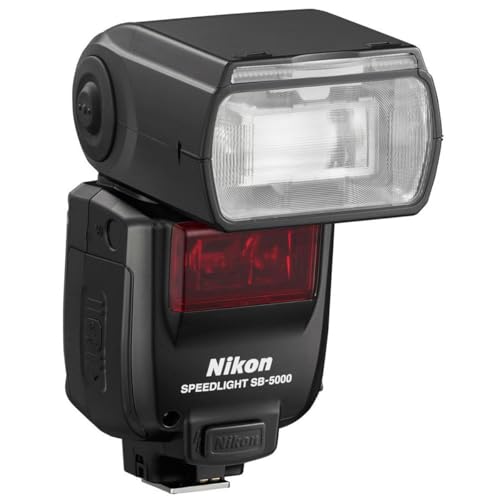
Nikon SB-5000
Nikon’s flagship speedlight offers top-tier build quality, advanced wireless radio control, and fast recharge. It is the go-to choice for professionals who demand the best.
Pros
- Superb build quality and reliability
- Fast and powerful with radio wireless
- Seamless integration with Nikon cameras
Cons
- Very expensive
- Requires separate WR-R10 for radio control

Nikon SB-700
The SB-700 offers a great balance of power, features, and price. It is smaller and lighter than the SB-5000 but still provides excellent TTL performance and durable construction.
Pros
- Compact and lightweight
- Intuitive controls
- Good value for Nikon quality
Cons
- No radio wireless (optical only)
- Guide number lower than SB-5000
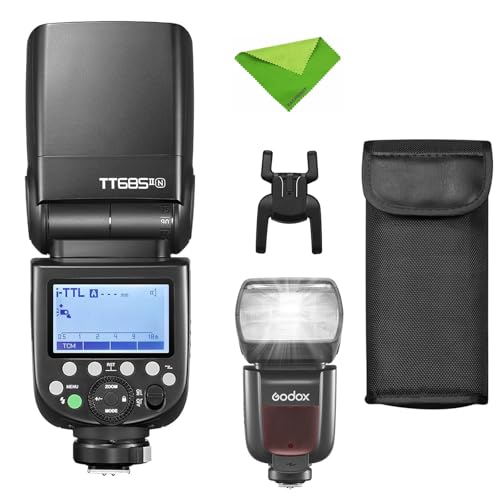
Godox TT685 II N
The Godox TT685 II N is a full-featured TTL flash at a fraction of the cost of Nikon’s own units. It works with the Godox X system for wireless operation.
Pros
- Affordable with TTL and HSS
- Compatible with Godox wireless system
- Solid build for the price
Cons
- AA batteries drain quickly
- Menu system less intuitive

Nikon SB-300
The SB-300 is a tiny flash that is perfect for casual photographers who want a simple bounce flash without bulk. It is ideal for travel and everyday snapshots.
Pros
- Very small and lightweight
- Simple operation
- Good for basic bounce flash
Cons
- Low power output
- No wireless or TTL remote capabilities

Yongnuo YN560 IV
The Yongnuo YN560 IV is a powerful manual flash with built-in radio trigger, making it a favorite among budget-conscious off-camera photographers.
Pros
- Low cost for radio capability
- Strong manual power
- Works as both commander and receiver
Cons
- No TTL (manual only)
- Plastic build feels less durable

Nikon R1C1
The Nikon R1C1 is a close-up speedlight kit with two SB-R200 wireless flash units, designed for macro photography. It offers precise control and positioning.
Pros
- Perfect for macro lighting
- Compact and flexible placement
- TTL control with Nikon cameras
Cons
- Low power output
- Expensive for macro only
Side by side
| # | Model | Guide number | Best for | Score | Price |
|---|---|---|---|---|---|
| 1 | Godox V860 III N | GN60 (m ISO 100, 200mm) | Best overall for Nikon shooters | 9.4 | Check price |
| 2 | Nikon SB-5000 | GN34.5 (m ISO 100, 35mm) | Best premium Nikon flash | 9.2 | Check price |
| 3 | Nikon SB-700 | GN28 (m ISO 100, 35mm) | Best Nikon flash for enthusiasts | 9.0 | Check price |
| 4 | Godox TT685 II N | GN60 (m ISO 100, 200mm) | Best budget TTL flash | 8.8 | Check price |
| 5 | Nikon SB-300 | GN18 (m ISO 100, 18mm) | Best compact for travel | 8.5 | Check price |
| 6 | Yongnuo YN560 IV | GN58 (m ISO 100, 105mm) | Best manual flash for off-camera | 8.3 | Check price |
| 7 | Nikon R1C1 | GN10 (m ISO 100, 24mm) | Best for macro photography | 8.0 | Check price |
What to look for
Questions worth asking
Will any Nikon flash work with my mirrorless camera?
Most newer Nikon flashes are compatible with mirrorless cameras when used on the hot shoe, but they may not support all advanced features like high-speed sync. Check compatibility with your specific model.
What is the difference between TTL and manual flash?
TTL (Through The Lens) automatically measures light and adjusts flash output for correct exposure. Manual flash requires you to set power levels yourself. TTL is convenient but manual gives consistent results in controlled situations.
Can I use third-party flashes on Nikon cameras?
Yes, many third-party flashes are designed for Nikon and support TTL. However, compatibility can vary. Look for flashes that specifically list Nikon compatibility.
How do I use a flash off-camera?
Off-camera flash requires either a physical cable, an optical trigger, or a radio trigger. Many modern flashes have built-in radio receivers, so you can trigger them wirelessly with a compatible commander unit.
What is high-speed sync (HSS)?
HSS allows you to use flash at shutter speeds faster than the normal sync speed (usually 1/200s). This is useful for outdoor portraits where you want a wide aperture in bright light.
Do I need a flash for macro photography?
A dedicated macro flash or ring light provides even, close-up illumination and helps avoid shadows from the lens. The Nikon R1C1 is designed for this purpose.
Can I use a Nikon flash on a non-Nikon camera?
Nikon flashes are designed for Nikon cameras, but they may work in manual mode on other brands with a standard hot shoe. TTL will not work cross-brand.
What is a guide number?
A guide number (GN) indicates flash power. Higher GN means the flash can illuminate a subject at a greater distance or with a smaller aperture. It is measured at a specific ISO and zoom setting.
How many flashes do I need for a studio setup?
A typical portrait setup uses at least two flashes: a key light and a fill light. Add a rim light or background light for more creative effects. Many photographers start with one flash and use reflectors.
Are rechargeable batteries better for flashes?
Rechargeable NiMH batteries are cost-effective and perform well. Some flashes use proprietary lithium-ion packs that offer faster recycle and longer life but cost more to replace.
Our pick
For most photographers, the Godox V860 III N is the best overall choice due to its powerful output, fast recycle, and built-in wireless features at a reasonable price. If you prefer an original Nikon product and have the budget, the SB-5000 is unmatched in build and integration. For those on a tight budget, the Yongnuo YN560 IV provides excellent manual performance for off-camera work.


