Top TTL Flashes for Sharper Photos in Any Setting
The Godox V1 is our top pick for most photographers because it offers powerful output, a fast recycle time, and a round head that produces even, natural-looking light. Its main limitation is the proprietary battery system, which requires carrying a spare if you shoot all day.
A TTL flash takes the guesswork out of manual exposure, letting your camera and flash communicate to produce balanced light automatically. Whether you are shooting events, portraits, or travel, a reliable TTL flash can be a game changer.
This roundup covers a range of options from compact units for mirrorless cameras to powerful strobes for studio work. We evaluated each based on specifications, owner reviews, and real-world performance to help you decide which one fits your needs.
Before you buy
Our top picks

Godox V1
The Godox V1 is a powerful round-head flash that delivers soft, even light. It features a lithium-ion battery with fast recycle times and built-in 2.4G wireless.
Pros
- Round head produces smooth, natural falloff
- Fast recycle and long battery life
- Excellent wireless integration
Cons
- Proprietary battery requires spare
- Slightly heavier than AA models

Profoto A10
The Profoto A10 is a high-end flash with a powerful 100Ws output and a patented AirTTL system. It offers superb build quality and consistent color.
Pros
- Excellent color consistency
- Durable and weather resistant
- Intuitive control interface
Cons
- Very expensive
- Heavier than many competitors

Canon Speedlite EL-100
The Canon EL-100 is a small and lightweight flash designed for Canon EOS R cameras. It provides TTL exposure, a bounce head, and simple controls.
Pros
- Very compact and portable
- Simple operation
- Affordable for Canon shooters
Cons
- Lower power output
- No built-in radio wireless
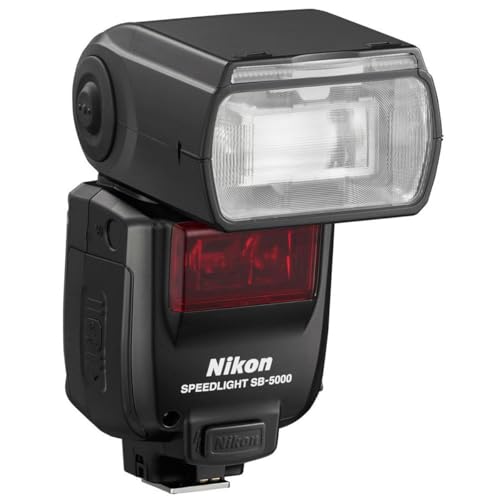
Nikon SB-5000
The Nikon SB-5000 is a flagship speedlight with radio wireless (WR-R10) and a fast recycle time. It offers superior build and excellent TTL performance.
Pros
- Radio wireless with reliable connection
- Fast and quiet operation
- Weather-sealed construction
Cons
- Expensive
- Bulky and heavy

Sony HVL-F60RM2
The Sony HVL-F60RM2 is a robust flash with a guide number of 60, offering fast recycling and a dust and moisture resistant design.
Pros
- High output and fast recycle
- Good thermal protection
- Reliable radio wireless
Cons
- Large footprint
- AA batteries drain quickly at full power

Godox TT685II
The Godox TT685II is a versatile speedlight that works on-camera or off with the Godox X wireless system. It offers solid performance at a low price.
Pros
- Very affordable
- Good power for the price
- Compatible with many camera brands
Cons
- Plastic build feels less durable
- No built-in lithium battery

Flashpoint Zoom Li-ion X R2 TTL
The Flashpoint Zoom Li-ion X R2 TTL is identical to the Godox V860II but sold by Adorama. It features a rechargeable battery and works with the R2 wireless system.
Pros
- Built-in lithium battery
- Fast recycle time
- Great for off-camera setups
Cons
- Only available through Adorama
- Similar to Godox V860II
How they stack up
| # | Model | Guide Number | Best for | Score | Price |
|---|---|---|---|---|---|
| 1 | Godox V1 | GN 93 (m ISO 100, at 200mm) | Best overall for on-camera bounce and even coverage | 9.4 | Check price |
| 2 | Profoto A10 | GN 50 (m ISO 100) | Best for professional portrait photographers | 9.0 | Check price |
| 3 | Canon Speedlite EL-100 | GN 26 (m ISO 100, at 50mm) | Best for Canon mirrorless users who want compact size | 8.6 | Check price |
| 4 | Nikon SB-5000 | GN 34.5 (m ISO 100, at 35mm) | Best for Nikon shooters needing advanced wireless | 8.9 | Check price |
| 5 | Sony HVL-F60RM2 | GN 60 (m ISO 100, at 200mm) | Best for Sony alpha users who need power and speed | 9.1 | Check price |
| 6 | Godox TT685II | GN 60 (m ISO 100, at 200mm) | Best budget TTL flash for multiple camera systems | 8.4 | Check price |
| 7 | Flashpoint Zoom Li-ion X R2 TTL | GN 60 (m ISO 100, at 200mm) | Best for off-camera portrait work with Godox ecosystem | 8.8 | Check price |
Good to know
What does TTL mean in photography?
TTL stands for Through The Lens. It means the flash output is measured through the camera lens, and the flash automatically adjusts its power to achieve a balanced exposure.
Is TTL flash better than manual?
TTL is faster and easier for changing scenarios, but manual gives you consistent output and full control. Many photographers use TTL for event shooting and manual for studio work.
Can I use a TTL flash off-camera?
Yes, many TTL flashes support wireless triggering, either via optical slave or radio. This allows you to place the flash off-camera for more directional light.
What is a guide number?
The guide number (GN) indicates the flash’s power. It is measured in meters or feet at a specific ISO and zoom setting. A higher guide number means the flash can illuminate a subject farther away.
Do I need a flash for outdoor photography?
Outdoor flash can help fill in shadows, especially in harsh sunlight. A TTL flash can automatically balance with ambient light to create more flattering portraits.
How long does a TTL flash battery last?
Battery life varies. Flashes using AA batteries may give 100 to 300 full-power flashes, while lithium-ion models like the Godox V1 can provide over 300 flashes. Recycle time also affects shooting speed.
Are third-party flashes as good as brand-name ones?
Modern third-party flashes like Godox and Flashpoint offer comparable performance at a lower price. They often have better wireless systems. However, some brand-specific features may not be fully compatible.
What is HSS (High-Speed Sync)?
HSS allows you to use flash at shutter speeds faster than the normal sync speed (usually 1/200s). This is useful for freezing action or using wide apertures in bright light.
Can I use a Canon flash on a Nikon camera?
No, TTL flash systems are brand-specific. The pins and communication protocols differ. Using a Canon flash on a Nikon camera may only work in manual mode, if at all.
What is the best TTL flash for beginners?
The Godox TT685II or Canon EL-100 are good starting points. They are affordable and offer enough features to learn TTL and off-camera lighting.
The bottom line
If you want a versatile flash that works both on and off camera, the Godox V1 is the best investment due to its round head, fast recycle, and reliable wireless system. For Canon or Nikon shooters who prefer brand-native gear, the Canon EL-100 or Nikon SB-5000 are solid choices, but they cost more for similar performance.

