Fountain Pens That Write Smoothly Straight From the Box
The LAMY Safari is our overall pick for its forgiving steel nib and grip section that teaches a correct hold. The Pilot Metropolitan is the better value for a smoother, finer line, and the TWSBI ECO holds far more ink thanks to its piston filler.
If you want one fountain pen that simply works every time you uncap it, the LAMY Safari is the pen to buy, with the Pilot Metropolitan offering a finer and slightly smoother line for less, and the TWSBI ECO winning outright on ink capacity.
Fountain pens are harder to shop for than they look because nib width, ink behaviour and paper quality all interact, and a pen that skips on cheap notebook paper can be flawless on a decent journal. We compared nib sizes, filling systems and what owners report about hard starts and drying out to rank the seven below.
How to pick the right one
Nib width is not standardised between countries A Japanese medium from Pilot or Platinum writes roughly like a European fine from LAMY or Kaweco. If your handwriting is small, or you write in ruled notebooks with narrow lines, a Japanese fine or extra fine is usually the right call. If you write large and want a wetter, more expressive line, a European medium suits better. This single mismatch is behind most disappointment with a first fountain pen.
Filling system decides how often you stop Cartridges are convenient and clean, but hold very little ink, so heavy writers refill constantly. A converter lets you use bottled ink, which is cheaper over time and opens up hundreds of colours. Piston fillers like the TWSBI ECO hold the most because the whole barrel is the reservoir. Choose cartridges for occasional use, a converter for regular use, and a piston filler if you write pages at a time.
Paper matters as much as the pen Fountain pen ink sits on the surface longer than ballpoint ink, so absorbent office paper causes feathering and bleed through that make a good nib look faulty. Smoother, denser papers keep lines crisp and colours accurate. If a new pen looks messy, try it on better paper before assuming the nib is wrong. Notebook choice is the cheapest fix available for a pen that seems to write badly.
Cap seal decides whether it starts next week A fountain pen that sits capped for a fortnight will only write immediately if the cap seals well. Designs with an inner cap, such as the Platinum Preppy and the Kaweco Sport, hold ink wet far longer than simple friction caps. If a pen will be used daily, cap sealing barely matters. If it lives in a drawer between uses, it becomes the most important feature on the list.
The shortlist, ranked

LAMY Safari Fountain Pen
A German made everyday pen with a moulded triangular grip that guides your fingers into the correct writing position without you thinking about it. The steel nib is swappable, so you can change from medium to fine or italic later without buying another pen. Owners report it survives bags, pockets and years of school and office use with no meaningful drop in performance.
Pros
- Grip section trains a correct hold quickly
- Nib units swap in seconds without tools
- Very tolerant of rough handling and travel
Cons
- Converter is sold separately on most listings
- Triangular grip does not suit every hand

Pilot Metropolitan Fountain Pen
A brass bodied pen with real heft and a Japanese steel nib that runs finer than European equivalents, which suits small handwriting and thin paper. It comes with a squeeze converter and a cartridge, so it works out of the box either way. Owners report it is the pen most often recommended to people who are not sure they will like fountain pens at all.
Pros
- Metal body feels far better than its price band suggests
- Japanese fine nib is genuinely fine
- Converter included in the box
Cons
- Nib is not swappable like the Safari
- Cap posts loosely on some units

TWSBI ECO Fountain Pen
A demonstrator pen with a built in piston that draws ink directly into the transparent barrel, holding several times what a cartridge does. The clear body means you can see exactly how much ink is left, which removes the usual mid page surprise. Owners report it is the cheapest way into a proper piston filler without moving to vintage pens.
Pros
- Holds enough ink for weeks of normal writing
- Ink level is visible at all times
- Comes with wrench and silicone grease for servicing
Cons
- Piston seal needs occasional greasing
- Clear body shows every ink stain inside

Kaweco Classic Sport Fountain Pen
A short octagonal pen designed to disappear into a pocket and then post to full writing length once capped on the back. The faceted body stops it rolling off a desk, which sounds minor until you have chased a pen across a table. Owners report the cap seals well enough that it starts reliably even after sitting unused for a week.
Pros
- Genuinely pocketable when capped
- Octagonal body will not roll away
- Good cap seal resists drying out
Cons
- Too short to use comfortably unposted
- Only takes short cartridges, so capacity is low

Pilot Kakuno Fountain Pen
A light hexagonal pen built around the same nib quality Pilot uses in pricier models, with a small smiling face stamped on the nib to show which way up it should sit. The shaped grip gently encourages a tripod hold. Owners report it is the pen most often bought for a child or a first time user and then quietly kept by the adult.
Pros
- Very light, so young hands do not tire
- Nib marking shows correct orientation at a glance
- Same nib feel as more expensive Pilot pens
Cons
- No clip on the cap
- Plain plastic body feels basic

Pilot Custom 74 Fountain Pen
The step up pen for people who have decided they are staying with fountain pens, built around a 14 karat gold nib with noticeably more give than steel. The resin body is light for its size, so long writing sessions do not tire the hand. Owners report the difference from a steel nib is most obvious in how quietly and smoothly it moves across the page.
Pros
- Gold nib has real softness under the hand
- Large CON-70 converter holds plenty of ink
- Light for a full sized pen
Cons
- Costs several times a good steel nib pen
- Nib softness makes it less forgiving of heavy pressure
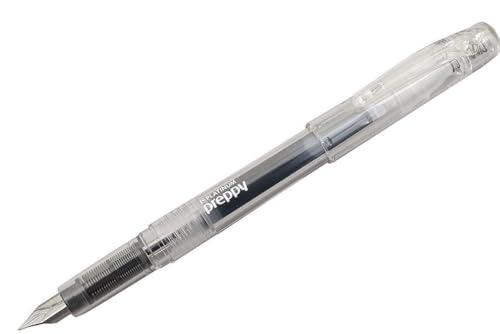
Platinum Preppy Fountain Pen
A basic transparent pen with a sealing cap mechanism that keeps ink wet for months of storage, which is unusual at this level. It writes far better than its plain looks suggest and is cheap enough to keep several inked in different colours. Owners report using them as disposable pens that nonetheless refuse to die.
Pros
- Sealing cap prevents drying during long storage
- Cheap enough to keep several inked colours
- Writes cleanly on most ordinary paper
Cons
- Plastic body cracks if the cap is forced
- Feels light and inexpensive in the hand
Side by side
| # | Model | Nib | Best for | Score | Price |
|---|---|---|---|---|---|
| 1 | LAMY Safari Fountain Pen | Swappable steel, EF through B and italic | Best overall | 9.4 | Check price |
| 2 | Pilot Metropolitan Fountain Pen | Steel, fine or medium (Japanese sizing) | Best value | 9.2 | Check price |
| 3 | TWSBI ECO Fountain Pen | Steel, EF through B and 1.1 stub | Best for ink capacity | 9.0 | Check price |
| 4 | Kaweco Classic Sport Fountain Pen | Steel, EF through B | Best for pockets and bags | 8.8 | Check price |
| 5 | Pilot Kakuno Fountain Pen | Steel, extra fine, fine or medium | Best for beginners and children | 8.6 | Check price |
| 6 | Pilot Custom 74 Fountain Pen | 14k gold, multiple widths | Best gold nib upgrade | 8.3 | Check price |
| 7 | Platinum Preppy Fountain Pen | Steel, 02 fine or 03 medium | Best budget | 8.0 | Check price |
Good to know
Do I need bottled ink or are cartridges fine?
Cartridges are fine and are the simplest way to start. Bottled ink becomes worth it once you write enough that cartridge cost and refill frequency start to annoy you, and it gives access to a far wider range of colours. Most pens here take both, using a converter for bottled ink.
Why does my fountain pen skip at the start of a line?
Usually the ink has partly dried at the nib because the cap does not seal tightly, or the pen has been stored nib up for a long period. Storing it nib down or horizontal helps, and a quick rinse of the nib section clears dried ink. Persistent skipping on new pens is often a paper problem rather than a nib fault.
Which nib size should a first time buyer choose?
A fine in Japanese pens such as the Pilot Metropolitan and Kakuno, or an extra fine to fine in European pens such as the LAMY Safari. A finer nib puts down less ink, so it behaves better on ordinary paper and dries faster, which matters a lot for left handed writers.
Are fountain pens good for left handed writers?
Yes, with the right combination. Choose a finer nib and a fast drying ink, and consider an underwriting hand position rather than hooking over the line. Some writers also prefer a slightly stiffer steel nib, which is less sensitive to the pushing motion that left handed writing sometimes involves.
How often should a fountain pen be cleaned?
Flush with cool water every time you change ink colour, and roughly every month or two with regular use of the same ink. Pens left inked and unused for long periods need a longer soak. Piston fillers such as the TWSBI ECO also benefit from occasional silicone grease on the seal.
Can I use any ink in any fountain pen?
Use inks sold specifically as fountain pen inks. Calligraphy, drawing and India inks contain shellac or pigments that clog feeds and are very difficult to remove. Within fountain pen inks, almost any brand works in almost any pen, though heavily saturated or shimmer inks need more frequent cleaning.
Is a gold nib actually better than steel?
Better is the wrong word. Gold nibs, such as the one on the Pilot Custom 74, flex slightly under pressure and feel softer on the page. Steel nibs are firmer, more consistent and much harder to damage. Many long term users prefer steel for daily notes and keep a gold nib for longer writing sessions.
Will a fountain pen leak on a plane?
Rarely, if it is full or completely empty and stored nib up. Problems come from half full pens, where the air inside expands as cabin pressure drops and pushes ink out. Filling before flying, or emptying and rinsing, removes the risk almost entirely.
Final word
The LAMY Safari remains the pen to buy if you want one that survives daily life and can have its nib swapped as your preferences change. The Pilot Metropolitan is the better choice for finer handwriting and the more impressive object for the money, and the TWSBI ECO is worth the small extra step if refilling cartridges every few days sounds tedious.

