Which Gaming Headset Actually Fits Your Setup?
SteelSeries’ Arctis Nova 7 blends clear audio, a retractable mic and long battery life for most players. The Astro A50 suits anyone wanting a premium wireless setup with a charging base. Competitive gamers should look at the Razer BlackShark V2 for fast, precise positional audio.
SteelSeries’ Arctis Nova 7 stands out as the best all-round gaming headset, pairing balanced sound with a genuinely good microphone and comfort that holds up over long sessions. Esports players, console owners and budget shoppers each have a stronger match below.
Headset marketing leans on surround-sound labels and RGB lighting, while mic clarity, comfort and wireless reliability are harder to judge from a spec sheet. We compared published specifications, driver and connection details, and what owners consistently report about sound, comfort and mic performance.
How to choose
Should you buy a wired or wireless gaming headset? Wired headsets like the BlackShark V2 and HyperX Cloud II deliver lag-free audio and never need charging, which suits competitive play. Wireless models such as the Arctis Nova 7 and Astro A50 trade a little of that for freedom of movement. Modern 2.4 GHz latency is low enough that most players will not notice a difference, so the real choice comes down to convenience versus never charging a headset.
How much does microphone quality matter? Team games and streaming put the microphone on equal footing with sound quality. Look for clear, noise-resistant designs such as the Logitech G Pro X with Blue VO!CE, which owners rate highly for voice clarity. Detachable or flip-to-mute mics add real convenience, letting you remove the boom entirely for everyday music and listening.
What makes a gaming headset comfortable for long sessions? You will wear a headset for hours, so clamping force, earcup padding and total weight matter more than looks. Memory-foam cushions and floating headbands spread pressure and cut fatigue over long sessions. Glasses wearers should look at softer cushions like those on the Turtle Beach Stealth 700 and HyperX Cloud II to avoid pressure points behind the ears.
Does virtual surround sound actually help? Most gaming headsets simulate directional audio through THX Spatial or Dolby Atmos, which helps you locate footsteps and gunfire in competitive titles. Treat it as a useful aid rather than true surround sound. Clean, balanced drivers matter more than an aggressive surround effect that can muddy the mix.
The shortlist, ranked
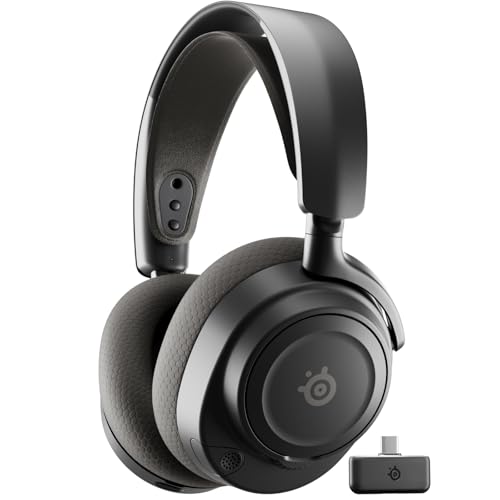
SteelSeries Arctis Nova 7
Clean, balanced audio comes standard here, backed by a retractable ClearCast mic that owners rate highly for voice clarity. Dual 2.4 GHz and Bluetooth connections work at the same time. Around 38 hours of battery and a comfortable ski-band fit suit most players.
Pros
- Clean, well-balanced sound
- Retractable mic rated highly by owners
- Dual wireless connection runs simultaneously
Cons
- No active noise cancelling
- Full EQ control needs the companion app

Astro A50
A charging base station doubles as a stand, so the headset stays topped up between sessions. Low-latency wireless keeps audio tight during fast-paced games. Owners praise the spacious soundstage and sturdy build quality.
Pros
- Base station charges and stores the headset
- Spacious, detailed soundstage
- Low-latency wireless connection
Cons
- Heavier than most rivals
- Base station takes up desk space

Razer BlackShark V2
TriForce Titanium drivers paired with THX Spatial Audio help pinpoint footsteps and directional cues. A lightweight design and passive noise isolation suit long tournament stretches. Owners rate the detachable mic as clear for team comms.
Pros
- Precise positional audio for competitive play
- Lightweight, comfortable for long matches
- Detachable mic stays clear in comms
Cons
- Wired connection limits movement
- Ear cushions run warm over time
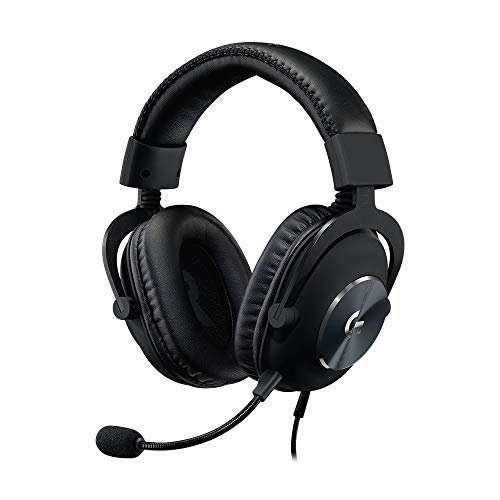
Logitech G Pro X
A Blue VO!CE microphone sets this headset apart, and streamers rate it among the best built into any gaming headset. A steel-and-aluminum frame adds durability most plastic builds lack. 50mm PRO-G drivers round out a headset built for players who talk as much as they play.
Pros
- Blue VO!CE mic stands out for clarity
- Durable metal frame construction
- Balanced 50mm drivers
Cons
- Wired connection only
- Stock ear pads clamp firmly

Corsair HS80 RGB
Dolby Atmos support and 50mm drivers push room-filling sound for single-player and cinematic games. A floating headband spreads weight evenly across long sessions. Roughly 20 hours of wireless battery covers most gaming sessions.
Pros
- Dolby Atmos delivers immersive sound
- Floating headband stays comfortable for hours
- Broadcast-style mic sounds clear
Cons
- Microphone is not detachable
- Battery life trails wireless rivals
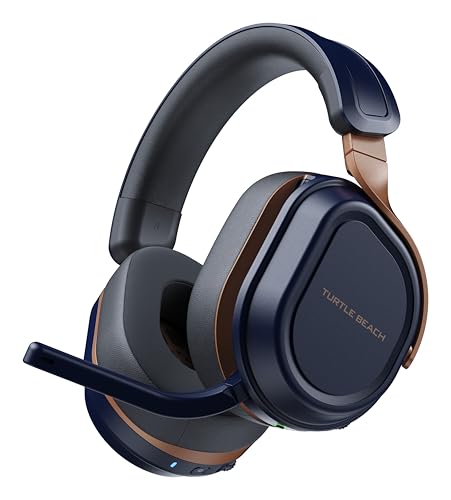
Turtle Beach Stealth 700
Strong wireless range pairs with up to 40 hours of battery for long console sessions. Memory-foam earcups fit comfortably around glasses. Setup on PlayStation and Xbox takes only a few steps.
Pros
- 40-hour battery outlasts most rivals
- Glasses-friendly memory-foam cushions
- Simple console pairing process
Cons
- Bulkier profile than competitors
- Companion app offers basic tuning only

HyperX Cloud II
Plush memory-foam padding and a sturdy aluminum frame have kept this headset popular for years. 53mm drivers and a detachable mic skip fancy wireless in favor of a dependable wired connection. Owners consistently call it a lot of headset for a modest outlay.
Pros
- Excellent comfort for the price
- Sturdy, durable build quality
- Detachable mic sounds clear
Cons
- Wired connection only
- USB sound control feels dated
Side by side
| # | Model | Connection | Best for | Score | Price |
|---|---|---|---|---|---|
| 1 | SteelSeries Arctis Nova 7 | 2.4 GHz + Bluetooth | Best overall | 9.4 | Check price |
| 2 | Astro A50 | 2.4 GHz wireless + base station | Best premium wireless | 9.1 | Check price |
| 3 | Razer BlackShark V2 | 3.5mm + USB DAC | Best for esports | 8.9 | Check price |
| 4 | Logitech G Pro X | 3.5mm / USB | Best microphone | 8.7 | Check price |
| 5 | Corsair HS80 RGB | 2.4 GHz wireless | Best for immersive audio | 8.5 | Check price |
| 6 | Turtle Beach Stealth 700 | 2.4 GHz wireless | Best for console | 8.3 | Check price |
| 7 | HyperX Cloud II | 3.5mm + USB | Best budget | 8.1 | Check price |
Common questions
Are wireless gaming headsets good enough for competitive play?
Yes. Modern 2.4 GHz wireless headsets have latency low enough that most players cannot detect it. Some pros still prefer wired for consistency, but a good wireless headset like the Arctis Nova 7 holds up fine in competitive play.
Does virtual surround sound actually help?
It can. THX Spatial and Dolby Atmos simulate directional cues, which helps you judge where sounds come from in shooters. It is not true surround, so treat it as a helpful aid rather than a replacement for well-tuned stereo drivers.
What makes a good gaming microphone?
Clarity and noise rejection matter most. A good mic captures your voice cleanly while filtering out background noise and keyboard clatter. The Logitech G Pro X with Blue VO!CE stands out, and detachable or flip-to-mute designs add everyday convenience.
Are expensive gaming headsets worth the extra cost?
Premium models add better build quality and extras like charging bases, as seen on the Astro A50. Budget options such as the HyperX Cloud II still sound and feel great, so overspending is not required for a genuinely good experience.
Will these headsets work on PS5 and Xbox?
Compatibility varies by model and connection type. Many wireless headsets ship in console-specific versions, and most wired 3.5mm headsets work broadly. Check listed platform support before buying, since Xbox support does not guarantee PlayStation support.
How do you stop your ears from overheating in a headset?
Choose breathable fabric earcups over sealed leatherette if heat bothers you, and take short breaks during long sessions. Cloth cushions like those on the BlackShark V2 run cooler, while plush leatherette isolates noise better but traps more warmth.
Do you need active noise cancelling on a gaming headset?
Not usually. Most gaming headsets rely on passive isolation from the earcups, which suffices in quiet rooms. Active noise cancelling helps in noisy environments but adds cost, so weigh it against where you actually play.
How long do wireless gaming headsets last on a charge?
Battery life ranges from around 20 hours on the Corsair HS80 RGB to roughly 38 to 40 hours on the Arctis Nova 7 and Turtle Beach Stealth 700. Daily players should look for at least 20 hours to avoid constant charging.
What driver size should you look for in a headset?
Bigger drivers are not automatically better. Common sizes run from 40mm to 60mm, and tuning matters more than raw size. A well-tuned 40mm driver like the Arctis Nova 7 can sound cleaner than a larger but poorly balanced one.
Final word
SteelSeries’ Arctis Nova 7 remains the strongest all-round pick for sound, mic quality, comfort and wireless flexibility. Competitive players should look at the Razer BlackShark V2 for its precise positional audio. The HyperX Cloud II stays the smart budget choice.