Garden Hoes Compared: Draw vs Stirrup for Weeding
Rogue ProHoe 5.5 Inch Field Hoe handles the widest range of jobs, from breaking sod to chopping weeds. Corona Clipper SH63000 Heavy-Duty Weeding Hoe targets fast weed removal at the soil line. Raised bed gardeners get better control from the compact Fiskars Ergo Cultivator Hoe.
Three hoes cover most yards: Rogue ProHoe 5.5 Inch Field Hoe, Corona Clipper SH63000 Heavy-Duty Weeding Hoe, and the compact Fiskars Ergo Cultivator Hoe. Each blade shape favors a different task, whether that means breaking new ground or slicing weeds an inch below the surface.
A single hoe rarely handles everything well, since chopping sod and skimming weeds call for opposite blade geometry. We compared blade shape, steel gauge and handle length, then checked what gardeners report about edge retention in clay versus sandy soil.
What we recommend

Rogue ProHoe 5.5 Inch Field Hoe (55F)
A forged steel head, sharpened on three sides, chops through sod and breaks compacted ground in one swing. Its 54 inch ash handle adds leverage for repeated strikes without straining the back. Market gardeners use this same head shape for row prep and heavy weeding.
Pros
- Cuts through sod and hardpan in one pass
- Three sharpened edges extend usefulness
- Ash handle absorbs shock during chopping
Cons
- Too heavy for delicate seedling work
- Wood handle needs oiling to prevent drying
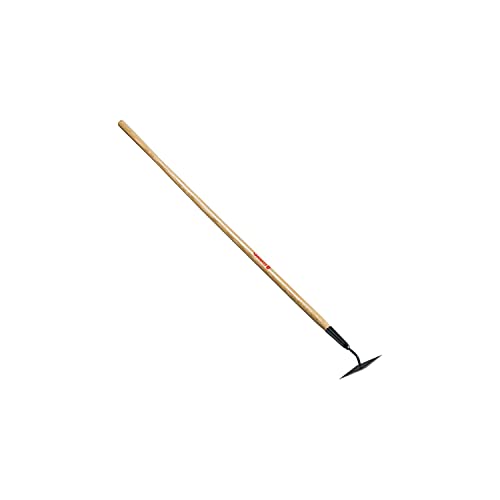
Corona Clipper SH63000 Heavy-Duty Weeding Hoe
A hollow-back forged blade slices weeds at the soil line with a quick push and pull stroke, shedding dirt instead of collecting it. Its shallow design leaves the roots of nearby vegetables undisturbed. Owners report the edge stays sharp through a full season of use.
Pros
- Push-pull stroke covers ground quickly
- Hollow back sheds soil instead of clogging
- Shallow cut protects nearby roots
Cons
- Not built for breaking hard or compacted soil
- Narrow blade takes longer on wide beds
Corona Clipper SH61000 Diamond Hoe
A diamond shaped blade cuts on both the push and pull stroke, speeding up cultivation along long vegetable rows. Its pointed tip also works into tight corners flat blade hoes cannot reach. Forged steel construction resists bending against rocky soil.
Pros
- Cuts on both push and pull strokes
- Pointed shape reaches tight corners
- Forged steel resists bending on rocky soil
Cons
- Narrower blade than a full field hoe
- Less effective on established sod

Bully Tools 92354 Warren Hoe with Fiberglass Handle
A pointed V-shaped blade opens a clean furrow for seeds in one pass, then flips to pull soil back for covering. The 12-gauge steel head is made in the USA and holds up against stony ground. Its fiberglass handle skips the maintenance wood handles require.
Pros
- V-shape opens clean furrows for seeds
- Fiberglass handle needs no oiling
- Heavy gauge steel resists bending
Cons
- Point is less useful for broad weeding
- Handle length can feel long in small beds

Truper AOM-3M Round Eye Hoe with 54 Inch Handle
A traditional round eye head, forged rather than stamped, handles general digging and chopping at a lower price than boutique brands. Its 54 inch handle suits most adult heights without stooping. At roughly 3.4 pounds, it carries enough heft for breaking dry ground.
Pros
- Forged head withstands regular chopping
- Solid weight helps break dry, hard ground
- Replacement handles are widely available
Cons
- Finish is more basic than premium brands
- Heavier than blades built for fine weeding

Fiskars Ergo Cultivator Hoe (1027030)
A dual-function head pairs a sharpened hoe blade with cultivator tines on the opposite side, so one short tool loosens and chops soil. Its rust-resistant steel blade suits raised beds and container gardens where a full length hoe feels unwieldy. A plastic ergonomic handle keeps the grip light.
Pros
- Two functions in one compact head
- Ergonomic grip reduces hand fatigue
- Fits tight spaces standard hoes cannot reach
Cons
- Too short for standing full sized beds
- Limited reach for larger garden plots
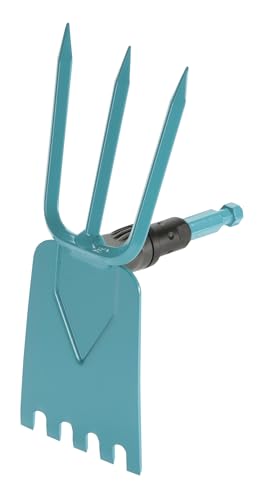
Gardena Combisystem Garden Hoe (3219-20)
A steel hoe head with a straight blade and three tines attaches to any Gardena Combisystem handle, sold separately. Owners already using the Combisystem line swap this head onto a handle they already own. Its 9 centimeter working width suits narrow beds and edging work.
Pros
- Compatible with existing Combisystem handles
- Compact width suits narrow or edged beds
- Coated steel resists rust between seasons
Cons
- Handle purchased separately adds a step
- Narrow width slows work on large plots
How they compare
| # | Model | Head | Best for | Score | Price |
|---|---|---|---|---|---|
| 1 | Rogue ProHoe 5.5 Inch Field Hoe (55F) | 5.5 x 6.5 inch forged steel, sharp on 3 sides | Best overall | 9.4 | Check price |
| 2 | Corona Clipper SH63000 Heavy-Duty Weeding Hoe | Forged steel, hollow-back blade | Best for weeding | 9.1 | Check price |
| 3 | Corona Clipper SH61000 Diamond Hoe | Forged steel, diamond shaped blade | Best for cultivating between rows | 8.8 | Check price |
| 4 | Bully Tools 92354 Warren Hoe with Fiberglass Handle | 12-gauge steel, V-shaped blade | Best for furrows and planting rows | 8.5 | Check price |
| 5 | Truper AOM-3M Round Eye Hoe with 54 Inch Handle | Forged steel, round eye | Best budget | 8.2 | Check price |
| 6 | Fiskars Ergo Cultivator Hoe (1027030) | Rust-resistant steel, dual hoe and cultivator | Best for raised beds and small spaces | 8.0 | Check price |
| 7 | Gardena Combisystem Garden Hoe (3219-20) | Steel, thermoplastic coated | Best for modular handle systems | 8.0 | Check price |
What to look for
What to look for in a garden hoe Blade shape decides the job a hoe does best, more than steel quality alone. Flat, sharpened blades chop sod and weeds, while pointed or diamond blades work into corners and rows. Handle length affects posture, since a short handle forces bending on standing beds. Forged steel outlasts stamped steel under repeated impact against rocky soil.
Weeding hoe vs field hoe vs furrowing hoe: what’s the difference? Weeding hoes like Corona Clipper SH63000 stay shallow, slicing roots without disturbing nearby plants. Field hoes such as Rogue ProHoe 5.5 Inch handle heavier chopping, from breaking sod to clearing overgrown patches. Furrowing designs like Bully Tools 92354 Warren Hoe open a seed trench, then flip to cover it, a task the other shapes handle poorly.
Best garden hoes for raised beds and small gardens Standing hoes with 54 inch handles overshoot most raised bed dimensions and force awkward angles. Fiskars Ergo Cultivator Hoe solves that with a short handle sized for kneeling or reaching from outside the bed frame. Container gardeners get similar control from any short handled cultivator hoe, since leverage matters less at that scale.
How to maintain a hoe blade and handle A file restores a dull edge in a few passes, and a sharp blade cuts weeds with less arm effort. Wood handles benefit from an occasional coat of linseed oil to prevent cracking in dry climates. Fiberglass handles like the one on Bully Tools 92354 skip that step entirely, trading some shock absorption for durability.
Questions worth asking
What is the difference between a Warren hoe and a Dutch hoe?
A Warren hoe has a pointed V-shaped blade suited to furrowing and cultivating between rows. A Dutch or push hoe uses a flat, double edged blade designed to slice weeds just under the surface on the push stroke.
Which garden hoe is best for breaking new ground?
A field hoe with a heavy forged head, like Rogue ProHoe 5.5 Inch, handles sod and compacted soil better than lighter weeding hoes. Added weight and a sharpened edge do the breaking work for you.
Can one hoe handle both weeding and cultivating?
Dual-head tools like Fiskars Ergo Cultivator Hoe combine a blade and tines in one compact head. Full sized single-blade hoes usually specialize in one task rather than covering both equally well.
How long should a garden hoe handle be?
Most standing hoes use a 54 to 60 inch handle, letting an average height adult work without bending. Shorter handles under 15 inches suit raised beds, containers or kneeling work.
Is a forged steel hoe better than a stamped steel one?
Forged steel is shaped under pressure and holds an edge longer under repeated impact, which matters for chopping sod or rocky ground. Stamped steel works fine for lighter, shallow weeding tasks.
What is a diamond hoe used for?
A diamond shaped blade, like the one on Corona Clipper SH61000, cuts on both the push and pull stroke. That makes it efficient for cultivating long rows between vegetables.
Do garden hoes work on rocky or clay soil?
Heavier forged hoes with wood or fiberglass handles hold up better against rocks than lightweight aluminum tools. Clay soil benefits from a sharp edge, since dull blades tend to compact rather than cut through it.
Are modular hoe systems like Gardena Combisystem worth it?
They save money over time if you already own compatible handles, since only the head needs replacing. New buyers starting from scratch pay for a handle separately, an extra purchase.
The verdict
Rogue ProHoe 5.5 Inch Field Hoe covers the widest range of soil types and tasks, making it the strongest single choice. Gardeners focused on weed control get faster results from Corona Clipper SH63000 Heavy-Duty Weeding Hoe. Raised bed and container growers should reach for the compact Fiskars Ergo Cultivator Hoe instead.


