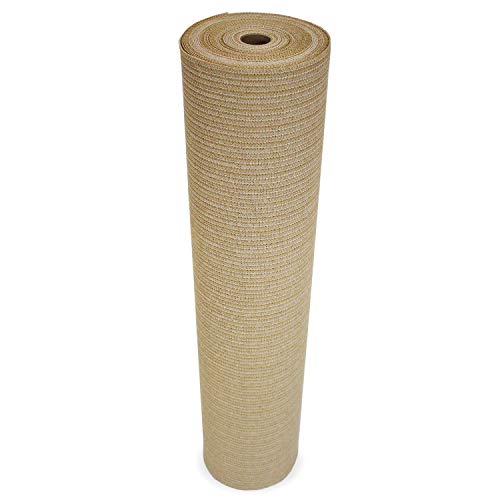
Sun Shade Sails Ranked for Coverage and Durability
The ColourTree Custom Sized Sun Shade Sail is our overall pick for fabric weight and edge construction. The Shade&Beyond Sun Shade Sail is the best value for a standard patio, and the Quictent Waterproof Sun Shade Sail is the one to choose if you need rain cover too.
For a patio or deck that needs real shade through summer, the ColourTree Custom Sized Sun Shade Sail is the one to buy, with the Shade&Beyond Sun Shade Sail the value pick for standard sizes and the Quictent Waterproof Sun Shade Sail the choice when you want to sit outside in light rain.
Shade sails are harder to get right than the product photos suggest, because most failures come from the installation rather than the fabric. A sail needs real tension, anchor points that can take load, and a slope so water runs off. We compared fabric weights, UV block ratings, edge reinforcement and what owners report about tearing at the corners to rank the seven below.
Before you buy
Breathable mesh or waterproof coating This is the first decision and it changes what the sail can do. Knitted HDPE mesh blocks most direct sun while letting hot air rise through it, so the space underneath actually feels cooler, but rain passes straight through. Coated polyester sheds rain and gives you a usable space in a shower, at the cost of trapping heat underneath and requiring a proper slope so water drains rather than pools. Pick based on whether heat or rain is the bigger problem where you live.
Tension is what makes a sail work A sail hung loosely will flap in wind, wear at the corners and sag into a water trap. It needs to be pulled genuinely tight, which is why turnbuckles matter more than the rope most sails ship with. Plan for the sail to be slightly smaller than the span between anchor points, leaving room for hardware and tension. Anchor points also need to take real load, so a post should be concreted and a wall fixing should reach structural timber or masonry.
Pitch it so water runs off Even a breathable sail benefits from a slope, and a waterproof one requires it. Set the anchor points at different heights so there is a clear fall in one direction, ideally away from where people sit. A flat sail collects water in the centre, and the weight of pooled rain stretches the fabric permanently and can pull an anchor out. A drop of around one foot in every five of span is a reasonable target.
Plan for wind and for winter Wind loads on a sail are considerable, because the sail is a large surface with nowhere for air to escape on a coated fabric. Overlapping smaller sails, leaving a gap between them, and using breathable mesh all reduce that load. Most owners take sails down before winter, which extends fabric life significantly and removes any risk from snow load. Quick release hardware such as snap hooks makes that a ten minute job rather than an afternoon.
The best picks, ranked

ColourTree Custom Sized Sun Shade Sail
A heavier knitted HDPE fabric than most of the category, with reinforced webbing running around the perimeter and stainless D rings at each corner. The custom sizing means you can order to fit awkward spans rather than compromising with a standard rectangle. Owners report the edge reinforcement is where it separates itself, since corners are where cheap sails fail first.
Pros
- Reinforced perimeter webbing resists corner tearing
- Custom sizing fits awkward spans
- Breathable fabric lets heat escape upward
Cons
- Not waterproof, rain passes through
- Custom orders take longer to arrive

Shade&Beyond Sun Shade Sail Canopy
A breathable HDPE sail in the common rectangle and square sizes that cover most patios, at a level that makes covering a large area affordable. It ships with corner rings and a short length of rope. Owners report it does the core job well and suggest upgrading the supplied rope to turnbuckles for proper tension.
Pros
- Covers large areas at low cost
- Wide range of stock sizes
- Breathable so hot air rises through it
Cons
- Supplied rope is not enough for proper tension
- Colour fades faster than premium sails

Quictent 185GSM Waterproof Sun Shade Sail
A coated polyester sail rather than a knitted mesh, so water runs off instead of through, which turns a shade sail into a light rain shelter. That coating also means it must be pitched at a slope or water will pool and stretch the fabric. Owners report it works well when installed with a proper fall, and badly when hung flat.
Pros
- Keeps rain off as well as sun
- Heavier fabric feels substantial
- Colour range suits patios and decks
Cons
- Traps hot air underneath, less cooling than mesh
- Pools water badly if not pitched correctly

Coarbor Sun Shade Sail with Grommets
Made to order in the exact dimensions you specify, with grommets set along the edges rather than only at the corners, which spreads load across more anchor points. That is useful on long spans where a four corner sail sags in the middle. Owners report the extra fixing points make a visible difference to how taut a large sail sits.
Pros
- Edge grommets spread load on long spans
- Made to exact dimensions
- Reduces sag on wide installations
Cons
- More anchor points means more installation work
- Longer lead time than stock sizes

Cool Area Rectangle Sun Shade Sail
A straightforward rectangular sail supplied with corner hardware and rope, aimed at people who want shade over a seating area this weekend rather than a permanent structure. The fabric is a standard breathable HDPE. Owners report it is easy to put up between a house wall and two posts, and easy to take down before winter.
Pros
- Fast to install with what is in the box
- Easy to take down for winter storage
- Good value for a seating area
Cons
- Hardware is basic and worth upgrading
- Rectangle only, limited shape options

Amgo Custom Size Sun Shade Sail
A heavier commercial grade fabric intended for installations that stay up year round in exposed positions, with double stitched hems and substantial corner hardware. It is more sail than a small patio needs. Owners report choosing it for windy sites and large spans where lighter fabrics have already failed once.
Pros
- Built for exposed and windy sites
- Double stitched hems resist unravelling
- Custom sizing for large spans
Cons
- Heavier fabric needs stronger anchor points
- Overkill for a small sheltered patio

Artpuch Sun Shade Sail Triangle
A simple triangular sail that is the cheapest way to throw shade over a corner of a yard or a sandpit. Triangles need only three anchor points, which often means one fewer post to sink. Owners report overlapping two triangles at different heights as a practical way to cover a larger area without a single huge sail.
Pros
- Only three anchor points needed
- Cheapest way to shade a corner
- Two overlapped triangles cover more area than one square
Cons
- Covers less area than a rectangle of similar cost
- Light fabric fades over several seasons
How they stack up
| # | Model | Fabric | Best for | Score | Price |
|---|---|---|---|---|---|
| 1 | ColourTree Custom Sized Sun Shade Sail | Knitted HDPE, breathable | Best overall | 9.4 | Check price |
| 2 | Shade&Beyond Sun Shade Sail Canopy | Breathable HDPE knitted fabric | Best value | 9.2 | Check price |
| 3 | Quictent 185GSM Waterproof Sun Shade Sail | 185 GSM coated polyester | Best for rain protection | 9.0 | Check price |
| 4 | Coarbor Sun Shade Sail with Grommets | HDPE with UV stabilisation | Best for custom spans | 8.8 | Check price |
| 5 | Cool Area Rectangle Sun Shade Sail | Breathable HDPE knitted | Best for quick setup | 8.5 | Check price |
| 6 | Amgo Custom Size Sun Shade Sail | Commercial weight HDPE | Best heavy duty | 8.2 | Check price |
| 7 | Artpuch Sun Shade Sail Triangle | Breathable HDPE knitted | Best budget | 8.0 | Check price |
Frequently asked questions
Are sun shade sails waterproof?
Most are not. Standard knitted HDPE sails are breathable mesh that block sun while letting rain through, which is deliberate because it lets heat escape. Coated polyester sails such as the Quictent do shed rain, but they must be pitched at a slope so water runs off rather than pooling in the middle.
How much smaller than the span should the sail be?
Leave roughly a foot on each side for hardware and tensioning, more on very large spans. A sail sized exactly to the distance between posts leaves no room for turnbuckles and cannot be tensioned properly, which is the most common installation mistake.
What hardware do I actually need?
Beyond the sail, plan on stainless snap hooks, turnbuckles at two or more corners, and appropriate fixings for whatever you are anchoring to. The rope supplied in the box is generally adequate only for a temporary setup. Turnbuckles are the item most owners wish they had bought first.
Can I attach a shade sail to my house?
Yes, provided the fixing reaches structural framing or solid masonry rather than just siding or fascia board. Use a proper pad eye or eye bolt rated for the load. Fascia boards in particular are not designed to take the sustained pull a tensioned sail applies.
Do shade sails need to come down in winter?
In most climates it is advisable. Snow load, ice and winter storms are the conditions most likely to tear a sail or pull an anchor, and removing it extends fabric life considerably. If the hardware includes snap hooks, taking it down takes minutes.
How much sun do they actually block?
Most quality HDPE sails are rated around 95 percent UV block for direct sun through the fabric. That does not mean 95 percent cooler, because reflected and indirect light still reaches the space. Denser fabrics and darker colours block more but also absorb more heat themselves.
What shape should I choose?
Triangles need only three anchor points and are cheapest, which suits corners and small areas. Rectangles cover more usable area per sail and suit patios and decks. Overlapping two triangles at different heights is a popular way to cover a large irregular space while leaving a gap for wind and heat to escape.
Why did my sail tear at the corner?
Corners carry all the load on a four point sail, so that is where under built sails fail. The usual causes are insufficient edge reinforcement, uneven tension pulling harder on one corner, or wind snapping a loose sail. Sails with perimeter webbing and stainless D rings resist this far better than ones with a simple stitched grommet.
Final word
The ColourTree Custom Sized Sun Shade Sail is the one to buy if you want it to survive several seasons, because the reinforced perimeter webbing addresses the corner tearing that ends most sails. Shade&Beyond covers a standard patio for considerably less if you are willing to add your own turnbuckles, and the Quictent Waterproof Sail is the right call only if you pitch it with a real slope.