How to Choose a Gas Grill That Fits Your Backyard
The Weber Spirit II E-310 is the best gas grill overall, balancing even heat, cast iron grates, and a manageable footprint. The Char-Broil Performance Series 4-Burner is the value pick, and the Char-Broil Classic 360 fits the tightest budgets.
Even heat across three burners is why the Weber Spirit II E-310 tops this list for most backyards. Porcelain enameled cast iron grates hold sear marks and clean up easily, and the footprint fits a standard patio without dominating it. Long term owner reviews keep pointing back to this model for good reason.
Counting burners tells you less than grate material, cooking area, and BTU figures suggest, since raw power rarely predicts how evenly a grill cooks. Seven genuinely different models sit below, from compact budget grills to searing focused units, each suited to a different kind of cook. Every pick rests on published specifications and what owners consistently report, not on marketing claims.
What we recommend

Weber Spirit II E-310
Three burners pair with Weber’s GS4 grilling system here, giving even heat and reliable ignition that owners praise year after year. Porcelain enameled cast iron grates deliver strong sear marks and clean up easily. Just over 400 square inches of primary cooking space suits most families without crowding a patio.
Pros
- Even heat across all three burners
- Cast iron grates hold up over years of use
- Footprint fits smaller patios
Cons
- Three burners limit large batches
- No side burner on this model

Char-Broil Performance Series 4-Burner
Four main burners plus a side burner undercut most three burner rivals on price here. Owners like the roomy cooking surface and an enclosed cabinet base that hides the propane tank. Cooks who want more grilling space without stepping up to a premium brand find a sensible middle ground.
Pros
- Four burners plus a dedicated side burner
- Enclosed cabinet keeps the tank hidden
- Strong cooking area for the price
Cons
- Porcelain steel grates wear faster than cast iron
- Assembly takes real patience

Weber Genesis E-325s
A wider hood, a dedicated sear zone, and an expandable top rack step this model up for larger cookouts. Heavier build and stainless burners aim at years of frequent use. Grilling often, and wanting extra capacity plus a searing station, makes this the natural upgrade from the Spirit line.
Pros
- Dedicated sear zone reaches high heat
- Larger hood and a warming rack included
- Build quality suits frequent grilling
Cons
- Takes up more patio space
- Costs noticeably more than the Spirit

Char-Broil Classic 360 3-Burner
Three burners and a compact open cart frame cover the essentials while keeping the price low. Owners report it heats quickly and handles everyday burgers and hot dogs without fuss. Renters and anyone wanting gas convenience on a tight budget get a straightforward first grill.
Pros
- Low entry price for a full gas grill
- Heats up quickly once lit
- Open cart assembly stays simple
Cons
- Thinner build than pricier grills
- Open cart leaves the tank exposed

Weber Q2200
A single powerful burner sits inside a cast aluminum body built for campsites, tailgates, and small balconies. Owners consistently praise even heat and cast iron grates that outperform the compact size. A disposable canister covers trips, while an adapter hose connects it to a full tank at home.
Pros
- Genuinely portable and light to carry
- One strong burner heats evenly
- Cast iron grates on a compact grill
Cons
- Small cooking area for groups
- Runs on small canisters unless adapted

Monument Grills Mesa 415
Four stainless burners, a clear view lid window, and built in side shelves aim this model at larger cookouts. Owners like checking food without lifting the hood and losing heat. Feeding a crowd regularly, with extra prep space at a mid range price, is where this grill fits best.
Pros
- Large four burner cooking surface
- Lid window keeps heat from escaping
- Roomy side shelves for prep work
Cons
- Stainless grates need seasoning to stop sticking
- Larger footprint than three burner grills
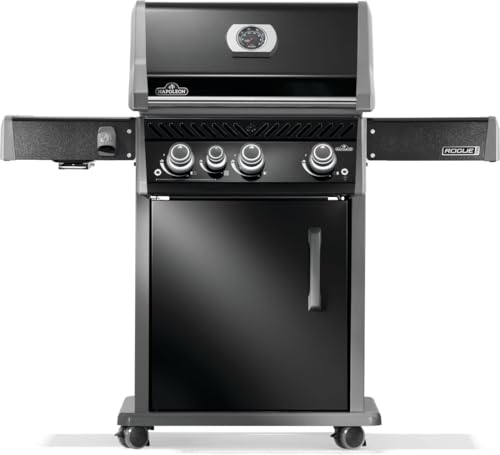
Napoleon Rogue XT 425
Wave shaped grids and even heat distribution here produce the restaurant style sear lines owners credit Napoleon for. Folding side shelves and a sturdy cart make it easy to live with day to day. Crisp, well marked steaks matter more than cooking volume for the cook who picks this one.
Pros
- Wave grids leave clean sear marks
- Heat spreads evenly across the surface
- Folding shelves save patio space
Cons
- Premium price for a three burner grill
- Cast iron needs regular seasoning
How to pick the right one
How many burners does your household actually need Two burners suit couples and small balconies, three cover most families, and four or more make sense only for cooking regular crowds. More burners add cooking area and zone control but also cost, weight, and patio footprint. Match burner count to how many people you usually feed, not to the biggest number on the shelf.
Why BTU numbers do not tell the whole story BTU measures fuel a grill can burn, not how hot or evenly it cooks. A well insulated grill with a tight fitting hood and thick grates can outperform a leakier one rated for more BTUs. Build quality, grate material, and heat retention matter more day to day, so treat BTU as a rough guide rather than a ranking.
Grate material changes both sear and upkeep Porcelain enameled cast iron holds heat well and produces strong sear marks but needs care to protect the coating. Stainless steel resists rust and cleans easily, though it can stick until seasoned. Porcelain coated steel costs less and works fine for everyday cooking, but wears faster than cast iron over years of use.
Fuel type and how it changes setup Most home gas grills run on refillable propane tanks, and some convert to a natural gas line for uninterrupted cooking. Portable models often use small disposable canisters unless fitted with an adapter hose. Decide between the convenience of a permanent gas line and the flexibility of a tank you can swap or take along on trips.
How they compare
| # | Model | Burners | Best for | Score | Price |
|---|---|---|---|---|---|
| 1 | Weber Spirit II E-310 | 3 | Best overall | 9.4 | Check price |
| 2 | Char-Broil Performance Series 4-Burner | 4 plus side | Best value | 9.1 | Check price |
| 3 | Weber Genesis E-325s | 3 plus sear | Best premium | 8.9 | Check price |
| 4 | Char-Broil Classic 360 3-Burner | 3 | Best budget | 8.6 | Check price |
| 5 | Weber Q2200 | 1 | Best portable | 8.4 | Check price |
| 6 | Monument Grills Mesa 415 | 4 | Best for big gatherings | 8.2 | Check price |
| 7 | Napoleon Rogue XT 425 | 3 | Best for searing | 8.0 | Check price |
Good to know
How many burners do I need for a family of four?
A three burner grill with 400 to 500 square inches of primary cooking area comfortably handles meals for four to six people, leaving room for a couple of heat zones without wasting fuel on unused space.
Is a higher BTU rating always better?
No. BTU reflects fuel consumption, not cooking performance. A grill with good insulation, heavy grates, and a tight hood can cook hotter and more evenly than a higher BTU model with a loose build.
Which grill grates last the longest?
Porcelain enameled cast iron tends to last longest and sears best when cared for, while stainless steel resists rust with less maintenance. Bare porcelain coated steel costs least but usually shows wear soonest.
Can I convert a propane grill to natural gas?
Some models offer a conversion kit, but not all do, and using the wrong setup is unsafe. Check manufacturer specifications before buying if a natural gas line matters to you.
How much cooking area is actually enough?
Around 400 square inches suits most households, 500 or more helps when entertaining, and compact 250 to 300 square inch grills fit couples, balconies, and travel best.
Do portable gas grills cook as well as full size ones?
Good portable models like single burner units heat evenly and sear well for their size, but the smaller surface limits how much fits at once, so they suit trips more than large gatherings.
How do I keep a gas grill from rusting?
Cover it when not in use, keep grates clean and lightly oiled, and store it somewhere dry. Stainless and cast aluminum bodies resist corrosion better than painted steel over time.
What routine maintenance does a gas grill need?
Brush the grates after each cook, empty the grease tray regularly, check burner ports for clogs, and inspect the gas hose for cracks. A seasonal deep clean keeps ignition and heat performance consistent.
Gas grill vs charcoal grill: which heats more evenly?
Gas grills generally heat more evenly and predictably once warmed up, since burners spread heat under the full grate. Charcoal grills can reach higher peak temperatures for searing but need more attention to keep heat consistent across zones.
Our pick
For most backyards, the Weber Spirit II E-310 remains the strongest overall choice, combining even heat, durable cast iron grates, and a patio friendly size. Budget focused cooks get real value from the Char-Broil Performance Series 4-Burner, while travelers and searing enthusiasts are better served by the Weber Q2200 and Napoleon Rogue XT 425.


