Glass Food Storage Containers vs Plastic: What Wins?
OXO Good Grips Smart Seal wins for lids that genuinely hold liquid without leaking. Pyrex Simply Store gives the best value for oven to fridge duty, and Rubbermaid Brilliance Glass suits lunches carried in a bag.
OXO Good Grips Smart Seal fits most kitchens best, Pyrex Simply Store wins on value for oven and fridge work, and Rubbermaid Brilliance Glass is the one worth carrying a soup in.
Every set here is made of glass, so what actually separates them lives in the lids, shapes and temperature ratings. We compared gasket design and clip mechanisms, published oven and freezer limits, how efficiently each shape stacks, and owner reports about warped lids, stained seals and glass that cracked from a fast temperature swing.
What we recommend
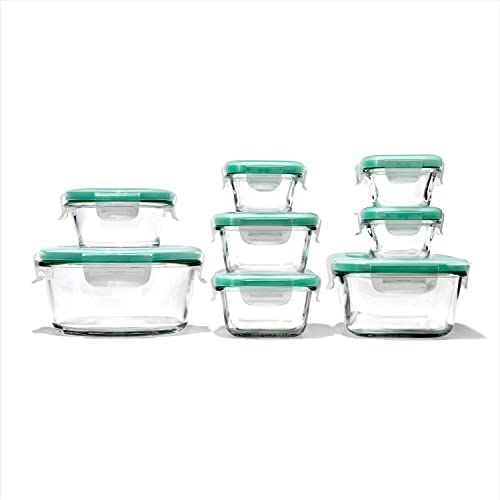
OXO Good Grips Smart Seal Glass Container Set
Four locking tabs and a removable silicone gasket hold liquid reliably on their side, a rare trait among glass container lids. That removable gasket matters most over time, since trapped food under a fixed seal is why most sets end up in the trash. Borosilicate bases handle oven use, and every shape stacks squarely without wasted gaps.
Pros
- Holds liquids without leaking in a bag
- Removable gasket can be cleaned properly
- Square shapes save fridge space when stacked
Cons
- Clip tabs take slightly longer to close
- One of the pricier sets compared here

Pyrex Simply Store 18 Piece Glass Food Storage Set
Most kitchens land on Pyrex Simply Store eventually, earned through durability and a low price per piece. Tempered glass bases move from freezer to oven, so a portion can be frozen, thawed and reheated in the same dish. Plastic lids press on rather than clip, fine for the fridge but not something to trust with soup in a bag.
Pros
- Freezer to oven capability in one dish
- Strong value for the price per piece
- Replacement lids are widely available
Cons
- Press on lids are not leakproof
- Round shapes waste some fridge space

Rubbermaid Brilliance Glass Food Storage Containers
A latching lid with a built in vent makes this the container to pick for a bag, since it microwaves without removing the lid fully. Clear glass and clear lids make finding the right dish in a packed fridge easier than expected. Owners report the latches hold up well over years, though the vent flap loosens eventually.
Pros
- Reliable seal for commuting with liquids
- Built in vent allows splatter free reheating
- Clear lids make contents easy to spot
Cons
- Vent flap can loosen with heavy use
- Heavier than Rubbermaid’s plastic Brilliance line

Glasslock 18 Piece Assorted Container Set
Glasslock built its reputation on a four sided locking lid backed by a thick silicone gasket, still among the tightest seals on the market. Tempered glass runs thicker than most competitors, adding weight but also surviving rough handling. Marinating sauces or stacking wet food in a full fridge is where this set earns its keep.
Pros
- Among the most watertight lids compared
- Thick glass tolerates rough handling
- Good spread of sizes within one set
Cons
- Noticeably heavy once containers are full
- Clips need care in the dishwasher to avoid warping

Anchor Hocking Glass Food Storage Set
These dishes read more like bakeware than storage tubs, which suits cooking a casserole and storing leftovers in the exact same dish. Thick glass presents well enough for the table, and snap on lids take over for fridge duty afterward. Lunchboxes are the weak spot, since the weight and lid style work against portability.
Pros
- Doubles as presentable serving dishes
- Thick glass handles regular oven use well
- Simple lids that clean up easily
Cons
- Snap lids are not built for travel
- Bulky footprint in a small fridge
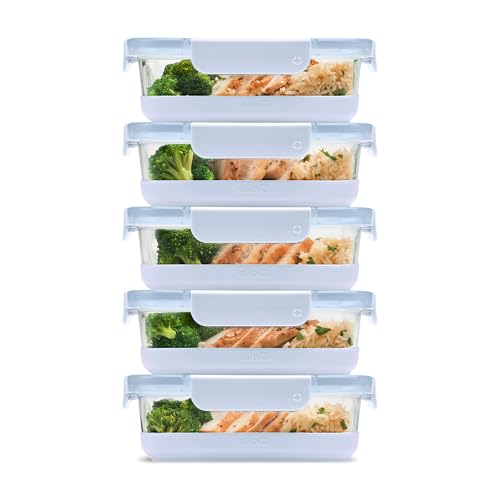
Ello DuraGlass Meal Prep Containers
A removable silicone sleeve wraps each glass base, cushioning knocks and making a hot dish easier to lift straight from a microwave. Sizes lean toward single portions, so batch cooking five identical lunches stays simple. That sleeve does add bulk in a fridge and needs occasional removal to clean underneath properly.
Pros
- Sleeve protects against chips and knocks
- Portion sizing suits batch cooking
- Easier to handle straight from the microwave
Cons
- Sleeve takes up extra fridge space
- Food residue can collect underneath the sleeve

Bayco Glass Food Storage Containers
Bayco offers the cheapest route into glass storage, pairing locking lids with rectangular bases that stack sensibly. Build quality trails the established brands, and gaskets are the first part to wear out. Still, tempered glass and a four clip lid cover the fundamentals for anyone replacing stained plastic on a tight budget.
Pros
- Lowest cost per container in this group
- Locking lids included at a budget price
- Rectangular shapes stack efficiently
Cons
- Gaskets wear out sooner than premium brands
- Replacement lids are harder to source
Compared at a glance
| # | Model | Glass type | Best for | Score | Price |
|---|---|---|---|---|---|
| 1 | OXO Good Grips Smart Seal Glass Container Set | Borosilicate | Best overall | 9.4 | Check price |
| 2 | Pyrex Simply Store 18 Piece Glass Food Storage Set | Tempered soda lime | Best value | 9.2 | Check price |
| 3 | Rubbermaid Brilliance Glass Food Storage Containers | Tempered | Best for packed lunches | 9.0 | Check price |
| 4 | Glasslock 18 Piece Assorted Container Set | Tempered | Best seals | 8.8 | Check price |
| 5 | Anchor Hocking Glass Food Storage Set | Tempered soda lime | Best for oven to table | 8.6 | Check price |
| 6 | Ello DuraGlass Meal Prep Containers | Tempered | Best for meal prep | 8.3 | Check price |
| 7 | Bayco Glass Food Storage Containers | Tempered | Best budget | 8.0 | Check price |
How to pick the right one
Borosilicate and tempered glass are not the same Borosilicate handles sudden temperature swings better, which matters when a dish moves from fridge to hot oven. Tempered soda lime glass resists impact better and is what most mainstream sets use instead. Neither type is immune to thermal shock, so let a cold dish sit out before it goes into a hot oven regardless of which you own.
The lid is what you are really choosing Nearly every complaint about glass storage traces back to the lid. Press on lids work fine in a fridge and fail in a bag. Four clip lids with a silicone gasket hold liquid but need that gasket cleaned regularly. Latching lids with a vent make microwaving tidier. Decide what you will actually carry, then match the lid style to that.
Shape decides how much fits in your fridge Round containers waste roughly a fifth of the space a square one occupies in the same footprint. A tight fridge favors rectangular sets with uniform widths, so lids and bases stack in neat columns. Check whether pieces nest when empty too, since a set that will not nest ends up taking over a cupboard.
Looking after the gaskets Silicone seals absorb tomato, curry and garlic odours, and they eventually stain from it. Sets with removable gaskets pull apart for a proper wash and dry, roughly doubling how long the set stays pleasant to use. Always dry lids fully before storing them, since a damp sealed lid is how the musty smell starts.
Good to know
Can glass food storage containers go in the oven?
The glass bases in most sets here can, but never the lids. Check the manufacturer’s stated maximum temperature, avoid the grill or broiler, and never move a container straight from the fridge into a preheated oven, which risks thermal shock.
Are glass containers safe in the freezer?
Yes, as long as you leave headspace for liquids to expand and avoid filling right to the rim. Cool food fully before freezing, then let a frozen container thaw in the fridge rather than in hot water or a hot oven.
Is glass better than plastic for food storage?
Glass resists staining, does not hold odours, and goes safely in the oven. Plastic stays lighter and does not shatter if dropped. Many households keep glass for reheating leftovers and plastic for children’s lunches and picnics.
Which glass containers are genuinely leakproof?
Four clip lids with a full silicone gasket, like the OXO Smart Seal and Glasslock designs, prove most reliable. Press on and snap lids resist splashing but should not carry soup laid flat inside a bag.
Can the lids go in the dishwasher?
Most lids are dishwasher safe on the top rack. Repeated high heat from the bottom rack warps clip lids and shortens gasket life, so keep plastic lids away from the heating element.
How do I stop the seals from smelling?
Remove the gasket where possible, wash it separately, then dry it fully before reassembling. Soaking in a bicarbonate of soda solution clears most lingering odours, and storing lids off the containers lets air circulate.
Why did my glass container crack?
Thermal shock, meaning a rapid temperature change, causes most cracks, along with unseen chips that weaken the rim. Avoid pouring boiling liquid into a cold dish, never set a hot dish on a wet or cold surface, and retire any container with a chipped edge.
Can I microwave glass containers with the lid on?
Only if the lid has a vent, and only with that vent open. A sealed lid traps steam and builds pressure. Where there is no vent, rest the lid loosely on top instead, or use a separate cover.
Which glass containers work best for carrying soup or sauce?
OXO Smart Seal and Glasslock both use a full silicone gasket with locking clips, the combination most likely to survive being tipped sideways in a bag. Rubbermaid Brilliance follows close behind thanks to its manufacturer rated leakproof latch.
The verdict
OXO Good Grips Smart Seal is the set worth buying, since the lids seal properly and the gaskets come out for cleaning, which determines whether a set survives three years of daily use. Pyrex Simply Store remains the better value when oven and fridge duty matter more than portability, and Rubbermaid Brilliance Glass is the safer pick for anything traveling in a bag.


