How Do You Pick the Right Golf Ball for Your Swing?
Titleist’s Pro V1 remains the top pick for players chasing tour level greenside spin and consistency. Srixon’s Soft Feel suits moderate swing speeds better, at a fraction of the cost. Wilson’s Duo Soft+ is the low compression choice that helps slower swings get airborne and hold distance.
Titleist’s Pro V1 leads this list because its multi layer urethane cover gives better players the greenside control they want, without sacrificing distance. Srixon’s Soft Feel matches the moderate swing speeds most amateurs actually produce. Wilson’s Duo Soft+ carries the lowest compression here, which helps slower swings launch higher.
Choosing a golf ball mostly means matching compression and cover material to your swing, which marketing tends to obscure. Urethane covers spin more around the green and cost more, ionomer covers last longer and spin less, and a ball that feels great at 85 miles per hour can feel dead at 110. We compared published compression ratings, cover materials, layer counts and target swing speeds, then weighed those against owner reports on feel, durability and wind performance.
How to pick the right one
How do you match compression to swing speed? Compression describes how much a ball deforms at impact. A slow swing cannot fully compress a firm ball, costing distance and producing a hard, unresponsive feel. Swings below about 85 miles per hour suit low compression, 85 to 100 suits mid compression, and above 100 suits firmer tour balls. A launch monitor session at a fitting bay reveals your number in ten minutes and beats guessing from a review.
What does cover material do to greenside spin? Cast urethane covers grip wedge grooves and generate the spin that stops a ball on the green. Ionomer and surlyn covers run harder, last longer and spin less. Urethane costs more and scuffs faster. The real question is whether your wedge strikes are consistent enough to use that spin, since a player who does not will get more from durability and price.
Do more layers actually make a golf ball better? Two piece balls pair a core with a cover and prioritise distance and durability. Three piece designs and above add a mantle layer, letting designers reduce driver spin while increasing wedge spin, a contradiction otherwise. Five piece constructions push this further still. Extra layers give designers more control over how spin varies by club, not automatic improvement.
Where should you actually test a new golf ball? Most players judge a ball by driver distance, where modern balls differ little. Real differences show up on chips, pitches and putts, where feel and spin vary substantially. Buy a sleeve of two or three candidates and play them in a short game session. Choose whichever behaves most predictably from fifty yards and closer.
The shortlist, ranked

Titleist Pro V1
This ball sets the reference point the rest of the category gets measured against. Its cast urethane cover produces the greenside spin that lets a skilled player stop a wedge shot, while the multi layer core keeps long game spin low enough to hold distance. Consistent contact rewards it, and a swing that cannot control face angle wastes it.
Pros
- Outstanding greenside spin and control
- Consistent flight in wind
- Soft feel without losing ball speed
Cons
- Most expensive ball in this group
- Urethane cover scuffs faster than ionomer

TaylorMade TP5
Five layers separate driver spin from wedge spin more aggressively than a typical three piece design. High launch off the tee pairs with a steep descent into greens. Players who shape shots and want the ball to respond will notice the difference most.
Pros
- Excellent separation of long and short game spin
- Steep descent angle holds greens
- Responds well to shot shaping
Cons
- Premium pricing
- Benefits are hard to feel below about 95 mph

Callaway Chrome Soft
Urethane cover performance arrives here at a noticeably softer compression than the Pro V1. Moderate to fast swingers who dislike a firm feel tend to prefer it. Greenside control sits close to the top tier, making it the premium ball most often recommended to amateurs.
Pros
- Soft feel with genuine urethane spin
- Forgiving on off centre strikes
- Strong all round performance
Cons
- Premium price point
- Softest feel is not to everyone’s taste

Srixon Soft Feel
A low compression core pairs with an ionomer cover that resists scuffing, a combination that has been a value benchmark for years. Amateurs swinging in the 80s launch it easily and hold a straight line. Wedge spin trails urethane, though most players at this level are not generating much of it anyway.
Pros
- Excellent value for the performance
- Easy launch at moderate swing speeds
- Durable cover lasts multiple rounds
Cons
- Less greenside spin than urethane balls
- Feels firm to players used to premium soft balls

Bridgestone e6
Engineering aimed at reducing sidespin translates into straighter shots for players fighting a slice or hook. Soft feel and easy launch make it approachable for most swing types. A ball built to spin less off the driver also spins less into greens.
Pros
- Noticeably reduces sidespin dispersion
- Soft feel off the putter face
- Easy to launch
Cons
- Limited stopping power on firm greens
- Not suited to players who shape shots
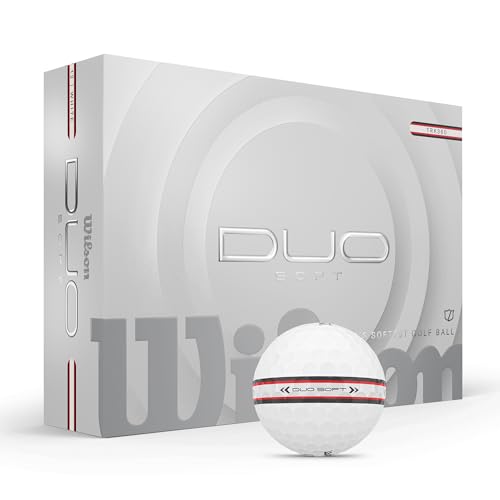
Wilson Duo Soft+
One of the lowest compression ratings on the market makes this ball for swing speeds that struggle to compress a firmer one. Easier launch and a very soft feel around the greens follow from that. Faster swings will find it mushy and lose distance, so match it honestly to your speed.
Pros
- Very easy to compress at slower speeds
- Extremely soft feel
- Affordable for regular play
Cons
- Loses efficiency at faster swing speeds
- Minimal greenside spin

Vice Pro Soft
A cast urethane cover arrives here below the price of traditional premium brands, putting tour style spin within reach of players who lose a few balls a round. Soft compression suits moderate swing speeds well. Consistency runs strong, though the brand lacks decades of tour validation the majors carry.
Pros
- Urethane cover at a lower cost
- Soft feel with real greenside bite
- Distinctive colour options
Cons
- Less tour proven than the major brands
- Cover marks up as quickly as other urethane balls
How they stack up
| # | Model | Construction | Best for | Score | Price |
|---|---|---|---|---|---|
| 1 | Titleist Pro V1 | Three piece | Best overall | 9.4 | Check price |
| 2 | TaylorMade TP5 | Five piece | Best for spin control | 9.2 | Check price |
| 3 | Callaway Chrome Soft | Multi layer | Best soft premium | 9.0 | Check price |
| 4 | Srixon Soft Feel | Two piece | Best for average swing speeds | 8.8 | Check price |
| 5 | Bridgestone e6 | Two piece | Best for straight flight | 8.6 | Check price |
| 6 | Wilson Duo Soft+ | Two piece | Best for slow swings | 8.3 | Check price |
| 7 | Vice Pro Soft | Three piece | Best value urethane | 8.0 | Check price |
Good to know
Does the golf ball you play actually matter?
Yes, mainly around the green and in feel. Off the tee, modern balls sit much closer together than marketing suggests for most amateurs. Greenside spin, launch at a given swing speed and putter feel are where they genuinely differ.
What compression rating should you play?
Under about 85 miles per hour of driver swing speed suits low compression. 85 to 100 suits mid compression, and above 100 suits firmer tour balls. Feel preference matters too, and some players choose softer than their speed indicates simply for the sound and response.
Are expensive golf balls worth the extra cost?
They are, if your speed and strike consistency let you use the extra greenside spin, and if you are not losing several balls a round. A player losing four balls a round gets more value from a durable mid priced ball played consistently.
What’s the difference between urethane and surlyn covers?
Urethane is a softer cover that grips wedge grooves and produces higher short game spin, at a higher cost and shorter lifespan. Surlyn and ionomer covers run harder, resist cuts, spin less and cost less to make. Nearly every tour ball uses urethane.
Do low compression balls go further?
Often yes for slower swings, since the player can compress the ball fully and transfer energy efficiently. Faster swings see the opposite, with the ball over compressing and losing efficiency. Distance depends on the match between ball and swing speed, not compression alone.
How long does a golf ball actually last?
A ball that avoids hazards and cart paths can last several rounds. Urethane covers show scuffing sooner, especially from wedge grooves and bunker sand. Replace a ball once the cover is visibly cut or scuffed, since that changes flight.
Should beginners use premium golf balls?
Usually not. Beginners lose more balls and rarely generate the spin premium construction unlocks. A durable low compression two piece ball gives easier launch and better value while the swing develops.
Do coloured golf balls perform differently?
Construction stays the same, so performance does not change with colour. Matte and coloured finishes mainly aid visibility against certain backgrounds and in low light. Some players find yellow easier to track in flight, a modest but real benefit.
Pro V1 vs Chrome Soft: what’s the real difference?
Both use urethane covers for greenside spin, but the Chrome Soft runs a noticeably lower compression for a softer feel. The Pro V1 suits players who prefer a firmer response. Spin and control land close between the two.
How many golf balls should you carry per round?
Most rounds use two or three balls if the round goes well, more if hazards and cart paths come into play. A sleeve of three or a dozen box covers most weekend rounds without running short.
The verdict
Players generating real clubhead speed with consistent contact still get the most from the Titleist Pro V1, and its greenside control justifies the cost. Most amateurs swinging in the 80s will score better and spend less with the Srixon Soft Feel. Slower swings should start with the Wilson Duo Soft+ and revisit the question as speed increases.


