Picking Golf Irons That Forgive a Mid Handicap Swing
Callaway’s Paradym Ai Smoke irons top this group thanks to a variable thickness face that protects mishits. TaylorMade’s Qi irons deliver similar forgiveness for less, and the Cleveland Launcher XL Halo set helps slower swing speeds get the ball airborne fastest.
Callaway’s Paradym Ai Smoke irons suit most mid handicap golfers, since the variable face design keeps ball speed up on strikes away from centre. TaylorMade’s Qi irons deliver similar forgiveness for less money. Cleveland’s Launcher XL Halo set helps golfers with slower swing speeds get the ball airborne, while better players wanting feedback should look toward the Mizuno JPX Hot Metal line.
Iron buying goes wrong when players choose by tour presence rather than by what their own strike pattern needs. A blade rewards a centred hit and punishes everything else, while a game improvement head keeps distance on the thin and toe strikes that fill most amateur rounds. Shaft weight and flex matter just as much as the head. We compared these sets on construction, published forgiveness technology, offset, sole design and stock shaft options, and we strongly recommend a fitting before committing.
What we recommend

Callaway Paradym Ai Smoke Irons
Face thickness varies across the hitting area, protecting ball speed on the off centre strikes mid handicap golfers make most often. Compact styling at address still satisfies better players despite the added forgiveness. Sound is noticeably more solid than earlier hollow body Callaway irons.
Pros
- Holds ball speed well on mishits across the face
- Compact enough at address for a forgiving iron
- Wide range of stock shaft options
Cons
- Premium price within the game improvement category
- Feedback on strike location is muted

TaylorMade Qi Irons
A cap back design with internal damping gives forgiveness without the hollow, clicky feel that usually comes with it. Long irons launch high and land soft, exactly where handicap golfers lose the most shots. It stands out as a strong all round set at a sensible price.
Pros
- Strong forgiveness without a hollow sounding impact
- Long irons are genuinely easier to launch
- Good value against the flagship sets
Cons
- Larger head shape than better player irons
- Offset is noticeable to those who dislike it

Cleveland Launcher XL Halo Irons
Cleveland leans fully into ease of use with a wide sole, a hybrid like profile in the long irons and light stock shafts. Golfers who struggle to get mid and long irons airborne find this set immediately helpful. Workability is the trade off, and a fair one for the target player.
Pros
- Easiest set here to get airborne
- Wide sole helps through soft turf and rough
- Light stock shafts suit moderate swing speeds
Cons
- Very little shot shaping control
- Chunky look at address will not suit everyone

Ping G430 Irons
Ping’s G series has a long standing reputation for sole design that moves cleanly through varied turf, producing more consistent contact from imperfect lies. Variable face thickness protects distance on mishits, and the sound stays well controlled. Ping’s colour code fitting system is worth using rather than buying stock.
Pros
- Excellent through the turf from imperfect lies
- Consistent distances across the set
- Established lie angle fitting system
Cons
- Best results really do require a fitting
- Look is functional rather than premium

Mizuno JPX 923 Hot Metal Irons
Mizuno built its reputation on feel, and this Hot Metal line delivers a soft, informative impact alongside modern distance and forgiveness. The head stays more compact than most game improvement irons. Improving players who want to know where on the face they struck the ball tend to prefer it.
Pros
- Best impact feel and feedback in this group
- Compact shape that inspires confidence
- Extensive custom shaft options
Cons
- Less forgiving than the wide sole sets
- Rewards a repeatable strike more than others here
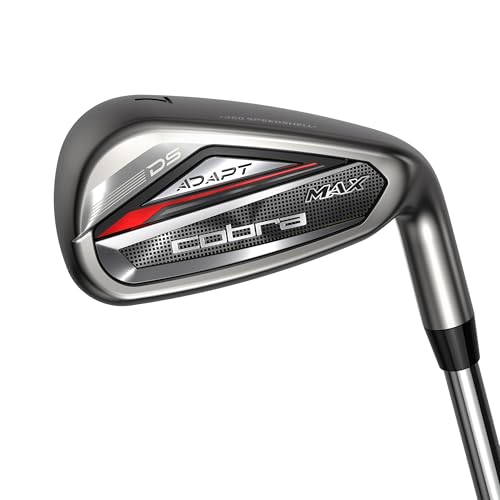
Cobra Darkspeed Irons
Progressive construction runs through the set, pairing forgiving hollow heads in the long irons with tighter profiles in the scoring clubs. That mix makes the four and five irons genuinely usable for handicap golfers. Finish and looks lean more aggressive than the traditional brands, which comes down to taste.
Pros
- Long irons launch noticeably easier
- Progressive design keeps short irons controllable
- Competitive pricing for a full set
Cons
- Styling divides opinion
- Feel is firmer than Mizuno or Ping

Wilson Dynapower Irons
Wilson consistently gets overlooked despite building irons that perform close to the major brands for less. A variable face and a stability frame hold distance on mishits across the set. Buyers wanting a full set without flagship pricing should add this to the shortlist.
Pros
- Strong performance for the price
- Respectable forgiveness on off centre strikes
- Clean, understated appearance
Cons
- Smaller custom shaft selection
- Lower resale value than the big brands
Before you buy
How to choose an iron category before a brand Iron heads fall on a spectrum. Blades and players irons are compact, carry little offset and demand a centred strike, suiting low handicap golfers who want to shape shots. Player distance irons add some forgiveness while keeping a tidy shape. Game improvement and super game improvement irons use wider soles, more offset and larger faces to keep mishits playable. Most amateurs score better with more forgiveness than their ego suggests, so be honest about your typical strike.
Do shafts matter as much as the head? Yes, and the wrong shaft on the right head will underperform badly. Shaft weight influences tempo and consistency, while flex affects launch and dispersion. Slower swing speeds generally benefit from lighter graphite, faster and more aggressive swings from heavier steel. Stock options cover a reasonable range today, but fitting still pays for itself fastest here, since shaft fit is invisible in any online comparison.
How many irons should be in a set, and how do gaps work? Modern sets often start at a five or six iron and rely on hybrids or utility clubs above that, since long irons are difficult for most players to launch. Check the lofts too, because strongly lofted game improvement sets can leave a large distance gap between the pitching wedge and the next wedge you own. Measure actual carry distances and build a set with even gaps rather than trusting the numbers stamped on the sole.
Which irons suit hilly courses or firm links turf? Sole design changes how a club moves through turf, and the right bounce and width depend on both attack angle and usual course conditions. Wide soles help on soft ground and in the rough. Narrower soles suit firm links style turf and steeper swings. A fitting session on a launch monitor reveals more in an hour than weeks of reading, and most retailers deduct the fitting fee against a purchase.
The lineup, side by side
| # | Model | Category | Best for | Score | Price |
|---|---|---|---|---|---|
| 1 | Callaway Paradym Ai Smoke Irons | Game improvement | Best overall | 9.4 | Check price |
| 2 | TaylorMade Qi Irons | Game improvement | Best value forgiveness | 9.2 | Check price |
| 3 | Cleveland Launcher XL Halo Irons | Super game improvement | Best for slower swing speeds | 9.0 | Check price |
| 4 | Ping G430 Irons | Game improvement | Best turf interaction | 8.8 | Check price |
| 5 | Mizuno JPX 923 Hot Metal Irons | Player distance | Best feel | 8.6 | Check price |
| 6 | Cobra Darkspeed Irons | Game improvement | Best long iron performance | 8.3 | Check price |
| 7 | Wilson Dynapower Irons | Game improvement | Best value full set | 8.0 | Check price |
Frequently asked questions
What are the best golf irons for a mid handicapper?
Game improvement irons that protect ball speed on off centre strikes, such as the Callaway Paradym Ai Smoke or TaylorMade Qi, generally serve mid handicappers best. They keep mishits playable without looking oversized at address, the balance most improving players want.
How many irons should be in my set?
Most sets run from a five or six iron through the pitching wedge, with hybrids or utility clubs filling the longer end. Even distance gapping across your fourteen clubs matters more than owning a traditional set makeup.
Do I need a club fitting for new irons?
It is the single most valuable step in buying irons. Lie angle, shaft weight, flex and length all change dispersion and consistency, and none of them can be judged from a product page. Many retailers refund the fitting fee against a purchase.
Are new irons really longer than older ones?
Partly, and much of the gain comes from stronger lofts rather than genuinely better technology. The real improvement in modern irons is consistency of distance on off centre strikes, which matters more for scoring than a few extra yards on a perfect hit.
Steel or graphite shafts, which suits my irons?
Graphite is lighter and helps golfers with moderate swing speeds generate clubhead speed and launch. Steel is heavier, generally more consistent for faster swingers and gives more feedback. Neither is universally correct, which is exactly why fitting matters.
What is offset and does it actually help?
Offset sets the leading edge slightly behind the hosel, giving the hands more time to square the face and helping golfers who slice. More forgiving irons carry more offset. Better players often dislike the look and prefer minimal offset for control.
Should I replace long irons with hybrids?
For most amateurs, yes. Hybrids launch higher and are far more forgiving than three, four and even five irons. Many modern sets are sold on that assumption and start at the five or six iron for exactly this reason.
Game improvement vs players irons: which fits my handicap?
Game improvement irons suit anyone who misses the centre of the face regularly, which covers most amateurs. Players irons suit low handicap golfers who strike consistently and want to shape shots on demand.
How often should irons be replaced?
Grooves wear gradually and clubs stay usable for many years. Worn grooves affecting spin, a significant change in swing or physical condition, or a set that no longer fits your gapping are the practical triggers. Every few years is more than enough for most golfers.
The bottom line
Callaway’s Paradym Ai Smoke irons stand out as the strongest all round choice for mid handicap golfers, since they keep ball speed on the mishits that define most rounds while still looking tidy at address. TaylorMade’s Qi set delivers much of the same benefit for less, and the Cleveland Launcher XL Halo answers slower swing speeds better than either. Book a fitting before ordering any of them, since shaft choice changes the result significantly.