Golf Gloves That Improve Grip in Any Weather
FootJoy’s StaSof leads on feel, with soft cabretta leather that lets you grip the club lightly in dry weather. Titleist’s Players Glove offers a thinner, more connected alternative. For humid or wet rounds, the FootJoy WeatherSof blends leather and synthetic for grip that survives sweat and rain.
Grip pressure decides more golf shots than swing mechanics, and a soft cabretta glove like the FootJoy StaSof keeps that pressure light in dry conditions. Titleist’s Players Glove trims the leather even thinner for players who want almost no barrier between hand and grip. Sweat or rain changes the calculation entirely, which is where the FootJoy WeatherSof and its synthetic panels take over.
Two gloves that feel identical in a store can age completely differently after twenty rounds. Premium cabretta wears out fast once hands sweat, while synthetic blends survive humidity but never match that tacky feel. We compared leather grades, thickness, wet weather grip, durability and sizing across seven current gloves, then checked what owners report about thumb seams splitting after repeated use.
The top picks, ranked
FootJoy StaSof Golf Glove
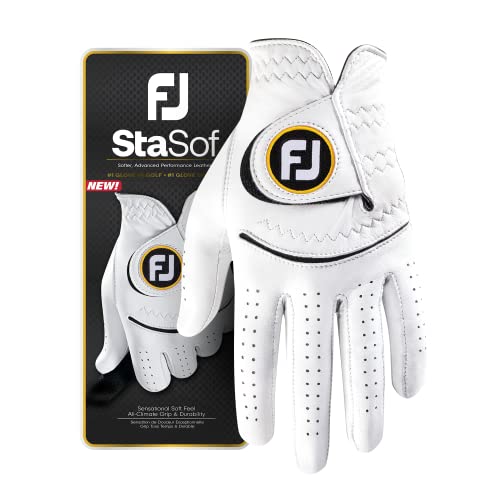
Cabretta leather on the StaSof runs thinner and tackier than most mid range gloves, which is what lets a light grip hold the club securely. Finger tapering avoids bunching at the tips, a common complaint with looser cut gloves. Sweaty hands will shorten its life fast, so treat it as a fair weather glove.
Pros
- Exceptional feel and connection to the grip
- Tapered fingers avoid bunching at the tips
- Available in cadet and standard sizing
Cons
- Wears out quickly under regular play
- Grip drops off once the leather gets wet

Titleist Players Golf Glove
Titleist trims this glove down to one of the thinnest cuts available, suited to players who dislike any material between hand and grip. Fit runs snug out of the box and molds to the hand within a round or two. Palm wear shows early on thin cabretta, so durability trails thicker gloves.
Pros
- Thinnest, most connected feel in this lineup
- Molds to the hand after just a few holes
- Clean styling without extra branding
Cons
- Short lifespan under frequent play
- Snug fit means many players size up

FootJoy WeatherSof Golf Glove
Leather at the palm meets synthetic panels across the back on the WeatherSof, a mix that outlasts full cabretta gloves several times over. Humidity barely affects its grip, where soft leather turns slick. Feel sits a step below premium leather, a tradeoff most club golfers accept for the extra life.
Pros
- Lasts far longer than full leather gloves
- Grip holds up in humid conditions
- Strong value when bought in multipacks
Cons
- Less feel than premium cabretta
- Synthetic back runs warmer in high heat

Callaway Weather Spann Golf Glove
Callaway builds this glove fully synthetic, so grip actually improves once the material gets damp instead of collapsing like leather does. Rain or heavy dew is exactly where it earns its keep. Refinement takes a back seat, so most players keep it in the bag as a situational spare rather than a daily glove.
Pros
- Grip improves rather than fails in the rain
- Holds up across many rounds of use
- Dries quickly between wet sessions
Cons
- Feel lags noticeably behind leather options
- Fit is less forgiving than leather gloves

TaylorMade Tour Preferred Golf Glove
Perforated panels across the fingers and palm move air on this glove, cutting the sweat buildup that ruins leather in summer heat. Cabretta stays soft here without being the thinnest option tested. Players who want leather feel through hot rounds get a workable compromise.
Pros
- Ventilation cuts down sweat buildup
- Leather feel holds up in warm weather
- Comfortable medium thickness throughout
Cons
- Perforations weaken the leather over time
- Not built for wet or rainy rounds

Bionic StableGrip Golf Glove
Hand therapists informed the anatomical padding built into this glove, aimed at players managing joint pain or reduced grip strength. Pre rotated finger panels reduce bunching that aggravates sore hands. Thickness is deliberate here, trading tour feel for comfort that keeps arthritic golfers on the course.
Pros
- Padding eases pressure on sore joints
- Pre rotated fingers cut down on bunching
- More durable than standard cabretta gloves
Cons
- Thicker than a typical tour glove
- Costs more than mainstream options

Nike Dura Feel IX Golf Glove
Nike pairs a leather palm with stretch fabric across the knuckles, making this glove easy to pull on and comfortable through the swing. Pricing usually sits at the low end for a branded glove. Casual and occasional players get fair feel and fair durability without the premium cost.
Pros
- Stretch panels add knuckle comfort
- Low cost for a name brand glove
- Quick to put on and take off
Cons
- Durability sits in the middle of the pack
- Less feel than dedicated cabretta gloves
Compared at a glance
| # | Model | Material | Best for | Score | Price |
|---|---|---|---|---|---|
| 1 | FootJoy StaSof Golf Glove | Premium cabretta leather | Best overall | 9.4 | Check price |
| 2 | Titleist Players Golf Glove | Cabretta leather | Best for feel | 9.2 | Check price |
| 3 | FootJoy WeatherSof Golf Glove | Leather and synthetic blend | Best value | 9.0 | Check price |
| 4 | Callaway Weather Spann Golf Glove | Full synthetic | Best for wet weather | 8.8 | Check price |
| 5 | TaylorMade Tour Preferred Golf Glove | Cabretta leather | Best for hot weather | 8.6 | Check price |
| 6 | Bionic StableGrip Golf Glove | Cabretta with padded zones | Best for arthritic hands | 8.3 | Check price |
| 7 | Nike Dura Feel IX Golf Glove | Leather palm with stretch panels | Best budget | 8.0 | Check price |
How to pick the right one
Cabretta leather versus synthetic construction Cabretta is fine grained sheepskin, thin and slightly tacky, the reason tour players favor it. It absorbs sweat and stiffens as it dries, which shortens its life fast. Synthetic gloves breathe better, last longer, and in some cases grip better once wet, though nothing quite matches good cabretta for feel. Many golfers own both, switching by weather rather than picking one glove for everything.
Getting the fit right A golf glove should sit snug like a second skin, with no loose material in the palm and no overhang at the fingertips. Leather stretches with wear, so a glove that feels slightly tight new is usually correct. One that feels comfortable in the store will likely be loose within two rounds. Cadet sizing suits players whose fingers run short relative to palm width.
Which hand needs the glove, and is one required Golfers wear the glove on their lead hand, the left for a right handed player and the right for a left handed player. That hand does most of the gripping work through the swing. Some players wear two, especially in cold or wet weather, and a few tour pros wear none at all. No rule requires a glove; it mainly aids grip security and prevents blisters.
Making a golf glove last longer Sweat destroys leather faster than anything else, so remove the glove between shots instead of leaving it on all round. Never ball it up in a bag or dry it on a radiator, which leaves cabretta hard and shiny. Rotating two gloves across a round lets each one dry properly. These habits can roughly double a cabretta glove’s useful life.
Frequently asked questions
Which hand does a golf glove go on?
Golfers wear it on the lead hand, left for right handed players and right for left handed players. That hand carries most of the gripping load through the swing. Some choose both hands in cold or wet weather.
How should a golf glove fit?
Snug through the palm with no loose material, and no excess bunching at the fingertips. Leather stretches, so a slightly tight new glove usually settles into place. Wide palms paired with short fingers call for cadet sizing.
How long does a golf glove last?
Premium cabretta typically lasts five to ten rounds under regular play. Synthetic blends often last several times longer. Sweat and grip pressure vary so much between players that two golfers can get very different life from the same glove.
Are leather or synthetic golf gloves better?
Leather wins on feel and dry weather grip. Synthetic wins on durability, breathability and wet weather grip. Neither beats the other outright, which is why many golfers carry both and choose by forecast.
Should I wear a golf glove in the rain?
Standard leather turns slick once soaked, which works against you. Rain specific synthetic gloves are built so grip improves when damp, and many players keep a pair just for that. A spare towel and backup glove matter almost as much as the glove itself.
Can I wash a golf glove?
Hand wash gently in cool water with mild soap, then air dry flat away from heat. Machine washing or heat drying will harden cabretta permanently. Synthetic gloves tolerate washing far better than leather.
Do I need a golf glove at all?
No rule requires one, and some professionals play bare handed. A glove mainly boosts grip security in humidity and guards against blisters during heavy practice. Skipping it is a legitimate personal preference.
What is a cadet size golf glove?
Cadet gloves match standard palm width but use shorter fingers, suited to players whose fingers are proportionally short. Bunching at the fingertips despite a correct palm fit is the sign to try cadet sizing.
The verdict
FootJoy’s StaSof rewards dry weather play with the lightest, most connected grip in this lineup, though its cabretta wears quickly and needs fair weather to shine. Most club golfers get better everyday value from the FootJoy WeatherSof, since its blend survives sweat without much feel lost. Keep a Callaway Weather Spann in the bag too, and a wet round stops being a struggle.