Golf Wedges Compared: Finding the Right Loft for Your Bag
Skilled players chasing precise turf interaction should look at the Titleist Vokey SM10 for its wide grind selection. The Cleveland RTX 6 ZipCore delivers strong spin for less money, and the Callaway Jaws Raw bites hardest out of rough.
Players who shape shots deliberately should start with the Titleist Vokey SM10. Most golfers get the best spin per dollar from the Cleveland RTX 6 ZipCore, and the Wilson Harmonized covers a first wedge without a large outlay.
The number stamped on a wedge sole is the least important spec. Bounce and grind decide whether the club digs or glides through your turf and swing, and a well reviewed wedge in the wrong bounce feels unusable. We compared published loft and bounce combinations, grind options, face technology and fitting flexibility across seven current models.
How to pick the right one
What is bounce and why does it matter most on a wedge? Bounce is the angle between the leading edge and the lowest point of the sole, and it decides whether the club digs into turf or skids across it. Steep swingers and soft courses call for higher bounce around twelve degrees or more, while sweepers on firm links turf suit eight degrees or less. Getting this wrong produces fat and thin shots that practice alone will not fix.
How does grind change what shots you can hit? Grind describes material removed from the heel, toe or trailing edge, and it controls how far you can open the face without lifting the leading edge off the ground. A heel relief grind lets you open the club for a flop shot while keeping the edge low. Players who rarely open the face do better with a simple full sole grind.
How many wedges do I need and what loft gaps make sense? Most golfers should aim for four to six degrees between wedges. A common modern setup runs a 46 degree pitching wedge, a 50 or 52 degree gap wedge, a 56 degree sand wedge and a 60 degree lob wedge. Check your pitching wedge loft first, since strong lofted game improvement irons often leave a larger than expected gap.
How often do wedge grooves wear out and lose spin? Wedge faces are consumables. Hitting a wedge two or three times a week from a practice mat wears away meaningful spin within a season, well before the club looks worn. Owners report the drop shows up first on partial shots into the wind. Cleaning grooves after every few shots and rotating practice between wedges slows the decline.
The top picks, ranked

Titleist Vokey SM10
No other wedge line offers as many loft, bounce and grind combinations, so a proper fitting can genuinely match the club to your turf and attack angle. SM10 shifts the center of gravity forward for a lower, more controlled flight on full shots. Owners report the added consistency shows up most on partial wedges into the wind.
Pros
- Unmatched grind and bounce selection
- Precise, controlled full shot flight
- Excellent turf interaction when fitted correctly
Cons
- Choice can overwhelm without a fitting
- Less forgiving on off centre strikes
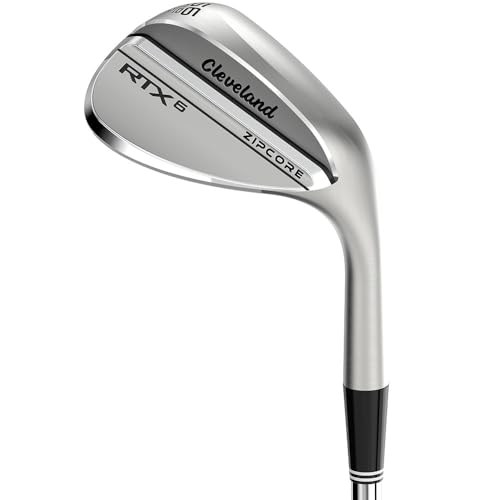
Cleveland RTX 6 ZipCore
A low density core shifts mass toward the toe, giving this wedge a better balanced head than earlier Cleveland models. Sharper grooves combine with a laser milled surface between them to hold spin in wet conditions, where grip usually disappears. It suits golfers chasing tour level spin without a tour level fitting process.
Pros
- Very high spin from the face milling
- Balanced head feels stable
- Strong value against tour wedges
Cons
- Fewer bounce combinations than Vokey
- Grooves wear faster with heavy practice

Callaway Jaws Raw
This wedge leaves the face unplated so it rusts deliberately, and that textured surface grips the ball better as the club ages. Aggressive groove geometry works especially well from wet grass and light rough where a smooth face slides. Expect the head to look worse and perform better over time, a tradeoff some players love and others avoid.
Pros
- Exceptional grip from wet grass and rough
- Face texture improves as it rusts
- Good grind range for the price
Cons
- Rust appearance is divisive
- Needs drying after wet rounds
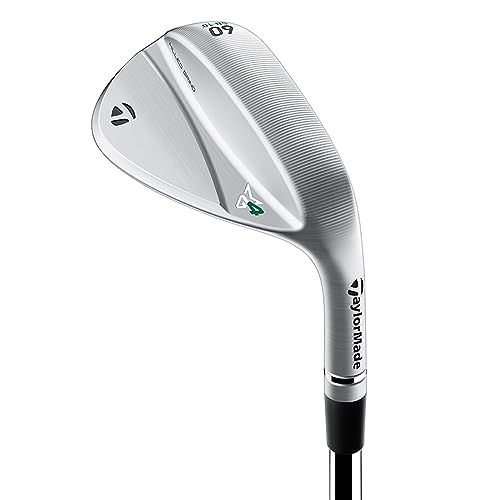
TaylorMade Milled Grind 4
Every sole in this line is machine milled rather than hand ground, so the bounce ordered is the bounce received within a tight tolerance. That consistency matters for players who buy multiple wedges and want them to behave identically. A spin treated face and tighter groove spacing help hold greens on full shots.
Pros
- Very consistent sole geometry between clubs
- Reliable full shot spin
- Clean look behind the ball
Cons
- Fewer exotic grind shapes
- Firmer feel than forged rivals

Ping Glide 4.0
Ping shapes this line for golfers who need help rather than shot shaping options, with a slightly larger head and an emery blasted face that adds friction on partial shots. A stock grip longer than standard lets you choke down for controlled distances without shifting hand position. Owners report it plays noticeably kinder from fluffy lies.
Pros
- More forgiving head shape
- Extended grip aids distance control
- Wide sole option helps from soft sand
Cons
- Less workable for skilled shot makers
- Larger profile at address

Mizuno T24
Mizuno grain flow forges this wedge the same way it forges its irons, producing the soft feel around the green that keeps players loyal to the brand. A copper underlay beneath the finish dampens vibration further. It suits players who judge a short game club by feedback through their hands rather than launch monitor numbers.
Pros
- Outstanding soft feel on touch shots
- Attractive shaping at address
- Good grind selection
Cons
- Soft face wears quicker with range use
- Finish marks easily

Wilson Harmonized Wedge
Golfers carrying only a pitching wedge get the biggest short game upgrade available by adding a 56 or 60 degree Harmonized for little money. Its classic blade shape and moderate sole suit ordinary parkland turf. Spin trails tour wedges, but the gap between having a sand wedge and not having one dwarfs the gap between wedge models.
Pros
- Very low cost entry to specialist wedges
- Wide loft range including 64 degrees
- Classic blade shaping
Cons
- Less spin than premium faces
- Single grind option per loft
The lineup, side by side
| # | Model | Lofts | Best for | Score | Price |
|---|---|---|---|---|---|
| 1 | Titleist Vokey SM10 | 46 to 62 degrees | Best overall | 9.4 | Check price |
| 2 | Cleveland RTX 6 ZipCore | 46 to 60 degrees | Best value | 9.2 | Check price |
| 3 | Callaway Jaws Raw | 48 to 60 degrees | Best for spin from rough | 9.0 | Check price |
| 4 | TaylorMade Milled Grind 4 | 46 to 60 degrees | Best for consistency | 8.8 | Check price |
| 5 | Ping Glide 4.0 | 46 to 60 degrees | Best for mid handicap forgiveness | 8.6 | Check price |
| 6 | Mizuno T24 | 46 to 62 degrees | Best feel | 8.3 | Check price |
| 7 | Wilson Harmonized Wedge | 50 to 64 degrees | Best budget pick | 8.0 | Check price |
Questions worth asking
How many wedges should I carry?
Three is the common setup for most golfers: a gap wedge, a sand wedge and a lob wedge alongside the pitching wedge in an iron set. Better players sometimes carry four, giving up a long club.
What bounce should I choose for my wedges?
Match it to turf and swing type. High bounce around twelve to fourteen degrees suits soft ground and steep swings, mid bounce near ten suits most golfers, and low bounce under eight fits firm turf and shallow attack angles.
What loft is a sand wedge versus a lob wedge?
A sand wedge usually runs 54 to 56 degrees. Lob wedges sit at 58 to 62 degrees, and gap wedges fall between the pitching wedge and sand wedge, typically 50 to 52 degrees in modern sets.
Do I need a 60 degree wedge?
Only if you can use it well. A 60 degree club is unforgiving on thin lies and needs commitment through the ball. Many mid handicap golfers score better relying on a 56 degree wedge for everything short.
How often should golf wedges be replaced?
Every one to three years for the wedge used most, depending on practice volume. Grooves lose bite gradually, so the decline is easy to miss until spin control disappears.
Steel vs graphite wedge shafts: which is better?
Steel remains the standard because it gives more feedback and stability on short shots. Graphite makes sense when an entire iron set already runs graphite, keeping feel consistent through the bag.
Do more expensive wedges really spin more?
On full shots from clean lies, the difference is smaller than marketing suggests. The gap widens from rough, wet grass and partial shots, where face milling and groove sharpness matter considerably more.
Should I get fitted for wedges?
It helps more than for almost any other club, since bounce and grind depend entirely on individual swing and home course conditions. Even a short session on real turf narrows the choice usefully.
What is the best wedge for a beginner or first sand wedge?
The Wilson Harmonized Wedge covers the job cheaply, and switching from no dedicated wedge to any wedge is a bigger jump than switching between premium models.
The bottom line
The Titleist Vokey SM10 stays on top for anyone willing to get fitted, since its grind range matches the sole to real turf rather than forcing a compromise. The Cleveland RTX 6 ZipCore is the smarter buy for most golfers, delivering nearly the same spin without the premium price. Players needing forgiveness should look at the Ping Glide 4.0, and a first sand wedge is best solved by the Wilson Harmonized.


