Golf Shoes That Fit Growing Junior Golfers Properly
The FootJoy Pro/SL Junior is our overall pick for its stable spikeless outsole and proper golf shoe construction. The adidas Tech Response 2.0 Junior offers the best value with real spikes, and the Skechers Go Golf Elite Junior is the easiest fit for wide feet.
For a junior who plays regularly, the FootJoy Pro/SL Junior is the safest choice, with the adidas Tech Response 2.0 Junior giving spiked traction for less and the Skechers Go Golf Elite Junior solving fit problems for wider feet.
Buying junior golf shoes is awkward because feet grow faster than shoes wear out, so paying for premium leather can feel wasteful while cheap trainers slip on wet grass. We compared outsole designs, closure systems, width availability and waterproof claims, then weighed those against what parents report about how a season of walking and swinging actually treats each pair.
Before you buy
Spiked or spikeless is the first real decision Replaceable spikes still give the best grip on wet grass and sloped lies, which matters for juniors playing competitively in early morning conditions. Spikeless outsoles have improved enormously and offer the practical advantage of being wearable anywhere, including the walk from the car and the clubhouse afterwards. For a junior playing a handful of casual rounds, spikeless is almost always the better buy.
Size for growth without sacrificing stability Parents naturally buy a size up to extend the life of the shoe, but a golf shoe that slides around undermines the very stability you are paying for. A thumbnail of space beyond the longest toe is a sensible ceiling, and a thicker sock can take up slack in the meantime. If a junior is between sizes, prioritise a snug heel over extra length, because heel slip is what causes blisters over eighteen holes.
Check the width, not just the length Junior feet are often proportionally wider than adult feet, and most golf shoe ranges only offer a standard width in youth sizing. Skechers and the more trainer like models tend to run more generously, while PUMA and some FootJoy lasts run narrow. If a previous pair caused pressure across the forefoot, start with the roomier options rather than sizing up in a narrow last.
Decide how much waterproofing you actually need Waterproof claims usually come with a stated warranty period and add both cost and warmth. Juniors playing summer afternoons rarely need it, while anyone teeing off early in spring or autumn will appreciate a sealed upper. Whatever you buy, drying shoes slowly at room temperature rather than near a radiator does more for their lifespan than the waterproof rating does.
Our top picks

FootJoy Pro/SL Junior
The junior Pro/SL takes the outsole philosophy from FootJoy’s adult flagship and scales it down, giving a wide, stable platform that resists rolling during the swing. The spikeless design means it can go straight from the car to the course and into the clubhouse. Parents report it holds shape well over a full season, which matters when a shoe has to survive being handed down.
Pros
- Very stable base for a junior shoe
- Spikeless outsole works on and off the course
- Holds its structure through a season of play
Cons
- Most expensive option here
- Standard width only, so narrow for some feet
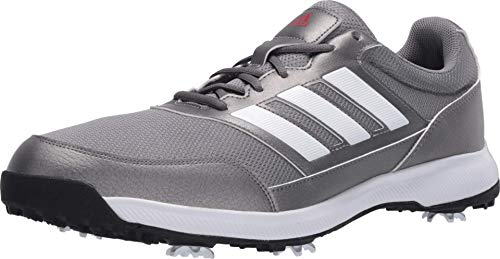
adidas Tech Response 2.0 Junior
The junior Tech Response uses replaceable spikes, which gives noticeably better grip on wet slopes than most spikeless junior shoes. The lightweight upper and cushioned midsole keep it comfortable across eighteen holes. Parents report it is the best compromise between real golf shoe performance and a price that will not sting when the shoe is outgrown.
Pros
- Genuine spiked grip on wet fairways
- Reasonable price for a spiked golf shoe
- Comfortable enough for full rounds
Cons
- Spikes wear and need replacing eventually
- Not intended for wear off the course

Skechers Go Golf Elite Junior
Skechers builds a generous toe box into its junior golf line, which solves the most common fit complaint parents raise. The cushioned midsole feels closer to a trainer than a traditional golf shoe, so juniors moving up from sneakers adapt quickly. Parents report the softness that makes it comfortable also makes it less stable than a firm tour style platform.
Pros
- Comfortable straight out of the box
- Roomy fit suits wider junior feet
- Trainer like feel eases the transition
Cons
- Softer midsole gives up some swing stability
- Spikeless grip fades on steep wet lies

Nike Roshe G Jr
The junior Roshe G keeps the low profile sneaker look that gets teenagers to actually wear their golf shoes. The lightweight foam midsole and integrated traction pattern handle dry to damp conditions well. Parents report it is the shoe most likely to see use beyond the course, which improves the value equation considerably.
Pros
- Styling juniors will wear off the course
- Very light for walking rounds
- Simple slip on and go construction
Cons
- Limited water resistance in heavy dew
- Minimal arch support for longer rounds

PUMA Junior Fusion FX
PUMA’s junior Fusion line pairs a waterproof treated upper with a spikeless outsole aimed at early tee times and dewy grass. The seam sealing is the feature that separates it from lighter mesh rivals. Parents report it runs slightly narrow, so ordering with a little length allowance is sensible.
Pros
- Handles morning dew better than mesh rivals
- Solid spikeless traction on flat lies
- Backed by a waterproof warranty claim
Cons
- Narrower fit than most juniors expect
- Waterproof upper runs warmer in summer

Under Armour Kids Charged Draw 2
The Charged Draw 2 in kids sizing borrows the cushioning platform from Under Armour’s adult range, so it suits older juniors approaching adult shoe sizes. The spikeless outsole gives dependable grip without needing spike changes. Parents report the sizing overlaps well with adult small sizes, which helps when a teenager is between ranges.
Pros
- Cushioning suited to longer walking rounds
- Adult styling appeals to older juniors
- Size range bridges into adult fittings
Cons
- Heavier than dedicated junior models
- Smallest sizes are limited

adidas S2G Spikeless Junior
The junior S2G is built for players who golf occasionally rather than competitively, with a versatile spikeless outsole and a relaxed fit. It works as a general trainer between rounds, which stretches the value for families buying every growth spurt. Parents report the traction is fine on dry courses and noticeably limited on wet slopes.
Pros
- Doubles as an everyday shoe
- Comfortable relaxed fit
- Lowest cost of the group
Cons
- Traction struggles on wet slopes
- Least supportive platform for a full swing
How they stack up
| # | Model | Traction | Best for | Score | Price |
|---|---|---|---|---|---|
| 1 | FootJoy Pro/SL Junior | Spikeless multi zone outsole | Best overall | 9.4 | Check price |
| 2 | adidas Tech Response 2.0 Junior | Six replaceable spikes | Best value | 9.2 | Check price |
| 3 | Skechers Go Golf Elite Junior | Spikeless traction plate | Best for wide feet | 9.0 | Check price |
| 4 | Nike Roshe G Jr | Integrated spikeless traction pattern | Best for everyday wear | 8.7 | Check price |
| 5 | PUMA Junior Fusion FX | Spikeless outsole | Best for wet mornings | 8.5 | Check price |
| 6 | Under Armour Kids Charged Draw 2 | Spikeless rubber outsole | Best for growing teens | 8.3 | Check price |
| 7 | adidas S2G Spikeless Junior | Spikeless versatile outsole | Best for casual junior golfers | 8.0 | Check price |
Frequently asked questions
Do juniors really need golf specific shoes?
Not for a first few range visits, but once they are walking full rounds on slopes, golf shoes noticeably improve footing and swing stability. Trainers slip on wet grass, which affects both scoring and safety.
Are spikeless shoes good enough for competitive juniors?
For most junior competition conditions, yes. Players who regularly compete in wet weather or on hilly courses still get measurably better grip from replaceable spikes.
How long should a pair of junior golf shoes last?
Growth usually ends the relationship before wear does. Owners report a season or two of regular play is typical, with the outsole and upper generally outlasting the fit.
What size should I buy if my child is between sizes?
Choose the size that holds the heel securely and allow about a thumbnail of length. A slightly thicker golf sock is a better way to take up space than jumping a full size.
Can junior golf shoes be worn off the course?
Spikeless models are designed for exactly that and many look like ordinary trainers. Spiked shoes should stay off hard surfaces, since pavement wears the spikes down quickly.
How do I clean them?
Brush off grass and mud once dry, wipe the upper with a damp cloth and mild soap, and let them air dry away from direct heat. Removing insoles helps them dry fully.
When do spikes need replacing?
Inspect them every few rounds and replace when the tips are visibly rounded or a spike is missing. Most spiked models come with a wrench, and replacement sets are inexpensive.
Is waterproofing worth paying extra for?
It depends on when they play. Early tee times, spring rounds and dewy links courses justify it, while summer afternoon golf rarely does.
Our take
The FootJoy Pro/SL Junior is worth the outlay for a junior who plays seriously, because its stable outsole supports the swing in a way softer trainers cannot. Families who want spiked grip without the premium should take the adidas Tech Response 2.0 Junior, and anyone fighting a wide fit will get on better with Skechers. Fit the heel properly, allow a modest amount of growing room, and the shoe will do its job all season.