Golf Rangefinders Junior Players Can Actually Use
The Precision Pro NX7 is the best rangefinder for junior golfers, combining a light body, simple controls and clear pulse confirmation. The TecTecTec VPRO500 is the low cost starter that survives a junior bag, and the Blue Tees Series 2 Pro adds slope for practice rounds.
For junior golfers the Precision Pro NX7 is the rangefinder that gets used rather than left in the bag, with the TecTecTec VPRO500 as the low cost starter and the Blue Tees Series 2 Pro for players who want slope in practice.
Choosing a rangefinder for a young player is different from choosing one for an adult, because the specifications that impress on paper, maximum range and slope algorithms, matter far less than whether small hands can hold it steady and confirm a lock. We compared weight, button count, lock feedback, display contrast and tournament legality, then weighed those specifications against what parents and coaches report about junior players actually using the device on course.
What to look for
Weight and grip matter more than range Every rangefinder here ranges further than any junior will hit a golf ball, so maximum range is the least useful number on the box. What matters is whether the player can hold a magnified view steady enough to hit a flagstick. Lighter units around four to six ounces are far easier for smaller hands, and a textured grip or a wrist lanyard reduces the chance of a drop on a cart path.
Look for clear lock confirmation The most common junior complaint is not knowing whether the number on screen is the flag or the trees behind it. Vibration confirmation, sometimes marketed as pulse or JOLT, removes that doubt with a physical buzz the player can feel. It builds confidence quickly and stops the habit of taking three or four readings and picking the one that looks right.
Understand slope and competition rules Slope compensation adjusts distance for elevation and is a genuinely good teaching tool, showing a junior why an uphill approach plays longer. It is not permitted in most competitions, so any unit used in junior tournaments must have a way to disable it that officials can verify from outside, typically a physical switch or an external indicator light. Check the local rules of the tournaments your player enters.
Build good habits alongside the device A rangefinder gives a distance, not a club selection, so encourage the player to note the yardage, consider the wind and lie, then choose. Steadying the unit against a shoulder or a cart post makes locking on far easier for younger players. Teach pace of play too, since taking a reading while others are playing keeps the group moving and is a habit tournament officials notice.
The top picks, ranked

Precision Pro NX7
The NX7 keeps the interface down to one main button and confirms a flag lock with a clear pulse, which removes the guesswork that frustrates younger players. It is light enough to hold steady and rugged enough for a junior bag that gets dropped. Owners report the customer support and lifetime battery replacement programme are useful when a device lives with a teenager.
Pros
- One button operation is easy to learn
- Pulse confirmation removes doubt on lock
- Light and durable for a junior bag
Cons
- No image stabilisation
- Slope model costs more

TecTecTec VPRO500 Golf Rangefinder
This is the sensible first rangefinder for a junior who may or may not stick with the game, since it delivers accurate yardages without the outlay of a premium unit. It is compact, light and tournament legal with no slope function to disable. Locking on takes a steadier hand than stabilised units, which is worth knowing for younger players.
Pros
- Low cost entry for a new junior player
- Small and light in a junior bag
- Legal for competition as supplied
Cons
- Needs a steady hand to lock the flag
- Basic display in low contrast light

Gogogo Sport Vpro GS03 Laser Rangefinder
The GS03 offers slope compensation that can be switched off for competition, at a price close to non slope units. That makes it useful for a junior learning how elevation affects club selection during practice rounds. Build quality is reasonable rather than premium, which suits a device that may be replaced as the player improves.
Pros
- Slope function at an accessible price
- Switches off for tournament play
- Clear vibration confirmation
Cons
- Housing is less rugged than premium units
- Optics are basic in flat light
Callaway 200s Laser Rangefinder
Callaway keeps the 200s small and simple with slope compensation and a straightforward pin acquisition mode. Its size suits smaller hands and it disappears into a junior bag rather than taking up a full pocket. It is a no fuss unit for players who just want a number.
Pros
- Small enough for smaller hands
- Simple pin acquisition mode
- Recognisable brand support
Cons
- No stabilisation to steady the view
- Case is basic
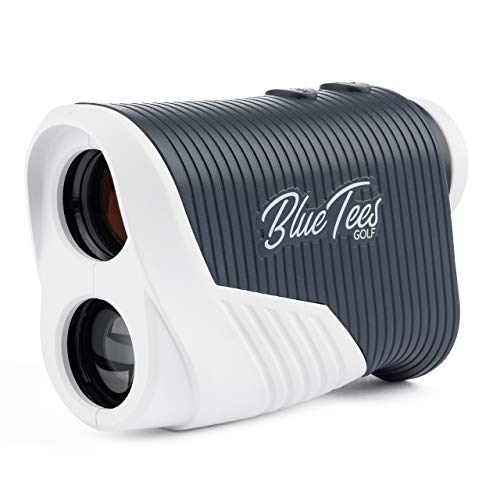
Blue Tees Golf Series 2 Pro
The Series 2 Pro adds a magnetic strip that sticks to a cart frame, slope compensation and clear flag lock vibration in a package aimed at improving players. For a junior working on distance control, seeing the plays like number alongside the raw yardage builds understanding. It is more device than a beginner needs and about right for a competitive junior.
Pros
- Slope helps juniors learn elevation effects
- Magnet keeps it accessible on a cart
- Clear lock vibration
Cons
- More features than a beginner needs
- Magnet adds weight for a walking junior

Nikon Coolshot 20i GIII
Nikon builds this one very light with optics that are clearly a step above the budget units, so the flag is easier to find in the first place. The slope adjusted reading helps on hilly courses and can be turned off. Its size and clarity make it particularly suitable for smaller players who struggle to hold heavier units steady.
Pros
- Very light, easy to hold steady
- Excellent optical clarity for the size
- Slope reading can be disabled
Cons
- Small buttons need familiarity
- No vibration confirmation on lock

Bushnell Tour V5 Shift
For a junior playing serious competitive golf, the Tour V5 Shift brings the JOLT vibration confirmation and the visible slope switch that tournament officials look for. Optics and lock speed are a clear step above budget units, which matters when playing under time pressure. It is a significant investment for a player who may still be growing into the game.
Pros
- Fast, confident flag locking
- External slope indicator satisfies officials
- Durable build for regular competition
Cons
- Expensive for a developing junior
- Larger and heavier than compact units
The lineup, side by side
| # | Model | Magnification | Best for | Score | Price |
|---|---|---|---|---|---|
| 1 | Precision Pro NX7 | 6x | Best overall | 9.4 | Check price |
| 2 | TecTecTec VPRO500 Golf Rangefinder | 6x | Best budget | 9.2 | Check price |
| 3 | Gogogo Sport Vpro GS03 Laser Rangefinder | 6x | Best value with slope | 9.0 | Check price |
| 4 | Callaway 200s Laser Rangefinder | 6x | Best compact option | 8.8 | Check price |
| 5 | Blue Tees Golf Series 2 Pro | 6x | Best for practice rounds | 8.6 | Check price |
| 6 | Nikon Coolshot 20i GIII | 6x | Best optics | 8.3 | Check price |
| 7 | Bushnell Tour V5 Shift | 6x | Best for competitive juniors | 8.0 | Check price |
Questions worth asking
What age can a child start using a rangefinder?
Most juniors can manage one from around ten or eleven, when they have the hand steadiness to hold a magnified view on a flag. Younger players often do better with a GPS device that shows distances without needing to aim at anything.
Are rangefinders allowed in junior tournaments?
Generally yes, provided slope compensation is switched off, but individual junior tours set their own conditions. Check the terms of competition for each event, and choose a device with a visible external slope indicator to make the check straightforward.
Do juniors need slope compensation?
It is a useful learning tool for practice rounds because it demonstrates how elevation changes effective distance. Since it cannot be used in competition, the important thing is that it can be turned off clearly rather than that it exists.
How much should I spend on a junior rangefinder?
For a player still deciding whether golf is their sport, an entry level unit covers the need entirely. For a committed competitive junior, a mid range model with vibration confirmation and better optics genuinely helps under pressure and holds resale value.
Rangefinder or GPS for a young golfer?
GPS devices give front, middle and back distances without needing to aim, which is easier for younger players. Lasers give precise distances to any target and teach better course awareness. Many juniors start with GPS and move to a laser as their aim steadies.
How do I stop my child losing or breaking it?
Use the wrist lanyard, keep the unit in its case when not in use and choose a model with a magnetic cart mount if they ride. A water resistant body is worth having, since junior bags get left on wet grass more often than adult ones.
Will a rangefinder actually improve a junior’s scores?
Indirectly. Knowing an accurate number removes guesswork and helps a player learn their real carry distances with each club, which is one of the fastest routes to better approach play. It does not replace practice.
What batteries do these use?
Most run on a CR2 or CR2032 coin cell that lasts a full season of regular play. Keep a spare in the bag, since cold weather shortens battery life and a dead rangefinder mid round is a common frustration.
Our take
The Precision Pro NX7 is the rangefinder best suited to junior players, with simple one button operation, clear lock confirmation and a build that survives a teenager’s bag. Start with the TecTecTec VPRO500 if the player is new to the game, and consider the Blue Tees Series 2 Pro once they are practising with distance control in mind.