Aquarium Gravel Vacuums That Clean Without a Mess
The Python No Spill Clean and Fill is our overall pick because it drains and refills straight from a tap, the Aqueon Siphon Vacuum Gravel Cleaner is the best value manual siphon, and the hygger electric gravel cleaner suits owners who want a cordless in tank option.
The Python No Spill Clean and Fill is the gravel vacuum that changes how you feel about water changes, since it drains to a sink and refills without carrying buckets. The Aqueon Siphon Vacuum is the best value manual option for smaller tanks, and the hygger electric cleaner appeals to anyone who prefers a cordless in tank tool.
Gravel vacuums differ far more than the listings suggest, particularly in how they start, whether suction pulls up substrate and how much water they waste. We compared tube diameters, hose lengths, priming methods and what aquarists report about clogging and gravel loss, then ranked seven that make maintenance easier.
What to look for
Decide whether you want to carry buckets Manual siphons are cheap and effective, but every water change means lifting full buckets. Faucet powered systems remove that entirely, and for tanks above roughly forty gallons owners almost universally say the upgrade paid for itself in the first month of ownership.
Tube diameter should match your substrate A wide tube lifts debris quickly from coarse gravel but will pull fine sand straight out of the tank. Narrow tubes give gentler suction suited to sand and nano tanks at the cost of speed. Choosing by tank size alone is why people end up vacuuming their substrate into a bucket.
Look for flow control A clamp or valve on the hose lets you slow the siphon when you get close to fine substrate or a planted area, and stop it without dragging the tube out. Without one, your only control is lifting the tube, which stirs up the debris you just collected.
Electric cleaners complement siphons, they do not replace them In tank electric units are excellent for quick debris removal between changes, since the water level never drops. What they do not do well is remove and replace a meaningful volume of water. Most aquarists who own one still keep a siphon for scheduled water changes.
The top picks, ranked

Python No Spill Clean and Fill Aquarium Maintenance System
This system connects to a faucet, uses tap flow to create suction for draining and then reverses to refill the tank directly. For anything above a small tank, removing the bucket carrying step is transformative. Owners consistently describe it as the last gravel vacuum they bought.
Pros
- No buckets or lifting
- Refills the tank through the same hose
- Extension sections available for long runs
Cons
- Uses tap water flow while draining
- Needs a compatible faucet fitting
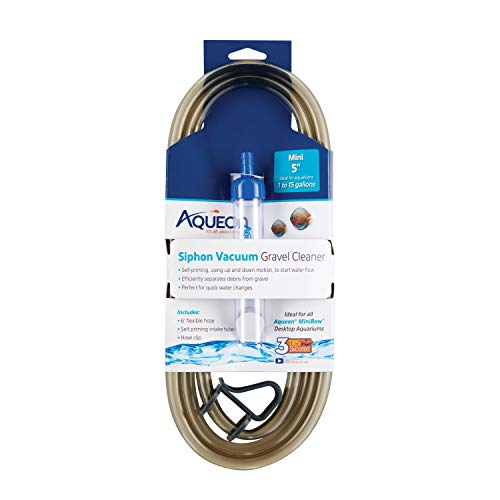
Aqueon Siphon Vacuum Gravel Cleaner
A simple gravel tube and hose with a primer bulb that starts the siphon without any mouth suction. The tube diameter lifts debris while letting gravel fall back, which is the core function done properly. Available in several sizes to match tank depth.
Pros
- Primer bulb starts the siphon easily
- Separates debris from gravel well
- Inexpensive and widely available
Cons
- Still requires a bucket
- Bulb can perish after a few years
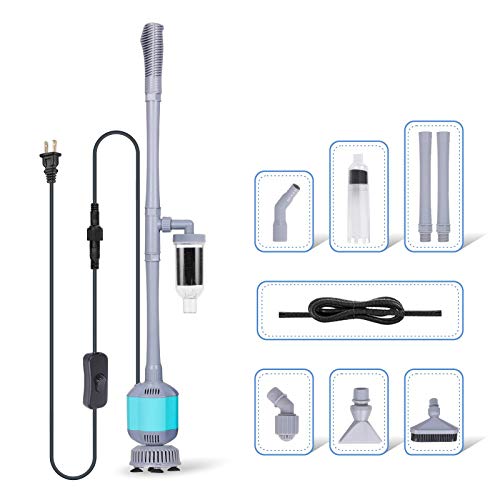
hygger Electric Aquarium Gravel Cleaner
A powered in tank cleaner that vacuums substrate, filters the water and returns it, meaning water level stays constant during spot cleaning. It also works for sand washing and water changes with the drain attachment. Useful for owners who clean often between full changes.
Pros
- Cleans without lowering the water level
- Multiple attachments included
- Good for frequent spot cleaning
Cons
- Needs a minimum depth to operate
- Filter sponge requires regular rinsing

Laifoo Aquarium Siphon Vacuum Cleaner
A no frills siphon set with a squeeze primer and a long flexible hose at a very low cost. Build materials are lighter than premium brands, but the function is identical for a small tank. A sensible first gravel vacuum for a beginner setup.
Pros
- Lowest cost complete set
- Long hose reaches a bucket easily
- Easy one hand priming
Cons
- Thin plastic feels fragile
- No flow control valve on some versions

Eheim Quick Vac Pro Automatic Gravel Cleaner
A battery powered handheld unit that pulls debris into an internal filter pad while leaving the water in the tank. Because it is cordless, there is no hose to manage. It handles routine debris removal rather than full water changes.
Pros
- No hose or bucket at all
- Cordless freedom in the tank
- Quick for spot cleaning
Cons
- Does not perform a water change
- Small debris capacity per pass
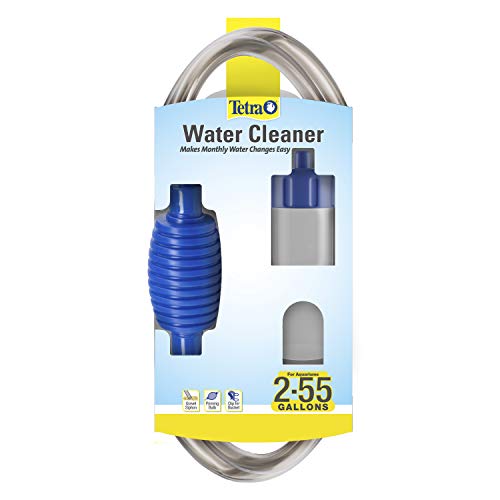
Marina Easy Clean Aquarium Gravel Cleaner
A compact siphon with a self starting action and a narrow tube sized for nano and small community tanks. The smaller diameter gives gentler suction, which prevents small gravel and sand from being pulled up the tube. Includes a flow control valve.
Pros
- Gentle suction suits fine substrate
- Self priming action
- Fits between plants and decor
Cons
- Slow on larger tanks
- Narrow tube clogs with large debris
NICREW Automatic Gravel Cleaner
An electric cleaner supplied with several nozzles for gravel vacuuming, sand washing, water changes and surface skimming. It covers a lot of maintenance jobs from one handle. Suction is milder than a good siphon, so deep substrate cleaning takes longer.
Pros
- Covers several maintenance tasks
- No manual priming needed
- Attachments suit both sand and gravel
Cons
- Milder suction than gravity siphons
- More parts to clean and store
The lineup, side by side
| # | Model | Type | Best for | Score | Price |
|---|---|---|---|---|---|
| 1 | Python No Spill Clean and Fill Aquarium Maintenance System | Faucet powered siphon and fill | Best overall | 9.4 | Check price |
| 2 | Aqueon Siphon Vacuum Gravel Cleaner | Manual siphon with primer bulb | Best value | 9.2 | Check price |
| 3 | hygger Electric Aquarium Gravel Cleaner | Electric in tank cleaner | Best electric | 9.0 | Check price |
| 4 | Laifoo Aquarium Siphon Vacuum Cleaner | Manual siphon | Best budget | 8.8 | Check price |
| 5 | Eheim Quick Vac Pro Automatic Gravel Cleaner | Battery powered handheld | Best cordless in tank | 8.6 | Check price |
| 6 | Marina Easy Clean Aquarium Gravel Cleaner | Manual siphon | Best for small tanks | 8.3 | Check price |
| 7 | NICREW Automatic Gravel Cleaner | Electric multifunction cleaner | Best multifunction | 8.0 | Check price |
Common questions
How often should I vacuum aquarium gravel?
Most aquarists vacuum during regular partial water changes, commonly every one to two weeks depending on stocking and filtration. Heavily stocked tanks benefit from more frequent attention, while lightly stocked planted tanks often need less.
Will a gravel vacuum suck up my fish?
Small fish and fry can be drawn toward the tube on a strong siphon, which is why a flow control valve and a wider tube diameter help. Keeping the tube moving and watching where curious fish are is usually enough to avoid it entirely.
Can I use a gravel vacuum with sand?
Yes, but with technique changes. Hold the tube slightly above the sand so debris lifts while the heavier sand falls back, or use a narrow tube designed for fine substrate. Several electric cleaners include a dedicated sand washing nozzle for exactly this.
How do I start a siphon without using my mouth?
Use a model with a primer bulb or self starting action, which nearly all current siphons have. The alternative is submerging the tube and hose to fill them with water, then lowering the hose end below the tank, which starts the flow by gravity.
Should I vacuum the whole substrate every time?
Most experienced aquarists do a section each time rather than the entire bed, which limits disruption to beneficial bacteria living in the substrate. Rotating through the tank over several water changes keeps everything clean without shocking the system.
Do electric gravel cleaners change the water?
Some do when fitted with a drain attachment, and some only filter and return water to the tank. Read the function list carefully, because a unit that only recirculates is a spot cleaning tool rather than a water change tool.
Why does my siphon keep losing suction?
Usually because the tube end has broken the water surface, letting air in, or because debris is blocking the hose. Keeping the intake fully submerged and periodically flushing the hose solves nearly all suction problems.
How much water should I remove during a change?
A common approach is removing around a quarter of the volume in a routine change, though this varies with stocking and test results. Vacuuming the substrate at the same time means the water you remove takes the waste with it rather than being discarded clean.
Our pick
The Python No Spill Clean and Fill is the gravel vacuum to buy if your tank is large enough that buckets have become the reason you delay water changes. For smaller tanks the Aqueon Siphon Vacuum does the same cleaning job for a fraction of the cost, and the hygger electric cleaner is a useful addition for spot cleaning between scheduled changes.


