Grow Bags That Keep Plant Roots Healthy in Tight Spaces
Smart Pot fabric containers lead this list for durability, keeping their shape season after season. VIVOSUN grow bags offer the best value multipack for most gardeners. 247Garden aeration fabric pots balance thickness and price well for larger vegetables.
Smart Pot fabric containers top this grow bag ranking, with VIVOSUN offering the best value multipack and 247Garden covering serious vegetable growing. Lighter sets from JERIA, iPower and Gardzen round out the budget options.
Grow bags look interchangeable in listings, which is exactly the problem. Fabric weight, stitching and handle attachment separate a bag lasting five seasons from one splitting when lifted wet. We compared stated fabric density, seam construction, size ranges and what owners report after a full growing year, ranking on longevity and root health rather than pack size.
What to look for
Why fabric weight is the spec that matters most Non woven fabric is measured in grams per square metre, and heavier grades resist tearing and hold shape through more seasons of sun. Listings that skip a stated weight are usually on the lighter side. A brand publishing that figure while a rival stays silent tells you something about build quality.
Matching bag size to the crop you’re growing Herbs and salad thrive in one to three gallon bags, peppers and bush beans want five, and tomatoes, potatoes and courgettes do far better with seven to fifteen. Undersized bags dry out constantly and stunt growth. Sizing up costs more compost but buys a much more forgiving watering schedule.
Why fabric bags need more frequent watering Breathability that benefits roots also speeds evaporation through the walls. Hot weather can mean daily watering, or twice daily for small bags in full sun. Grouping bags together, mulching the surface and standing them on soil rather than paving all slow the drying.
Storing and reusing bags between seasons Empty bags fold flat, so a season’s worth stores in a small box. Brush out old compost, rinse and dry thoroughly before storing to avoid mildew, and turn bags inside out if roots have knitted into the fabric. Bags that held diseased plants are worth discarding rather than reusing.
The best picks, ranked

Smart Pot Fabric Container
Smart Pot relies on a heavier non woven fabric than most multipacks, and it shows once the bag is filled and watered. Roots air prune at the fabric wall instead of circling, producing a denser root mass. Many owners report bags surviving several outdoor seasons, which changes the math against cheaper packs.
Pros
- Holds its shape reliably once saturated
- Strong air pruning supports healthier roots
- Wide size range spans 1 gallon to 100 gallon
Cons
- Larger sizes ship without handles
- Sold in smaller quantities than budget multipacks

VIVOSUN Grow Bags
VIVOSUN bags are a common default for patio gardeners, sold in multipacks with reinforced handles stitched into the side seams. Fabric thickness handles a full tomato season without sagging badly. Owners frequently single out the handles as the sturdiest part of the bag.
Pros
- Handles stay strong when moving full bags
- Balances fabric thickness against cost well
- Comes in a wide range of sizes and colours
Cons
- Fabric thins after a couple seasons in sun
- Some bags arrive creased and never fully relax
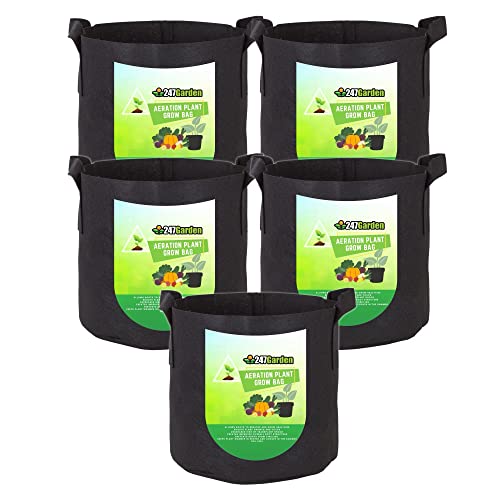
247Garden Aeration Fabric Pots
247Garden states its fabric weight directly, letting buyers pick a heavier grade for bigger crops instead of guessing. Thicker versions stand upright unaided and resist tearing when dragged across paving. Deep rooting plants like tomatoes, peppers and dwarf fruit trees suit this design well.
Pros
- Fabric weight is stated, not left vague
- Stands upright without extra support
- Handles survive repeated lifting
Cons
- Heavier fabric dries slower in cool climates
- Fewer bags included per pack than budget sets
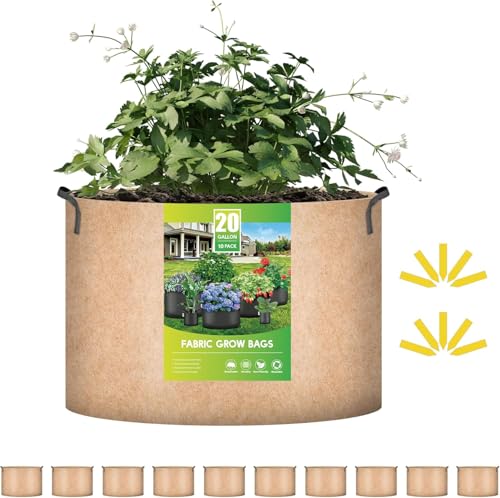
iPower Grow Bags
iPower leans toward smaller volumes, suited to starting seedlings, herbs and salad crops on a balcony. Fabric runs lighter than premium bags, which is fine for one-season crops destined for transplanting anyway. Expanding growing space this way costs little.
Pros
- Affordable way to expand a small growing area
- Small sizes suit herbs and salad greens
- Light enough to move once planted
Cons
- Thin fabric dries out quickly in heat
- Not built for multi-season use

JERIA 10 Gallon Grow Bags
JERIA sells larger volume bags in bigger packs, a practical route for planting a whole patio of potatoes or squash. Stitched handles and a flat bottom keep each bag sitting level. Mid weight fabric means treating them as a two to three season product.
Pros
- Good volume for potatoes and squash
- Flat base keeps bags stable when full
- Cost per bag drops in larger packs
Cons
- Mid weight fabric shows wear by season three
- Very heavy once filled and watered

Gardzen Grow Bags
Gardzen sells assorted size packs, genuinely useful while figuring out what each crop needs. Small bags for herbs sit alongside larger ones for fruiting plants in a single purchase. Fabric runs lighter, but the variety saves buying three separate sets.
Pros
- Mixed sizes suit experimenting with crops
- Folds flat for winter storage
- Affordable entry into fabric growing
Cons
- Lighter fabric than dedicated single-size packs
- Smaller bags lack handles

Winner Outfitters Grow Bags
Winner Outfitters offers one of the cheapest ways to try fabric containers, sold in multipacks with basic handles and standard non woven fabric. Draining freely and air pruning roots covers the core job. Seasonal replacement suits this bag better than repair once seams fray.
Pros
- Lowest cost per bag in this roundup
- Drains freely and prevents waterlogging
- Fine for annual crops
Cons
- Seams fray sooner than premium bags
- Sags noticeably when fully watered
Compared at a glance
| # | Model | Material | Best for | Score | Price |
|---|---|---|---|---|---|
| 1 | Smart Pot Fabric Container | Heavyweight non woven geotextile | Best overall | 9.4 | Check price |
| 2 | VIVOSUN Grow Bags | Non woven polypropylene fabric | Best value | 9.2 | Check price |
| 3 | 247Garden Aeration Fabric Pots | Aeration fabric in stated weights | Best for vegetables | 9.0 | Check price |
| 4 | iPower Grow Bags | 1, 2, 3 and 5 gallon | Best for seedlings and starts | 8.8 | Check price |
| 5 | JERIA 10 Gallon Grow Bags | 10 gallon per bag | Best large multipack | 8.6 | Check price |
| 6 | Gardzen Grow Bags | Assorted from 1 to 10 gallon | Best mixed size set | 8.3 | Check price |
| 7 | Winner Outfitters Grow Bags | 5 and 10 gallon | Best budget option | 8.0 | Check price |
Frequently asked questions
Are grow bags better than plastic pots?
For root health, usually yes. Air passing through the fabric prunes roots at the edge instead of letting them circle, producing a denser fibrous root system. The trade off is faster drying, so plastic still wins where watering is infrequent or the climate runs very hot.
How many seasons do grow bags last?
Lightweight multipack bags typically give one to three seasons before seams fray, while heavier fabric containers commonly run much longer. Ultraviolet exposure is the main enemy, so bags in constant full sun degrade faster than those partly shaded by foliage.
What compost should I use in grow bags?
A free draining mix works best, since the bag already drains hard. Many gardeners blend potting compost with perlite or bark for structure and add a slow release feed. Straight garden soil compacts badly in a bag and is best avoided.
Do grow bags need saucers underneath?
On a balcony or patio, a tray under the bag catches runoff and stops staining, but don’t let the bag sit in standing water. On soil, no saucer is needed and roots may even reach into the ground below. Raising bags slightly on feet improves airflow.
Can grow bags be used indoors?
Yes, with a waterproof tray underneath, since water passes through the walls as well as the base. Indoor use also means slower drying, so water less often than outside. Choose a light coloured fabric for less heat retention under grow lights.
How do I stop grow bags from falling over?
Fill them properly rather than part filling, since a half full bag flops at the rim. Flat bottomed designs and heavier fabric help. For tall crops, push a stake through the compost into the ground below or tie the plant to a nearby support.
Should grow bags be washed between seasons?
Rinsing and drying is sensible to remove salt build up and old root material. A soak in a mild solution works for stubborn residue, but avoid strong bleach, which weakens the fibres. Dry them completely before folding away.
What size grow bag do potatoes need?
Ten gallons or more gives a worthwhile harvest per bag, with two or three seed potatoes each. Smaller bags produce a token crop because there isn’t enough depth to earth up the stems. Depth matters more than width for potatoes.
What’s the difference between grow bags and fabric pots?
They’re the same product under different names; both describe breathable non woven fabric containers. Marketing language varies by brand, but construction and purpose stay identical. Check stated fabric weight rather than the name used.
Can grow bags be reused for the same crop every year?
Yes, provided the plant stayed healthy and the fabric shows no tearing. Refresh the compost each season rather than reusing old soil. Discard bags that held a diseased plant to avoid carrying problems forward.
Final word
Gardeners planning to grow in fabric for years pay once with Smart Pot rather than repeatedly. VIVOSUN’s multipack suits most patio gardeners as a starting point, and 247Garden earns its place for tomatoes and other heavy feeders. Buying larger volumes than seems necessary makes watering far less demanding.


