How Much Floor Space Do Guinea Pig Cages Really Give?
The MidWest Guinea Habitat Plus leads this roundup with a large open floor and washable canvas base. Living World’s Deluxe Habitat X-Large suits owners who want a solid tray and shelf. Ferplast’s KROLIK 140 offers a big footprint on a wire frame.
For a pair of guinea pigs, the MidWest Guinea Habitat Plus gives the most usable floor space, with the Living World Deluxe Habitat X-Large offering solid tray convenience and the Ferplast KROLIK 140 covering a wide wire framed setup. Floor area matters far more than height in this category.
Cage shopping gets tricky because listed dimensions often include sloped sides or a shelf that guinea pigs can’t really use, and many products marketed for guinea pigs are actually sized for hamsters. We compared usable floor area against welfare guidance, bar spacing, base depth and access openings, weighing what owners report about bedding scatter, ramp accidents and long term cleaning.
The top picks, ranked

MidWest Homes for Pets Guinea Habitat Plus
Roughly eight square feet of open, uninterrupted floor comes with a removable canvas bottom that wipes or washes clean. A divider lets owners separate two pigs temporarily during introductions or health checks. Folding flat for storage is unusual at this size.
Pros
- Meets welfare space guidance for a pair
- Canvas base washes clean rather than just wiping
- Divider helps with introductions and health checks
Cons
- Canvas eventually absorbs odours
- Open top offers no protection from other pets

Living World Deluxe Habitat X-Large
A deep plastic base keeps bedding inside the cage rather than scattered across the floor, the single most common complaint with wire bottom setups. A balcony and ramp add a little usable area, and the hinged top opens wide for cleaning. One pig fits comfortably here, two at a squeeze.
Pros
- Deep tray keeps bedding contained
- Wide top opening speeds up cleaning
- Water bottle, hay guard and dish included
Cons
- Balcony area is small in practice
- Tight fit for two adult guinea pigs

Ferplast KROLIK 140 Small Animal Cage
Around fifty five inches of width gives a pair of guinea pigs room to run rather than shuffle, paired with a deep plastic base and a wire top that lifts away. Removing the included shelf frees up more open floor. Bulk is real, so measure the space before ordering.
Pros
- Genuinely wide floor for two pigs
- Deep tray limits bedding scatter
- Top lifts off for full access
Cons
- Takes up a lot of room
- Ramp needs covering to be safe
Kaytee Guinea Pig Home Habitat Plus
A water bottle, hay feeder and dish ship in the box, removing the guesswork for a first setup. Daily care stays simple thanks to the deep base and wide door. Floor space suits one pig, so plan an upgrade before adding a companion.
Pros
- Everything needed for a first setup included
- Large front door eases daily care
- Simple tool free assembly
Cons
- Too small for two adult pigs
- Included accessories run basic
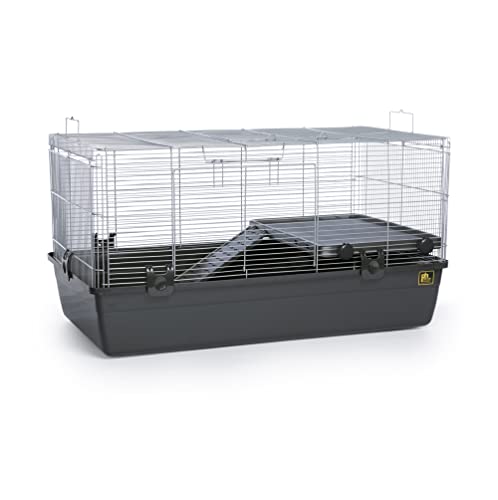
Prevue Pet Products 528 Rabbit and Guinea Pig Cage
A robust wire frame and a strong plastic base resist cracking, built to a heavier standard than most rivals here. Removable casters make repositioning easy when cleaning behind it. Floor area only really suits a single guinea pig despite the sturdy build.
Pros
- Noticeably sturdier build than rivals
- Casters make repositioning easy
- Base resists cracking over time
Cons
- Small floor area for the overall size
- Heavier to move without the casters fitted

PawHut 2-Story Wooden Guinea Pig Hutch
This wooden hutch resembles furniture more than pet equipment, which matters when the cage lives in a shared room. Two levels connected by a ramp add usable area within a smaller footprint. Wood absorbs urine over time, so a plastic liner or tray on the lower deck becomes essential.
Pros
- Blends into a living space visually
- Two levels add area within a modest footprint
- Multiple doors ease everyday access
Cons
- Wood absorbs odours without a liner
- Ramp runs steep and needs traction added

Zampa Portable Small Animal Playpen
Rather than a full time cage, this soft sided pen gives guinea pigs supervised run space on carpet or lawn. Packing down flat and wiping clean makes daily setup fast. Pairing it with a proper cage works better than using it alone.
Pros
- Large supervised run area for the price
- Folds away between uses
- Wipes clean easily after use
Cons
- Not secure enough for unsupervised use
- No roof, so escapes stay possible
How to choose
How much floor space a guinea pig cage actually needs Welfare guidance commonly recommends at least seven and a half square feet for one guinea pig and around ten for a pair, far larger than most cages sold as guinea pig homes. Running in bursts is how guinea pigs express contentment, and a small enclosure blocks that. Measure the usable rectangle rather than trusting listed dimensions, since ramps, balconies and sloped sides add very little practical room.
Bar spacing, ramps and other safety details Spacing under about an inch keeps young guinea pigs from squeezing through or getting a head stuck. Wire ramps need covering with fleece or a solid surface, because feet slip through the gaps and injuries follow. Climbing isn’t a guinea pig strength, unlike rats or ferrets, so a second level only earns its place with a shallow, wide and fully enclosed ramp.
Bedding, base depth and keeping up with cleaning A deep base is the difference between bedding staying inside the cage and ending up across the room. Solid plastic trays contain paper bedding and shavings well and rinse clean, while canvas bases pair with fleece liners that go in the washing machine. Spot clean daily and do a full change weekly either way, since ammonia from urine causes respiratory problems in a species already prone to them.
Where to place the cage and whether to keep a pair Guinea pigs are sensitive to heat and thrive in a room between roughly eighteen and twenty four degrees Celsius, away from direct sun, draughts and radiators. Social by nature, guinea pigs generally shouldn’t live alone, and several countries consider solo housing poor practice. Buying one larger cage from the outset costs less than buying two later, and leaves room for hides, hay and a tunnel.
How they compare
| # | Model | Usable floor area | Best for | Score | Price |
|---|---|---|---|---|---|
| 1 | MidWest Homes for Pets Guinea Habitat Plus | About 8 sq ft | Best overall | 9.4 | Check price |
| 2 | Living World Deluxe Habitat X-Large | About 6 sq ft | Best value | 9.2 | Check price |
| 3 | Ferplast KROLIK 140 Small Animal Cage | About 8 sq ft | Best for a pair | 9.0 | Check price |
| 4 | Kaytee Guinea Pig Home Habitat Plus | About 4.5 sq ft | Best for beginners | 8.8 | Check price |
| 5 | Prevue Pet Products 528 Rabbit and Guinea Pig Cage | About 4 sq ft | Best for durability | 8.6 | Check price |
| 6 | PawHut 2-Story Wooden Guinea Pig Hutch | 2 connected by a ramp | Best for a furniture look | 8.3 | Check price |
| 7 | Zampa Portable Small Animal Playpen | Portable playpen | Best for floor time | 8.0 | Check price |
Good to know
How big should a guinea pig cage be?
Aim for at least seven and a half square feet of usable floor for one guinea pig and around ten square feet for a pair. Most cages marketed for guinea pigs fall short, so measure the floor rectangle rather than trusting the box.
Can guinea pigs live alone?
They’re highly social and generally do better in same sex pairs or with a compatible companion. If a single pig is unavoidable, it needs far more human interaction and enrichment to compensate.
Are multi level cages good for guinea pigs?
Only with a shallow, wide and enclosed ramp. Guinea pigs are poor climbers and fall injuries are common, so extra floor area at ground level always beats a second storey.
What bedding works best for guinea pigs?
Paper based bedding and fleece liners are the two common choices. Fleece is washable and cost effective long term but needs a wicking layer and frequent brushing, while paper bedding is simpler and better at absorbing odour.
How often should a guinea pig cage be cleaned?
Spot clean soiled areas daily and do a full bedding change weekly, more often with two pigs. Ammonia build up causes respiratory illness, the most common health problem in poorly ventilated setups.
Is a wire bottom cage safe for guinea pigs?
No. Wire flooring causes sore hocks and foot injuries. Always use a solid base with bedding, and cover any wire ramps or shelves with fleece or a solid panel.
Can guinea pig cages go outdoors?
Only in mild weather with secure protection from predators, rain and direct sun, and guinea pigs should come indoors during heat or cold. Most owners keep them inside year round for safety and temperature stability.
Do guinea pigs need a hide inside the cage?
Yes, ideally one per pig so neither has to compete for shelter. As prey animals they need somewhere to retreat, and cages without hides tend to produce nervous, less sociable pigs.
What’s the difference between a hutch and a cage for guinea pigs?
Hutch usually describes a wooden structure, often built with an outdoor look, while cage typically means a wire and plastic indoor setup. Function matters more than the label, so check floor space and ventilation either way. Wooden hutches need a liner to stop urine soaking into the wood.
How do I clean a guinea pig cage without stressing the pigs?
Move the guinea pig to a secure playpen or carrier during a full clean, then return it once bedding and surfaces are dry. Keep at least one familiar item, like a hide, in place to ease the transition. Avoid strong scented cleaners, since guinea pigs have sensitive respiratory systems.
Final word
MidWest’s Guinea Habitat Plus wins for owners taking the space guidance seriously, giving a pair genuine room to run while cleaning up easily. Living World’s Deluxe Habitat X-Large suits owners who prefer a solid tray and less bedding scatter, and Ferplast’s KROLIK 140 offers a similar footprint with a lift off top. Buy bigger than the box suggests, regardless of which cage wins out.

