What Should You Look for in an Outdoor Headlamp?
Black Diamond’s Spot 400 balances beam quality, waterproofing and weight better than the others here. Petzl’s Actik Core adds a rechargeable battery that still takes AAA cells. BioLite’s HeadLamp 425 sits flattest against the forehead, which matters most for runners covering miles in the dark.
Black Diamond’s Spot 400 suits the widest range of outdoor use. It pairs a mixed flood and spot beam with IP67 waterproofing and a weight that disappears on the trail. Petzl’s Actik Core trades a little sealing for rechargeable convenience, and BioLite’s HeadLamp 425 wins with runners because it barely moves.
Lumens printed on the box rarely match what a headlamp delivers on a real hike. Manufacturers often quote a brief boost mode nobody uses for more than a few seconds. We compared regulated runtime, beam shape, waterproof ratings, battery swap options and what owners report about strap comfort after hours of wear.
The best picks, ranked

Black Diamond Spot 400 Headlamp
Spot 400 blends a proximity flood for camp chores with a tighter spot for spotting trail markers. IP67 sealing means dust proof and safe through temporary immersion, so a downpour is not a problem. Owners report the lock mode is what actually stops it draining inside a pack.
Pros
- Blends flood and spot beams effectively
- IP67 sealing survives heavy rain
- AAA cells replace easily on the trail
Cons
- No rechargeable version available
- Touch dimming is fiddly with gloves

Petzl Actik Core Headlamp
Petzl ships the Actik Core with its rechargeable Core battery pack, yet the AAA compartment stays available as backup. Charging happens over USB at home, while spare AAA cells cover longer trips. According to the listing, the beam spreads wide and even with enough throw for trail finding.
Pros
- Charges by USB but still accepts AAA cells
- Wide, even beam works for camp and trail
- Reflective strap adds roadside visibility
Cons
- Only splash resistant, not immersion rated
- Core battery pack adds extra weight

BioLite HeadLamp 425
BioLite builds this light into a slim, moisture wicking band that sits flat against the forehead instead of bouncing. A rear red light adds visibility on roads, and a constant mode holds brightness rather than fading as the battery drains. Sealed batteries mean no field swaps on multi day trips.
Pros
- Barely bounces during runs
- Rear red light improves road visibility
- Constant mode avoids a slow brightness fade
Cons
- No swappable batteries for long trips
- Band needs regular washing after sweat

Fenix HM65R-T Headlamp
Two separate emitters, one spot and one flood, let the HM65R-T light a distant ridge without sacrificing the nearby view. A rechargeable 21700 cell powers it, housed in a magnesium alloy shell that stays tough without excess weight. Casual campers rarely need this much output.
Pros
- Independent spot and flood emitters
- Very high sustained output for search work
- Tough alloy body carries an IP68 rating
Cons
- Heavier than trail focused lamps
- More headlamp than short walks require
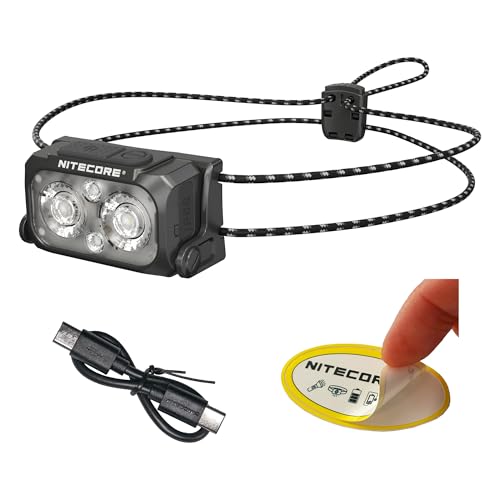
Nitecore NU25 UL Headlamp
Weighing about an ounce, the NU25 UL is the lamp thru hikers notice least at the end of a long day. Spot, flood and red modes remain despite the minimal weight, and USB C charging keeps things simple. A small battery means shorter runtimes at the higher settings.
Pros
- Lightest option in this lineup
- USB C charging is convenient on the trail
- Still offers three usable beam modes
Cons
- Runtime drops fast at high output
- Thin strap loosens in strong wind

Energizer Vision HD Plus Headlamp
This AAA powered headlamp handles camp chores, dog walks and glovebox emergencies without complication. Output and beam refinement trail the premium models here, though reliability holds up and batteries are available almost anywhere. Owners report keeping one as a backup is its most common role.
Pros
- Low cost for a spare or backup light
- Runs on standard AAA batteries
- Light enough for casual, short use
Cons
- Beam is less refined than pricier lamps
- Weather sealing is limited

Foxelli MX20 Headlamp
A wide elastic band and simple tilt adjustment make the MX20 comfortable for hours around a campsite. Red mode and basic white settings cover cooking and walking rather than serious night navigation. Plastic housing keeps cost down but is the clear compromise here.
Pros
- Wide band stays comfortable for long wear
- Useful tilt range for aiming the beam
- Simple controls work fine with gloves
Cons
- Modest output for real trail navigation
- Plastic body feels less durable
Side by side
| # | Model | Max output | Best for | Score | Price |
|---|---|---|---|---|---|
| 1 | Black Diamond Spot 400 Headlamp | 400 lumens | Best overall | 9.4 | Check price |
| 2 | Petzl Actik Core Headlamp | Around 600 lumens | Best value | 9.2 | Check price |
| 3 | BioLite HeadLamp 425 | 425 lumens | Best for running | 9.0 | Check price |
| 4 | Fenix HM65R-T Headlamp | 1500 lumens burst | Best for long distance throw | 8.8 | Check price |
| 5 | Nitecore NU25 UL Headlamp | 400 lumens | Best ultralight | 8.6 | Check price |
| 6 | Energizer Vision HD Plus Headlamp | Around 350 lumens | Best budget | 8.3 | Check price |
| 7 | Foxelli MX20 Headlamp | Around 165 lumens | Best for casual camping | 8.0 | Check price |
Before you buy
What lumens actually tell you about a headlamp Peak lumen figures usually reflect a brief boost mode rather than sustained output. What matters on a trail is regulated brightness, meaning how long a lamp holds a given level before stepping down. A steady 200 lumen setting lasting four hours beats a 1000 lumen burst that fades in minutes. Check runtime charts instead of the number printed on the box.
Which beam shape fits flood or spot use Flood beams light the ground around you, useful for cooking, pitching a tent or reading a map. Spot beams throw a narrow cone that reaches distant trail markers or a hillside. Lamps offering both, through separate emitters or a blended lens, cover more situations than a single mode design. Black Diamond and Fenix both split spot and flood across the models tested here.
How to choose a battery strategy for long trips Rechargeable lamps cost less to run and weigh less, but only work as far as your ability to recharge them. Hybrid designs like the Petzl Actik Core let you top up over USB and carry spare AAA cells as backup, the safer approach past a weekend. Cold weather drains lithium cells fast, so store spares inside a jacket pocket.
What waterproof ratings mean for rain and immersion IPX4 covers splashes from any direction but not a lamp dropped in a stream. IP67 and IP68 ratings add dust proofing and rated immersion, suited to genuinely rough conditions or water sports. Dry trails and campsite use rarely need more than IPX4, but sustained rain calls for stepping up.
Questions worth asking
How many lumens do I need for night hiking?
Around 200 to 400 regulated lumens covers most trail walking. Higher figures help when scanning open ground, but sustained output and beam shape matter more than the peak number on the packaging.
Rechargeable or battery powered, which headlamp is better?
Rechargeable suits day trips and running, since it costs less over time. For multi day trips away from power, a hybrid such as the Petzl Actik Core removes the risk of running dry.
What is the red light mode used for?
Red light preserves night vision and disturbs campsite neighbors less than white light. It also draws fewer insects, and most outdoor headlamps include it for map reading and moving around camp.
Which headlamp works best for running?
BioLite’s HeadLamp 425 stands out because its flat, integrated band sits close to the forehead without bouncing. A rear red light adds road visibility too. Bounce, not brightness, is usually what makes a headlamp unpleasant to run in.
Are outdoor headlamps waterproof?
It depends on the rating. IPX4 handles rain but not submersion. IP67 and IP68 lamps, such as the Black Diamond Spot 400 and Fenix HM65R-T, are dust proof and rated for immersion.
How long do headlamp batteries actually last?
Runtime varies enormously by setting. A lamp rated for a few hours at high output may run many times longer on a low proximity setting, which covers most camp use. Check the manufacturer’s runtime chart at your expected brightness.
Can a headlamp be worn under a helmet?
Most outdoor headlamps include a top strap or clip points built for helmet mounting. Climbers, cavers and cyclists should look for elastic clips or a removable top band, since a single band strap tends to slip on a smooth shell.
Does cold weather affect headlamp performance?
Yes, both lithium and alkaline cells lose capacity in freezing conditions, sometimes sharply. Carrying a spare battery in an inside pocket, warmed by body heat, is the standard fix for winter trips.
What is the difference between flood and spot beams?
Flood beams spread light wide for tasks close to camp. Spot beams concentrate light into a narrow throw for spotting trail markers or scanning a distant slope. Lamps with both modes adapt to more situations.
Our take
Black Diamond’s Spot 400 fits the widest range of outdoor situations, pairing a proper mixed beam with immersion rated sealing at a weight that disappears. Choose the Petzl Actik Core for rechargeable convenience with a battery fallback, or the BioLite HeadLamp 425 if most of your dark hours involve running.


