Heavy Duty Sewing Machines Ranked by Power and Reach
The SINGER Heavy Duty 4452 is our overall pick for its metal frame and stitch speed. The Brother ST371HD handles thick seams for less outlay, while the Janome HD3000 offers the most refined mechanics for regular canvas and denim work.
The SINGER Heavy Duty 4452 is the best all round heavy duty machine here, the Brother ST371HD is the value choice for occasional thick fabric work, and the Janome HD3000 is the one to buy if you sew denim or canvas every week.
Heavy duty sewing machines are tricky because the label is marketing rather than a standard, and a machine with a heavy duty badge may still have a plastic frame and a standard motor underneath. We compared seven currently sold models on frame material, motor strength, presser foot lift height, maximum stitches per minute, feed system and throat space, then weighed those specs against what owners report about skipped stitches on layered denim, timing drift and motor stalling in thick seams.
The best picks, ranked
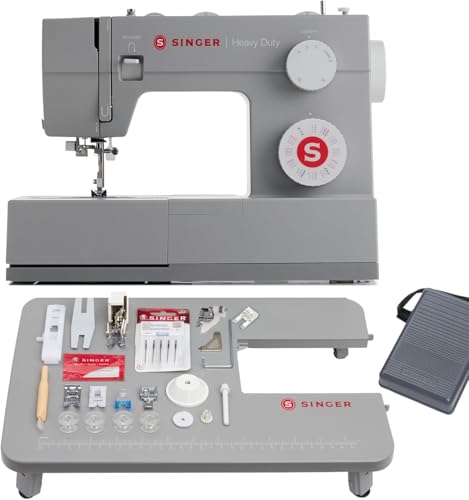
SINGER Heavy Duty 4452
A heavy metal interior frame keeps the needle bar aligned when you are pushing through layers, and the 1100 stitches per minute top speed gets long seams done quickly. The included heavy duty needles and non stick foot matter more than they sound, since the standard foot drags on coated and laminated fabrics. Owners report it handles denim hems and canvas bags reliably as long as you match the needle to the fabric.
Pros
- Metal frame keeps alignment under load
- High stitch speed for long seams
- Useful heavy duty accessories included
Cons
- Loud compared with premium mechanical machines
- Tension needs careful adjustment between fabrics
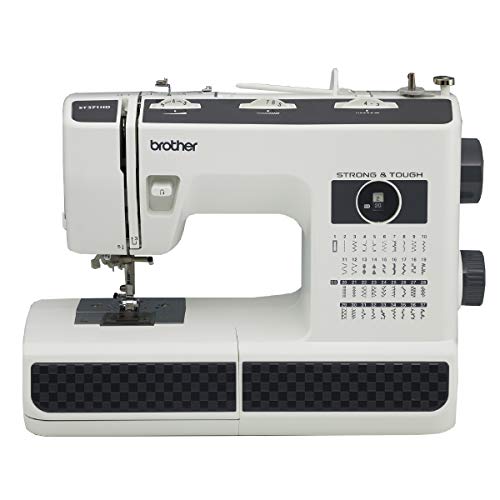
Brother ST371HD Strong and Tough
Brother’s heavy duty model pairs a metal needle plate and reinforced components with the automatic needle threader and drop in bobbin that make life easier for less experienced sewists. It will not match the SINGER on sustained speed, but it handles denim hems and canvas repairs without complaint. The free arm makes cuffs and trouser legs manageable.
Pros
- Automatic threader and drop in bobbin ease setup
- Free arm handles cuffs and hems
- Handles denim and canvas for occasional projects
Cons
- Slower than dedicated straight stitch machines
- More plastic in the housing than rivals

Janome HD3000
An aluminium body and a seven piece feed dog give the HD3000 a mechanical quality the plastic bodied machines cannot match, and the feed system is what keeps thick layers moving evenly rather than bunching. The presser foot lifts higher than most, which matters when you are stacking upholstery weight fabric. It is a mechanical machine with fewer stitch options, and that is the point.
Pros
- Feed system moves thick layers evenly
- High presser foot lift for stacked fabric
- Mechanically refined and quiet for its class
Cons
- Fewer decorative stitches than rivals
- Heavier to move between rooms
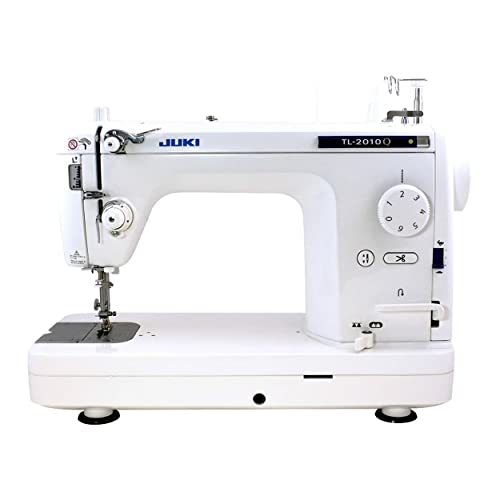
Juki TL-2000Qi
A straight stitch only machine with an aluminium die cast body, a knee lifter and 1500 stitches per minute, which puts it closer to a semi industrial machine than a domestic one. Quilters and bag makers choose it for the long throat space and the consistency of a dedicated straight stitch. If you need zigzag or buttonholes, this is not your machine.
Pros
- Exceptional straight stitch consistency
- Knee lifter frees both hands for thick work
- Long throat space for quilts and bags
Cons
- No zigzag or buttonhole capability
- Substantial outlay compared with domestic models

SINGER Heavy Duty 4423
The 4423 is the 4452’s simpler sibling, with fewer built in stitches and fewer accessories but the same metal interior frame and strong motor. For hemming jeans, running up curtains and repairing outdoor gear a few times a year, the extra stitches on the pricier model go unused. Tension adjustment is manual and takes a few test seams to dial in.
Pros
- Same metal frame and motor as the pricier model
- Straightforward controls with no learning curve
- Adjustable presser foot pressure
Cons
- Fewer accessories than the 4452
- Vibrates on a lightweight table at speed

Brother PQ1500SL
Another straight stitch specialist, aimed at quilters who need throat space and a pin feed system for handling bulky layers without shifting. The automatic thread trimmer and knee lifter save considerable time on repetitive work. Like the Juki, it does one stitch, so it works best alongside a general purpose machine rather than replacing one.
Pros
- Pin feed keeps bulky quilt layers aligned
- Generous throat space for large projects
- Automatic thread trimming saves time
Cons
- Straight stitch only
- Setup and threading take practice

Janome HD1000
The HD1000 keeps the aluminium body and mechanical simplicity of the HD3000 while dropping the stitch count and some conveniences. That trade suits anyone who wants a solidly built machine for repairs, hemming and light canvas work without paying for features they will not use. Threading is manual, which slows setup but keeps the mechanism simple.
Pros
- Aluminium body at an accessible price
- Simple mechanics with little to go wrong
- Solid enough for repairs and light canvas
Cons
- Manual threading slows setup
- Front loading bobbin is fiddlier than a drop in
What to look for
Heavy duty is a marketing term, so read the specification There is no standard behind the phrase, and several machines carrying the badge are ordinary domestic units with a stronger motor and a metal needle plate. The things that genuinely matter are a metal internal frame, which stops the needle bar flexing out of alignment under load, a motor that does not stall in thick seams, and a presser foot that lifts high enough to get layered fabric underneath in the first place.
Needles and thread do more work than the machine badge Most skipped stitch complaints on heavy fabric come down to the wrong needle rather than a weak machine. Denim and canvas need a sharp heavy needle in size 100 or 110, and leather needs a chisel point. Change needles far more often than feels necessary, since a blunt tip is the most common cause of skipped stitches, and match thread weight to the needle eye so it is not shredding as it passes through.
Feed system and presser foot lift decide what actually fits A machine that can technically sew through eight layers of denim still cannot do it if the presser foot will not lift high enough to get them underneath. Extra high lift is a specification worth checking. Underneath, a multi piece feed dog grips thick fabric more evenly than a simple two piece design, which is what stops the top layer creeping ahead of the bottom on long seams.
Straight stitch specialists versus general purpose machines Machines like the Juki TL-2000Qi and Brother PQ1500SL do one stitch superbly at high speed with generous throat space, which is what quilters and bag makers need. They cannot do zigzag, buttonholes or stretch stitches at all. If you have room and budget for one machine only, a general purpose heavy duty model is more flexible, and the specialists are better understood as a second machine.
Side by side
| # | Model | Frame | Best for | Score | Price |
|---|---|---|---|---|---|
| 1 | SINGER Heavy Duty 4452 | Heavy metal interior frame | Best overall | 9.4 | Check price |
| 2 | Brother ST371HD Strong and Tough | 37 built in | Best value | 9.2 | Check price |
| 3 | Janome HD3000 | Aluminium | Best for regular heavy fabric work | 9.0 | Check price |
| 4 | Juki TL-2000Qi | Straight stitch only | Best for straight stitch work | 8.8 | Check price |
| 5 | SINGER Heavy Duty 4423 | Heavy metal interior frame | Best for occasional projects | 8.6 | Check price |
| 6 | Brother PQ1500SL | Straight stitch only | Best for quilting | 8.3 | Check price |
| 7 | Janome HD1000 | Aluminium | Best budget | 8.0 | Check price |
Frequently asked questions
Can a heavy duty machine sew leather?
Lightweight garment leather and single layers of upholstery leather, yes, with a chisel point leather needle, a walking or roller foot and a longer stitch length. Thick belt or saddle leather needs a dedicated leather machine with a walking foot and a much stronger motor. Pushing a domestic machine through it damages the timing.
How many layers of denim can these machines handle?
Most heavy duty domestic machines manage six to eight layers of standard denim with a size 100 or 110 needle, though the seams where multiple hems intersect are the real test. Owners report using a hump jumper or folded fabric shim to keep the presser foot level over those transitions, which prevents skipped stitches.
What needle size should I use for canvas?
A size 100 or 110 sharp needle is the usual starting point for canvas and duck cloth, moving to 110 for heavier weights or multiple layers. Change the needle at the start of every substantial project rather than waiting for it to break, since a slightly blunt needle is the most common cause of skipped stitches on dense fabric.
Do I need a walking foot?
A walking foot feeds the top layer at the same rate as the bottom, which matters for quilting, vinyl, laminated fabrics and anything slippery. For plain denim and canvas seams the standard foot is generally fine. If you sew multiple layers of anything that shifts, a walking foot solves more problems than a stronger motor will.
Why does my machine skip stitches on thick fabric?
In order of likelihood: a blunt or wrong sized needle, an incorrectly threaded upper path, tension set for a lighter fabric, or trying to sew over a seam transition that lifts the presser foot out of level. Replace the needle first, since it fixes the majority of cases and takes a minute.
Is a mechanical or computerised machine better for heavy work?
Mechanical machines are generally preferred for heavy fabric because there is less to go wrong and the direct motor connection handles stalls more gracefully. Computerised machines offer convenience features and stitch variety. If your priority is durability on thick seams, mechanical is the safer choice.
How often should a heavy duty machine be serviced?
Manufacturers commonly suggest an annual service for regular use, and heavy fabric work generates more lint and puts more strain on timing than light dressmaking. Between services, clean the bobbin area and feed dogs after every substantial project and oil according to the manual, since lint packed under the needle plate causes more problems than wear does.
Can I use one machine for both heavy fabric and garment sewing?
Yes, most general purpose heavy duty machines cross over well. The adjustment is in the setup rather than the machine: change to a finer needle and lighter tension for lightweight fabrics, and expect to run a couple of test seams each time you switch. Straight stitch specialist machines cannot cross over, since they lack zigzag and buttonholes.
The verdict
The SINGER Heavy Duty 4452 is the machine we would pick for most people, since the metal internal frame and high stitch speed cover denim, canvas and general repairs without a large outlay. The Brother ST371HD is the friendlier option if you sew heavy fabric only occasionally and value an automatic threader. Anyone working with canvas or upholstery weight material regularly should step up to the Janome HD3000 for its feed system and higher presser foot lift.


