Shop Vacuums With Certified HEPA Filters for Workshop Dust
Ridgid’s HD1400 balances a 14 gallon tank with true HEPA filtration and takes the top spot. Craftsman’s CMXEVBE17595 delivers similar capture at a lower price. Short on storage room? The Vacmaster VBV1210 offers a compact 12 gallon body without giving up HEPA certification.
Three models handle fine dust the way a workshop actually needs: the Ridgid HD1400, Craftsman CMXEVBE17595 and Vacmaster VBV1210. Each traps particles instead of blowing them back into the room, which matters most during drywall sanding or sawdust cleanup.
Suction numbers dominate the marketing, yet filtration certification decides what stays out of your lungs. We compared tank size, HEPA certification level, motor draw and cord length, then checked owner reports on filter clogging, noise and how easily each tank empties.
What we recommend

Ridgid HD1400 14 Gallon HEPA Wet/Dry Vac
This 14 gallon tank covers a full day of shop cleanup before it needs emptying. Its HEPA media filter captures 99.97 percent of particles at 0.3 microns, meeting the certified HEPA standard. Onboard tool storage and a 6.5 peak horsepower motor round out a unit built for daily use.
Pros
- Certified HEPA rating traps fine drywall dust
- 14 gallon tank cuts down on mid-job emptying
- Built in tool storage keeps accessories organized
Cons
- Bulkier to haul around a job site
- Motor noise calls for hearing protection

Craftsman CMXEVBE17595 16 Gallon Wet/Dry Vac
Sixteen gallons of capacity make this the largest tank in the comparison, and it still ships with a HEPA-rated filter for fine dust. Wheels plus a top carry handle simplify repositioning around a garage. Wet pickup performs well enough to skip a separate shop mop after spills.
Pros
- Largest tank capacity in this comparison
- Wheeled base simplifies repositioning
- Handles wet spills without extra tools
Cons
- Cord runs shorter than most competitors here
- Bulkier footprint eats into small storage areas

Vacmaster VBV1210 12 Gallon HEPA Vac
Twelve gallons of capacity fit into smaller garages and utility closets without hogging storage space. The bundled HEPA cartridge filter manages drywall dust and sawdust for occasional use. A blower port doubles the unit as a leaf and debris blower outdoors.
Pros
- Compact size suits small storage spaces
- Lower cost than larger-tank rivals here
- Blower port adds outdoor cleanup use
Cons
- Less motor power for heavy debris loads
- Filter needs cleaning more often than premium models
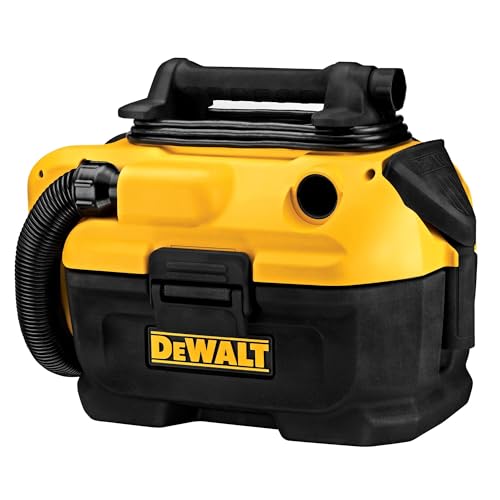
DeWalt DXV20SH 20 Gallon HEPA Vac
Twenty gallons of steel tank capacity covers extended renovation work without frequent stops to empty. An optional HEPA filter meets stricter dust standards required on some regulated job sites. Stair-climbing wheels help move the unit between floors on multi-level projects.
Pros
- Large steel tank suits multi-day jobs
- Optional filter meets OSHA silica dust standards
- Stair-climbing wheels ease transport between floors
Cons
- HEPA filter often sold as a separate accessory
- Footprint is too large for casual home use
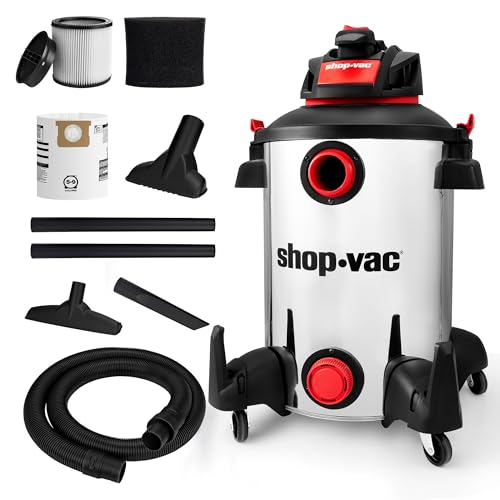
Shop-Vac 5989300 12 Gallon HEPA Wet/Dry Vac
A disposable HEPA bag layered with a cartridge filter creates two stages of fine particle capture. That combination suits owners cleaning up after renovation work with allergy or asthma concerns. A muffler quiets the motor compared to older Shop-Vac designs.
Pros
- Two-stage filtration suits allergy-sensitive households
- Muffler cuts down on motor noise
- Disposable bags simplify dust disposal
Cons
- Replacement bags add an ongoing cost
- Motor draws less power than premium rivals
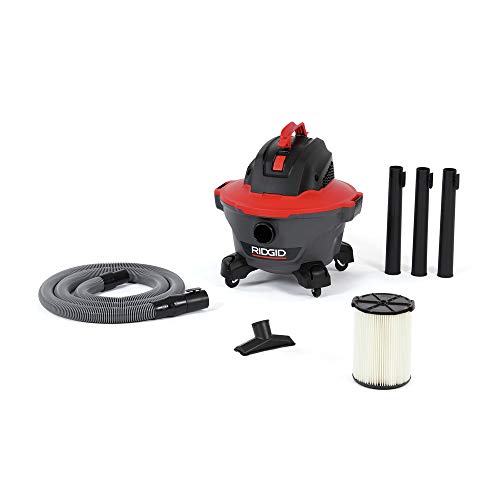
Ridgid HD0600 6 Gallon HEPA Vac
Six gallons of tank capacity and a light overall weight suit toolboxes, car detailing and tight workshop corners. HEPA filtration still meets the same 99.97 percent standard as Ridgid’s larger models. A quiet, muffled motor design keeps use tolerable in enclosed spaces.
Pros
- Lightweight enough to carry between rooms
- Matches the HEPA rating of larger Ridgid units
- Quieter motor than typical shop vacs
Cons
- Small tank needs frequent emptying
- Less suction for heavy debris loads

Bissell CleanView 2765A HEPA Canister Vac
A sealed HEPA system targets indoor fine dust, the kind produced by indoor woodworking or drywall repair. Lighter canister construction moves more easily between rooms than steel-tank shop vacs. Wet pickup power falls short of the dedicated shop vacs on this list.
Pros
- Sealed system limits indoor dust leakage
- Long cord reduces the need for outlet changes
- Lighter build suits room-to-room use
Cons
- Weaker wet pickup than dedicated shop vacs
- Not built for heavy job site debris
Compared at a glance
| # | Model | Tank capacity | Best for | Score | Price |
|---|---|---|---|---|---|
| 1 | Ridgid HD1400 14 Gallon HEPA Wet/Dry Vac | 14 gallons | Best overall | 9.3 | Check price |
| 2 | Craftsman CMXEVBE17595 16 Gallon Wet/Dry Vac | 16 gallons | Best value | 9.0 | Check price |
| 3 | Vacmaster VBV1210 12 Gallon HEPA Vac | 12 gallons | Best budget | 8.6 | Check price |
| 4 | DeWalt DXV20SH 20 Gallon HEPA Vac | 20 gallons | Best for job sites | 8.9 | Check price |
| 5 | Shop-Vac 5989300 12 Gallon HEPA Wet/Dry Vac | 12 gallons | Best for allergy-sensitive users | 8.5 | Check price |
| 6 | Ridgid HD0600 6 Gallon HEPA Vac | 6 gallons | Best for tight spaces | 8.3 | Check price |
| 7 | Bissell CleanView 2765A HEPA Canister Vac | 9 gallons | Best for fine dust indoors | 8.2 | Check price |
Before you buy
What does true HEPA filtration mean? True HEPA filters trap 99.97 percent of particles at 0.3 microns, the size that slips through cheaper filters. Many listings advertise HEPA-style or HEPA-rated media that falls short of that certified standard. Look for the specific 99.97 percent figure before assuming a listing means true HEPA. Anyone sanding drywall or handling silica dust should confirm this rating directly on the product page.
How do you pick the right tank size? Six gallon tanks suit quick cleanups and car detailing, where portability matters more than capacity. Twelve to fourteen gallon tanks balance capacity and weight for weekend garage projects. Job site crews running multi-day renovations benefit from 20 gallon tanks that avoid constant stops. Weigh how often you want to empty and clean a filter against how much weight you want to carry.
Can a HEPA shop vac handle wet spills? Not every HEPA filter tolerates moisture, and running a dry-only filter through liquid can ruin it. Some models swap to a foam sleeve for wet pickup, then switch back to HEPA media for dust. Confirm the filter-change process before buying if you plan to handle both spills and sanding debris. Skipping that step causes the most common complaint owners report in this category.
Do job site rules affect which vacuum you need? Regulated construction sites increasingly require dust extraction that meets OSHA silica standards, not just a general HEPA claim. Check the certification language on a listing directly if compliance matters for your work. Motor noise varies widely between models, and muffled designs help during indoor or daily use. Steel tanks resist dents better than plastic but add strain when moving between floors.
Common questions
What counts as a true HEPA shop vacuum?
It uses a filter certified to capture 99.97 percent of particles at 0.3 microns. Listings labeled HEPA-style or HEPA-rated without that figure may not meet the certified standard.
Do shop vacuums need a HEPA filter?
For drywall sanding, sawdust or silica dust, yes. Standard filters let fine particles pass through and recirculate into the air you breathe.
Can a HEPA shop vacuum pick up wet spills?
Many can, but the filter usually needs to switch to a foam sleeve first. Running liquid through a dry HEPA filter can damage it permanently.
Which shop vacuum works best on a job site?
The DeWalt DXV20SH suits multi-day renovation work with a 20 gallon tank and an optional filter that meets OSHA silica standards.
How often should a HEPA filter be replaced?
Heavy fine-dust use can clog a filter within weeks, while occasional cleanup stretches that to months. Watch for suction loss as the main sign it needs cleaning or swapping.
Is a bigger shop vac tank always the better choice?
Larger tanks cut down on emptying frequency but add weight and bulk. Base the choice on available storage space and typical job length.
HEPA shop vac vs regular shop vac, what actually changes?
A HEPA model traps fine dust that a standard filter blows back into the air. Regular shop vacs still handle leaves, water and larger debris fine where fine particulate is not a concern.
Which shop vacuum fits small storage spaces best?
The Ridgid HD0600 delivers true HEPA filtration in a 6 gallon body light enough to carry between rooms or store in a closet.
What is the difference between HEPA media and HEPA cartridge filters?
Media filters use pleated fiber sheets, while cartridge filters use a rounder, often washable design. Both can meet true HEPA certification if rated for 99.97 percent at 0.3 microns.
Can allergy sufferers use a standard shop vacuum safely?
Standard filters recirculate fine dust that can trigger allergy or asthma symptoms. A two-stage HEPA setup like the Shop-Vac 5989300 traps more of that particulate before it reaches the air.
Our pick
Most workshops get the best balance of tank size, true HEPA filtration and onboard storage from the Ridgid HD1400. Owners who want similar dust capture at a lower cost should consider the Craftsman CMXEVBE17595. Anyone short on storage space can look to the Vacmaster VBV1210 for a compact footprint without sacrificing filtration quality.