High Torque Oscillating Multi-Tools for Demanding Cuts
The Dremel Multi-Max MM45 stands out for its 4.5 amp motor and variable speed dial that delivers up to 21,000 OPM, making it ideal for heavy duty flush cuts and sanding. Its main advantage is the OIS quick change system that allows tool free accessory swaps. The main limitation is that it is corded, which restricts mobility.
Oscillating multi-tools have become a staple for renovation and repair work, especially for making precise plunge cuts in wood, drywall, and even metal. The key to tackling tough materials is torque, which allows the blade to maintain speed without stalling.
We compared seven leading models to identify which ones deliver the most power, control, and convenience. This roundup highlights tools that excel in both performance and user feedback, helping you choose the right one for your projects.
The top picks, ranked
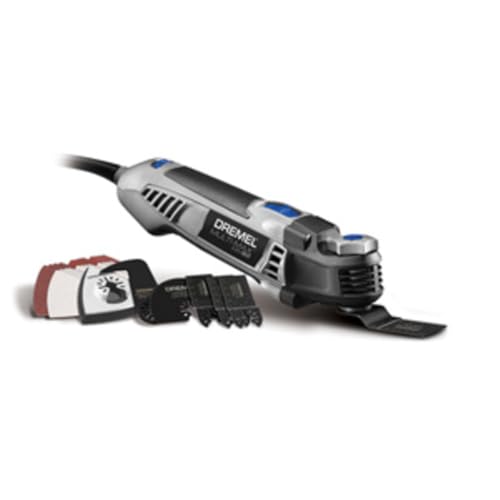
Dremel Multi-Max MM45
The Dremel MM45 is a corded oscillating tool with a powerful 4.5 amp motor that delivers up to 21,000 OPM. It features a variable speed dial and a 3.2 degree oscillation angle for efficient material removal. The OIS system allows for tool free accessory changes, and the tool comes with a range of accessories for cutting, sanding, and scraping.
Pros
- Powerful motor handles tough materials
- Tool free accessory changes save time
- Variable speed dial offers control
Cons
- Corded design limits portability
- Some users find it slightly heavy

DeWalt DWE315K
The DeWalt DWE315K is a corded oscillating multi-tool with a 3 amp motor that delivers up to 22,000 OPM with a 3.6 degree oscillation angle. It features a quick change lever for tool free accessory swaps and a variable speed dial for precise control. The tool includes a universal accessory adapter and a storage bag.
Pros
- Wide oscillation angle for faster cutting
- Compatible with many accessories
- Durable construction
Cons
- Less powerful than some competitors
- No onboard blade storage

Makita XMT04Z
The Makita XMT04Z is a cordless oscillating multi-tool that runs on the 18V LXT battery platform. It delivers up to 18,000 OPM with a 3.6 degree oscillation angle. The tool features an electronic speed control and a tool free accessory change system. It is compatible with standard oscillating accessories and offers excellent balance.
Pros
- Cordless freedom for job site use
- Compact and lightweight
- Constant speed under load
Cons
- Battery not included
- Lower max OPM than corded models

Bosch GOP40-30C
The Bosch GOP40-30C is a pro grade corded oscillating tool with a 4 amp motor that delivers up to 19,000 OPM. It features a 3.6 degree oscillation angle and a tool free blade change via the Bosch SDS system. The tool includes a carrying case, a variety of blades, and a depth stop for precise plunge cuts.
Pros
- Excellent build quality
- Low vibration for longer use
- Includes useful accessories
Cons
- Higher price point
- SDS system may require specific blades

PORTER-CABLE PCC650B
The PORTER-CABLE PCC650B is a 20V MAX cordless oscillating tool that offers a reasonable balance of power and affordability. It delivers up to 20,000 OPM with a 3.2 degree oscillation angle. It features a quick change accessory system and is compatible with standard oscillating blades.
Pros
- Affordable cordless option
- Good power for the price
- Lightweight design
Cons
- Battery and charger not included
- No variable speed dial
Chicago Electric 68146
The Chicago Electric 68146 is a budget friendly corded oscillating tool that is suitable for light to medium duty tasks. It has a 2.5 amp motor that delivers up to 21,000 OPM with a 3.2 degree oscillation angle. It includes a small selection of accessories and a carry case.
Pros
- Very affordable
- Includes accessories and case
- Simple to use
Cons
- Less powerful motor
- No speed control

Craftsman CMES630
The Craftsman CMES630 is a corded oscillating tool with a 3.5 amp motor that delivers up to 21,000 OPM. It features a variable speed dial and a tool free accessory change system. The tool is designed with a low vibration handle for comfort and includes a universal adapter.
Pros
- Good balance of power and price
- Variable speed control
- Comfortable grip
Cons
- Accessory selection limited
- Some users report minor vibration
How to pick the right one
Compared at a glance
| # | Model | Motor | Best for | Score | Price |
|---|---|---|---|---|---|
| 1 | Dremel Multi-Max MM45 | 4.5 amp | Heavy duty cutting and sanding | 9.4 | Check price |
| 2 | DeWalt DWE315K | 3 amp | Versatile cutting and sanding | 9.1 | Check price |
| 3 | Makita XMT04Z | 18V LXT battery | Cordless convenience | 9.0 | Check price |
| 4 | Bosch GOP40-30C | 4 amp | Professional use | 9.3 | Check price |
| 5 | PORTER-CABLE PCC650B | 20V MAX battery | Budget cordless option | 8.4 | Check price |
| 6 | Chicago Electric 68146 | 2.5 amp | Occasional DIY projects | 8.0 | Check price |
| 7 | Craftsman CMES630 | 3.5 amp | Everyday home use | 8.8 | Check price |
Questions worth asking
What is a high torque oscillating multi-tool used for?
It is used for plunge cutting, flush cutting, sanding, scraping, and grout removal. The high torque helps maintain speed under load for efficient work on wood, drywall, metal, and other materials.
How much torque do I need for cutting hardwood?
For hardwood, a corded tool with at least 3 amps or a cordless with a brushless motor rated above 18V is recommended. Look for tools with lower speeds and higher torque for controlled cuts.
Can I use any blade with these tools?
Most modern oscillating tools accept universal accessories with a standard opening. However, some brands use proprietary systems like Dremel OIS or Bosch SDS, which may require specific blades or adapters.
What is the difference between OPM and oscillation angle?
OPM (oscillations per minute) indicates speed, while oscillation angle is the arc through which the blade moves. A larger angle can remove more material per stroke, but may reduce precision. Both affect performance.
Are cordless oscillating tools as powerful as corded ones?
Generally, corded tools have higher torque and continuous power. However, modern cordless models with brushless motors can deliver comparable power for most tasks. Battery life is a consideration for extended use.
Why does my tool bog down when cutting?
Bogging down occurs when the motor lacks torque to maintain speed under load. Using a sharp blade, selecting the correct speed, and applying steady pressure can help. If the tool continues to stall, consider a higher torque model.
Is a variable speed dial important?
Yes, variable speed allows you to match the speed to the material and task. Lower speeds reduce heat and are better for precise cuts, while higher speeds are for fast material removal.
How do I reduce vibration when using an oscillating tool?
Choose a model with anti vibration technology. Additionally, maintain a firm grip, let the tool do the work, and avoid excessive pressure. Some tools have vibration dampening handles.
What accessories should I get?
Common accessories include segment saw blades for plunge cuts, sanding pads, scraper blades, and grout removal blades. A universal adapter can expand compatibility with various brands.
Can I use an oscillating tool to cut nails?
Yes, there are bi metal blades designed for cutting nails. High torque models can handle this, but it is important to use the appropriate blade and go slowly to avoid damage.
The verdict
For most demanding projects, the Dremel Multi-Max MM45 is our top recommendation because it offers the best combination of power, speed control, and tool free accessory changes. If you need cordless convenience, the Makita XMT04Z is the better choice, provided you already own Makita batteries. For professionals who prioritize durability, the Bosch GOP40-30C is worth the investment.