Hiking Boots Built for Wet Trails and Heavy Packs
Salomon’s Quest 4 GTX leads for balanced ankle support and Gore-Tex waterproofing on loaded packs. Merrell’s Moab 3 Mid Waterproof gives casual day hikers similar grip at a lower cost. Lowa’s Renegade GTX Mid suits multi-day backpackers who want a resoleable leather boot built for heavier loads.
Salomon’s Quest 4 GTX suits hikers who carry 30 to 40 pound packs on multi-day trips, pairing a Gore-Tex membrane with an Advanced Chassis midframe for torsional support. Its stiffer build takes longer to break in than lighter trail shoes.
Day hikers and multi-day backpackers need different midsole stiffness and ankle support, which makes one boot hard to recommend for everyone. We compared waterproofing membranes, midsole material, weight, and owner-reported fit across seven current models.
What we recommend

Salomon Quest 4 GTX
A Gore-Tex membrane blocks water during creek crossings and wet grass. Salomon’s Advanced Chassis midframe adds torsional support across uneven terrain, while the molded EVA midsole cushions loaded packs weighing 30 to 40 pounds. Contragrip rubber lugs grip loose rock and wet roots on descents.
Pros
- Stable ankle support under a loaded pack
- Gore-Tex membrane blocks water at creek crossings
- Contragrip outsole grips wet rock reliably
Cons
- Stiffer chassis needs a break-in period
- Runs narrow through the midfoot for some owners
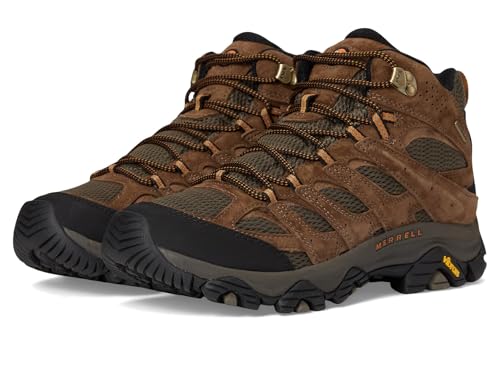
Merrell Moab 3 Mid Waterproof
M Select Dry waterproofing keeps out rain and puddle splash without the cost of premium leather boots. Vibram TC5+ rubber handles rocky, root-covered trails, and a molded EVA footbed adds cushioning for all-day hikes. Suede leather and mesh panels keep the upper lighter than full-leather designs.
Pros
- Comfortable out of the box with minimal break-in
- Vibram TC5+ outsole handles loose gravel well
- Costs less than most Gore-Tex competitors
Cons
- Waterproofing wears down faster than Gore-Tex under heavy use
- Offers less ankle support for loaded backpacking

Lowa Renegade GTX Mid
Nubuck leather and a Gore-Tex lining pair with a half-length nylon shank for stiffness under heavier packs. Owners report the resoleable Vibram outsole survives multiple seasons of regular backpacking. Its PU midsole holds cushioning longer than EVA foam under repeated loading.
Pros
- Resoleable construction extends usable lifespan
- Nylon shank adds stability on multi-day treks
- Leather upper resists abrasion on scree and rock
Cons
- Heavier than mesh-based trail boots
- Costs more than synthetic competitors

KEEN Targhee III Waterproof Mid
A wide toe box suits hikers who find standard lasts cramped through the forefoot. KEEN.Dry membrane and a dual-density EVA midsole handle wet trails and long descents. Multidirectional lugs bite into muddy singletrack, and a removable metal shank allows custom orthotics.
Pros
- Roomier fit for wide or high-volume feet
- Removable shank allows custom orthotics
- Grippy lugs perform well in mud
Cons
- Bulkier profile than narrow-fit trail boots
- Break-in period runs longer than mesh trail shoes
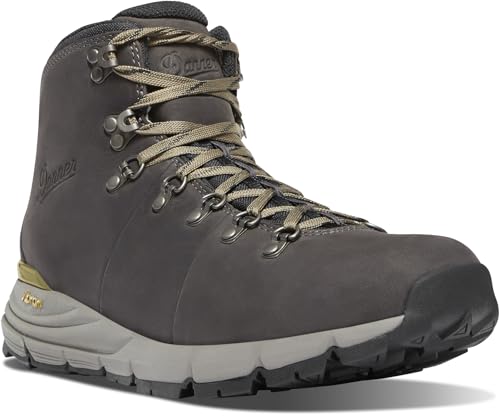
Danner Mountain 600
Waterproof nubuck leather and Danner Dry lining target rugged, rocky terrain where abrasion resistance matters most. An open lug pattern on the Vibram Fuga outsole sheds mud and debris. A 4.5 inch collar adds ankle coverage without the bulk of a full backpacking boot.
Pros
- Leather upper resists rock abrasion
- Vibram Fuga lugs shed mud effectively
- Balances height between a trail shoe and backpacking boot
Cons
- Not rated for the heaviest multi-day loads
- Leather needs periodic conditioning

Vasque Breeze LT GTX
Speed over maximum support defines this boot’s dual-density EVA midsole and lighter overall build. Gore-Tex lining keeps feet dry through wet grass and light stream crossings despite mesh upper panels. A Vibram Contact outsole balances grip with a lower rolling weight.
Pros
- Lighter weight reduces fatigue on long day hikes
- Gore-Tex lining still blocks water despite mesh panels
- Lower collar allows more ankle mobility
Cons
- Less ankle support for heavy overnight packs
- Mesh panels wear faster than full leather

Columbia Newton Ridge Plus II Waterproof
Casual hikers on a tighter budget get Columbia’s proprietary waterproof membrane paired with TechLite midsole cushioning. Suede leather and mesh keep the boot lightweight for short trails. Omni-Grip rubber handles packed dirt and light gravel but struggles on steeper, looser terrain.
Pros
- Lowest cost option in this comparison
- TechLite midsole feels cushioned for casual walking
- Lightweight build suits short day hikes
Cons
- Outsole compound wears faster than Vibram-soled competitors
- Limited ankle support for uneven or steep terrain
The lineup, side by side
| # | Model | Waterproofing | Best for | Score | Price |
|---|---|---|---|---|---|
| 1 | Salomon Quest 4 GTX | Gore-Tex membrane | Best overall | 9.4 | Check price |
| 2 | Merrell Moab 3 Mid Waterproof | M Select Dry membrane | Best value | 9.1 | Check price |
| 3 | Lowa Renegade GTX Mid | Gore-Tex lining | Best for backpacking | 8.8 | Check price |
| 4 | KEEN Targhee III Waterproof Mid | KEEN.Dry membrane | Best for wide feet | 8.6 | Check price |
| 5 | Danner Mountain 600 | Danner Dry lining | Best for rugged terrain | 8.4 | Check price |
| 6 | Vasque Breeze LT GTX | Gore-Tex lining | Best for lightweight day hiking | 8.2 | Check price |
| 7 | Columbia Newton Ridge Plus II Waterproof | Columbia proprietary membrane | Best budget | 8.0 | Check price |
What to look for
What actually matters in a hiking boot Waterproofing keeps feet dry through creek crossings and wet grass, though membranes like Gore-Tex, KEEN.Dry, and M Select Dry trade off breathability differently. Midsole material shapes cushioning over long miles; EVA foam feels softer while PU holds its shape longer under repeated loading. Ankle support matters more with a loaded pack than on a groomed day-hike trail. Weight and break-in time also shift which boot fits a given trip.
Day hikes versus multi-day backpacking Lighter boots with lower collars, like the Vasque Breeze LT GTX or Merrell Moab 3, suit day hikers moving fast with a light pack. Backpackers carrying 30 pounds or more benefit from a stiffer chassis and higher ankle collar, found on the Salomon Quest 4 GTX and Lowa Renegade GTX Mid. Load-bearing shanks reduce foot fatigue on rocky descents under a full pack. Pairing a light boot with a heavy pack often leads to ankle strain on uneven ground.
Which boots fit wide or high-volume feet? Standard hiking boot lasts run narrow through the forefoot, which presses on the pinky toe over long distances. KEEN’s Targhee III Waterproof Mid uses a wider toe box built for that exact complaint. Its removable metal shank also lets hikers swap in custom orthotics. Trying boots with the sock weight worn on trail matters more than reading a size chart.
Hiking through mud, stream crossings, and freeze-thaw conditions Open lug patterns, like the Vibram Fuga on the Danner Mountain 600, shed mud better than tighter tread designs. Leather uppers resist abrasion from sharp rock but absorb more water at the seams than sealed synthetic panels. Waterproof membranes cut internal moisture but will not stop water pouring in over a low collar during a deep crossing. Repeated freeze-thaw cycles break down glue and stitching faster on boots left wet than on boots stored dry.
Questions worth asking
How long do waterproof hiking boots stay waterproof?
Gore-Tex membranes typically outlast coated leather treatments, though owners report reduced water resistance after 200 to 300 miles of heavy use, especially at flex points near the toe.
Are hiking boots necessary for day hikes, or do trail shoes work?
Trail shoes work fine on groomed paths with a light daypack. Boots like the Merrell Moab 3 add ankle support once terrain turns rocky or uneven.
Salomon Quest 4 GTX vs Lowa Renegade GTX Mid, which is better for backpacking?
The Quest 4 uses a synthetic Advanced Chassis for lighter overall weight, while the Renegade’s leather upper and nylon shank favor durability and resoling over multiple seasons.
Which hiking boots fit wide feet best?
KEEN’s Targhee III Waterproof Mid uses a wider last through the forefoot than most competitors here, based on the listing’s fit description.
Can hiking boots handle backpacking with a heavy pack?
Boots built with a nylon or metal shank, such as the Lowa Renegade GTX Mid and Salomon Quest 4 GTX, handle loaded packs better than lighter trail-focused models.
Do budget hiking boots hold up as well as premium ones?
The Columbia Newton Ridge Plus II costs less but uses a lighter-duty outsole compound that wears faster than Vibram soles on rocky trails, according to owner reports.
How should hiking boots fit before a long trail?
Boots should leave a finger’s width behind the heel with no forefoot pressure, since sizing varies enough between brands like Merrell and Danner that true-to-size charts do not always match.
What causes hiking boots to leak after months of use?
Flex creases near the toe break down waterproof coatings first, and seams around the eyelets often let water in before the main membrane fails.
Final word
Salomon’s Quest 4 GTX earns the top spot for hikers who split time between day trips and loaded backpacking runs, pairing Gore-Tex waterproofing with a supportive Advanced Chassis. Hikers on a stricter budget should pick the Merrell Moab 3 Mid Waterproof instead, since it delivers similar trail grip without the premium cost. Anyone with wide or high-volume feet should skip both and choose the KEEN Targhee III Waterproof Mid for its roomier toe box.