Smart Home Hubs Compared: Zigbee, Z-Wave and Matter Support
Samsung’s SmartThings Station combines a Matter controller and Zigbee bridge in a compact charging pad, the strongest overall pick. Aqara’s Hub M3 covers a wider Zigbee sensor library for less. Households worried about internet outages should choose the Hubitat Elevation C-8, which runs every automation locally instead of through the cloud.
Samsung’s SmartThings Station is the strongest all-rounder here. The puck-shaped hub works as both a Matter controller and a Zigbee bridge, while doubling as a phone charging pad. Anyone starting fresh without a locked-in ecosystem preference gets the most value from it. Z-Wave support is missing entirely though, so households with older Z-Wave locks or sensors need a different pick.
Hub choice usually comes down to which wireless protocols a household already owns and which voice assistant runs the rest of the house. We compared radio support across Zigbee, Z-Wave, Thread and Matter, weighed local processing against cloud dependence, and checked owner reports on pairing reliability and sensor library size for each ecosystem.
What we recommend
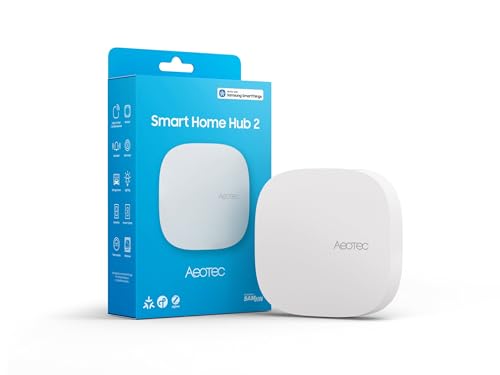
Samsung SmartThings Station
This puck shaped hub acts as a Matter controller and a Zigbee bridge in one small unit. A 15 watt USB-C wireless charging pad sits on top, doubling as a nightstand phone charger. Owners tap NFC tags or press the single physical button to trigger routines without opening an app.
Pros
- Charges a phone while bridging Zigbee devices
- Matter support guards against future ecosystem lock in
- NFC tags run routines without opening the app
Cons
- No Z-Wave radio for older sensors and locks
- Small footprint suits one room, not a whole house

Amazon Echo Hub
An 8 inch touchscreen replaces the phone app for daily control, showing cameras, thermostats and routines on one wall mounted panel. A built-in Zigbee radio pairs sensors and bulbs directly, skipping a separate Echo speaker as a bridge. Far-field microphones keep Alexa voice control active alongside the screen.
Pros
- Wall panel cuts down on constant phone app use
- Built-in Zigbee skips a separate bridge device
- Shows camera feeds and routines at a glance
Cons
- No Z-Wave or Thread radio onboard
- Tabletop stand sold as a separate accessory

Apple HomePod mini
A built-in Thread border router lets this speaker double as the backbone for Apple Home automations. Siri handles voice requests, and 360 degree computational sound plays music between commands. Two or more HomePod minis add redundancy, so one unit going offline does not stop automations.
Pros
- Plays music and runs automations from one device
- Thread radio extends mesh range for HomeKit sensors
- Multiple units add backup if one goes offline
Cons
- No Zigbee or Z-Wave radio of its own
- Automations stay locked inside the Apple Home app

Aqara Hub M3
This hub bridges Aqara’s large Zigbee sensor lineup, from door contacts to water leak detectors, into one app. A built-in infrared blaster also controls a television or air conditioner, cutting down on separate universal remotes. Its onboard speaker sounds alarms directly, without waiting on a cloud round trip.
Pros
- Pairs natively with Aqara’s wide sensor catalog
- Infrared blaster replaces separate universal remotes
- Local siren sounds without a cloud delay
Cons
- No native Z-Wave radio included
- App experience leans heavily on Aqara’s own ecosystem

Hubitat Elevation C-8
Automations run entirely on the hub itself, so a home internet outage does not stop lights or locks from following their routines. Both Zigbee and Z-Wave radios ship built in, covering two device families other hubs split across separate units. A local web dashboard replaces a phone app for setup and rule building.
Pros
- Routines keep working during an internet outage
- One hub covers both Zigbee and Z-Wave devices
- No subscription required for core automation
Cons
- Web dashboard looks dated next to app based rivals
- Initial setup takes longer than plug and play hubs

Home Assistant Green
This small appliance ships preloaded with Home Assistant OS, ready to join a home network out of the box. Zigbee, Z-Wave or Thread support arrives through an added USB radio dongle, sold separately. Thousands of community built integrations extend it far past the major voice assistant ecosystems.
Pros
- Integration library reaches far beyond major ecosystems
- No subscription needed for core functionality
- Active open source community adds features often
Cons
- Needs a separate USB dongle for Zigbee or Z-Wave
- Setup assumes comfort with network appliances
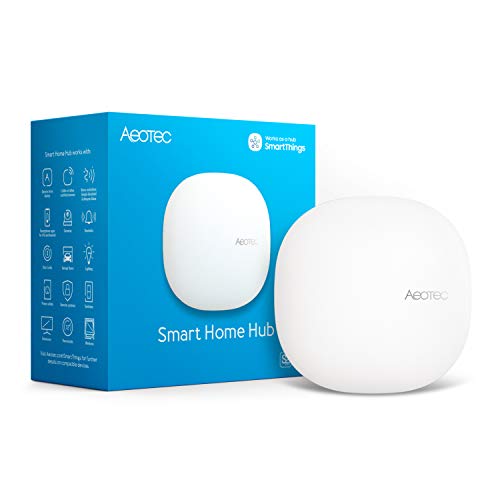
Aeotec Smart Home Hub
Built by a longtime Z-Wave hardware maker, this hub runs Samsung’s SmartThings software while adding stronger Z-Wave Long Range support. An ethernet port keeps the connection stable instead of relying only on WiFi. Extra USB ports allow additional radios to be added later.
Pros
- Stronger Z-Wave range than most consumer hubs
- Familiar SmartThings app for device management
- Ethernet port avoids WiFi congestion issues
Cons
- Still depends on SmartThings cloud for remote access
- Fewer native Matter features than newer hub designs
How they stack up
| # | Model | Protocols | Best for | Score | Price |
|---|---|---|---|---|---|
| 1 | Samsung SmartThings Station | Zigbee radio plus Matter over Thread | Best overall | 9.4 | Check price |
| 2 | Amazon Echo Hub | 8 inch touchscreen | Best for touchscreen control | 9.1 | Check price |
| 3 | Apple HomePod mini | Thread border router built in | Best for Apple Home users | 8.9 | Check price |
| 4 | Aqara Hub M3 | Zigbee 3.0 and Bluetooth mesh | Best for Zigbee sensor networks | 8.7 | Check price |
| 5 | Hubitat Elevation C-8 | Zigbee and Z-Wave radios built in | Best for local processing | 8.4 | Check price |
| 6 | Home Assistant Green | Home Assistant OS preinstalled | Best for open source customization | 8.2 | Check price |
| 7 | Aeotec Smart Home Hub | Z-Wave Long Range and Zigbee | Best for Z-Wave device libraries | 8.0 | Check price |
How to choose
What a smart home hub actually does A hub bridges low power wireless standards, Zigbee, Z-Wave and Thread, into a single app that also talks to WiFi and voice assistants. Without one, many battery sensors and smart locks cannot join a home network directly. Not every device needs a hub though. WiFi bulbs and plugs already connect on their own, so a hub earns its place once Zigbee or Z-Wave hardware enters the picture.
Which hub matches your voice assistant Alexa households gain the most from the Echo Hub’s built-in Zigbee radio and wall mounted screen. Apple Home users get a similar boost from a HomePod mini acting as a Thread border router. Google Home owners have fewer dedicated hub choices right now, which pushes many toward the more neutral SmartThings or Aqara apps instead. Pick the hub that lines up with the assistant already running your speakers.
Zigbee, Z-Wave and Thread compatibility explained Zigbee dominates budget sensors and bulbs, and Aqara’s Hub M3 leans into that with one of the widest Zigbee sensor libraries around, from door contacts to leak detectors. Z-Wave shows up more often in door locks and older security systems. Thread is newer, built for lower latency with multiple border routers on one network. A household mixing brands benefits from a hub like the Hubitat Elevation C-8 or Aeotec Smart Home Hub, since both cover Zigbee and Z-Wave in a single unit rather than splitting them across two bridges.
Local processing, privacy and the open source route Cloud dependent hubs stop responding to routines the moment home internet drops, even though the devices themselves stay powered. Hubitat and Home Assistant Green both process automations on the hub itself, keeping lights and locks working through an outage. That local approach also keeps sensor data off a manufacturer’s servers by default. The tradeoff is a rougher interface and a setup process aimed at people comfortable with network hardware.
Good to know
Do I need a smart home hub or just WiFi devices?
WiFi bulbs and plugs work without one. A hub becomes worthwhile once Zigbee or Z-Wave sensors, locks or bulbs enter the mix, since those standards cannot join a WiFi network directly.
What is the difference between Zigbee and Z-Wave hubs?
Zigbee radios pair more budget sensors and bulbs. Z-Wave shows up often in locks and security hardware instead. Some hubs, including the Hubitat Elevation C-8 and Aeotec Smart Home Hub, include both radios in one unit.
Which home automation hub works best with Alexa?
The Amazon Echo Hub is built around Alexa, with far-field microphones and a built-in Zigbee radio. Other hubs, including the SmartThings Station, also connect to Alexa through the cloud.
Does Apple Home need a separate hub?
Yes. HomeKit automations away from home need a hub such as a HomePod mini, Apple TV or HomePod acting as a Thread border router.
Are smart home hubs worth it in 2026?
For a handful of WiFi devices, not really. Once Zigbee, Z-Wave or Thread sensors, locks or bulbs are involved, a hub keeps them working together instead of splitting them across separate manufacturer apps.
What happens to a hub if the internet goes down?
Cloud dependent hubs stop running routines during an outage, even though devices stay powered. The Hubitat Elevation C-8 and Home Assistant Green process automations locally, so routines keep running.
Can one hub replace multiple smart home apps?
Often yes. A hub that supports Zigbee, Z-Wave and Matter consolidates sensors and bulbs from different brands into one app, instead of switching between several manufacturer apps.
Is Home Assistant Green hard to set up?
It ships with Home Assistant OS preinstalled, but Zigbee, Z-Wave or Thread support requires adding a separate USB radio dongle. That suits someone comfortable with basic network hardware.
What is Matter and do I need a hub that supports it?
Matter is a shared standard meant to let devices from different brands work together over Thread or WiFi. A Matter capable hub, such as the SmartThings Station, guards against future ecosystem lock in.
The verdict
Samsung’s SmartThings Station suits most households starting a smart home from scratch, pairing Matter support with a genuinely useful wireless charging dock. Anyone already committed to Apple Home should pick up an Apple HomePod mini instead, since it doubles as a Thread border router without adding a new app. Mixed Zigbee and Z-Wave households, especially those wary of cloud outages, get more reliability from the Hubitat Elevation C-8.


