Which Horse Halter Holds Up Best in a Stall?
The Weaver Leather Original Nylon Halter fits the widest range of barn horses with brass hardware that resists moisture. Tough 1’s Nylon Adjustable Halter costs less and still holds up daily. Hilason’s Rope Halter works for owners on a tight budget. Breakaway and padded builds cover specific stall-safety and comfort needs among the remaining four.
Barn owners buying an indoor halter usually rank breakaway safety, material, and fit range above color or brand name. Weaver Leather’s Original Nylon Halter, the Tough 1 Nylon Adjustable, and Hilason’s Rope Halter top this list for hardware quality, adjustability, and price against features.
Ammonia fumes and daily buckling wear down cheap hardware fast, so stitching quality matters more than looks. Owner feedback, published sizing charts, and listed specs across seven current Amazon halters shaped how we grouped these by material, safety feature, and fit.
Our top picks

Weaver Leather Original Nylon Halter
A doubled and stitched crown on 1 inch nylon webbing gives this halter the strength for daily stall and aisle handling. Brass-plated hardware shrugs off barn moisture better than bare steel. The adjustable chin strap covers pony through average-horse head shapes without a separate size for each.
Pros
- Doubled and stitched nylon resists fraying in a stall
- Brass-plated hardware holds up to barn moisture
- Adjustable chin fits a range of head shapes
Cons
- No manufactured breakaway point for stall tie-ups
- Bright colors can fade with repeated washing

Tough 1 Nylon Adjustable Halter
A chin snap on this nylon halter speeds up turnout swaps without fumbling a buckle in the dark. Owners fine-tune fit at the crown and noseband instead of stocking multiple sizes. Several color options let barns tell horses apart from across the aisle.
Pros
- Chin snap speeds up turnout and stall changes
- Wide size range fits yearlings through oversize horses
- Multiple color options simplify barn identification
Cons
- Nickel-plated hardware can show rust over time
- Noseband padding is thinner than premium models

Hilason Rope Halter
One length of poly rope, tied into a knot pattern, replaces the buckles and snaps other halters rely on. Nothing here can rust or snap under normal use, and the lightweight build packs flat for trailering between barns. Noseband knots double as pressure points for groundwork training.
Pros
- Lightweight rope packs easily for trailering
- Knotted noseband helps with groundwork cues
- No metal hardware to rust in a damp barn
Cons
- Thin rope can rub bare skin without a liner
- Sizing is less precise than buckled halters

Intrepid International Leather Halter
Stitched brass buckles at the crown and chin give this leather halter a fit adjustment range similar to nylon builds. Show barns and boarding facilities lean on leather for its traditional look. Under heavy sudden force, leather tends to give way rather than hold, a break trait some owners actively prefer.
Pros
- Traditional leather can give way under sudden force
- Brass buckles resist corrosion in barn humidity
- Classic look suits show barns and boarding facilities
Cons
- Leather needs regular conditioning to stay supple
- Higher upkeep than wipe-clean nylon halters
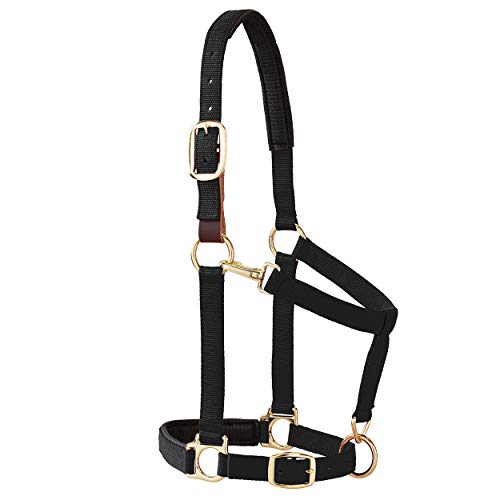
Weaver Leather Breakaway Halter
A leather crown piece on this nylon halter is built to release under sudden pressure, aimed squarely at overnight stall wear. Brass hardware and an adjustable chin strap carry over from Weaver’s standard build. Barns that leave horses haltered unattended gain a designed weak point most nylon-only halters skip.
Pros
- Leather breakaway crown reduces stall tie-up risk
- Nylon body keeps most of the halter low maintenance
- Brass hardware holds up to daily buckling
Cons
- Breakaway crown needs periodic replacement
- Narrower sizing range than standard nylon halters

Jacks Pony and Cob Nylon Halter
Standard halters leave minis and ponies swimming in extra strap, so this one is cut and sized specifically for smaller heads. An adjustable chin strap keeps the fit snug without rubbing on narrow faces. Nickel-plated hardware matches the lighter overall build rather than adding bulk a small horse does not need.
Pros
- Sized specifically for minis and ponies
- Lighter hardware suits smaller heads without added bulk
- Adjustable chin keeps fit snug on narrow faces
Cons
- Does not fit full-size or draft horses
- Fewer color choices than standard-size halters

Tabelo Padded Nylon Halter
Fleece lines the noseband and crown here, cutting pressure points during long stretches of indoor turnout. Brass hardware and an adjustable chin strap span cob through oversize horses. Horses new to extended stall halter wear tend to adjust faster with the added cushioning.
Pros
- Fleece padding reduces rubbing on the noseband
- Comfortable for horses haltered for long stall periods
- Adjustable crown fits a range of head sizes
Cons
- Fleece padding requires more frequent cleaning
- Padding adds bulk compared to plain nylon
What to look for
What to Look for in an Indoor Horse Halter Daily buckling, ammonia fumes, and wall rubs wear down a stall halter faster than color choice ever will. Material, hardware, and adjustability decide how long a halter lasts under that use. Nylon shrugs off moisture, leather offers a traditional break point, and rope skips hardware altogether. A properly fitted halter leaves room for two fingers between the noseband and the horse’s face.
Nylon vs Rope vs Leather: Which Halter Suits Stable Life? Nylon webbing wipes clean in seconds, which is why most barns default to it for everyday stall use. Rope halters carry no buckles at all, cutting out the parts most likely to rust or snap. Leather keeps a traditional look and gives way under sudden force, though it demands regular conditioning to avoid cracking. Many barns rotating horses between stalls and turnout keep both a nylon and a rope halter on the same hook.
Are Breakaway Halters Worth It for Overnight Stall Use? A stalled horse can catch its halter on a feeder edge or a hook without anyone noticing until morning. Breakaway designs use a leather crown piece or another built-in weak point that gives way under sudden pressure. That release point can be the difference between a scare and a neck injury during a panic. Owners who tie in cross-ties, by contrast, often choose a standard halter for the extra hold it provides.
How to Size a Halter for Pony, Cob, or Draft Horses Sizing runs from mini and pony up through cob, horse, and oversize builds meant for drafts. Too loose and a halter slips over the ears; too tight and it rubs the nose and poll raw. Measuring around the nose and behind the ears before ordering matches a horse to the right spot on a size chart. Adjustable straps at the crown and chin still allow small corrections once the halter arrives.
Side by side
| # | Model | Material | Best for | Score | Price |
|---|---|---|---|---|---|
| 1 | Weaver Leather Original Nylon Halter | 1 inch nylon webbing | Best overall | 9.4 | Check price |
| 2 | Tough 1 Nylon Adjustable Halter | Nylon webbing | Best value | 9.1 | Check price |
| 3 | Hilason Rope Halter | Poly rope | Best budget | 8.8 | Check price |
| 4 | Intrepid International Leather Halter | Leather | Best for leather feel | 8.5 | Check price |
| 5 | Weaver Leather Breakaway Halter | Nylon with leather breakaway crown | Best for stall safety | 8.3 | Check price |
| 6 | Jacks Pony and Cob Nylon Halter | Nylon webbing | Best for ponies and minis | 8.1 | Check price |
| 7 | Tabelo Padded Nylon Halter | Nylon with fleece padding | Best for padded comfort | 8.0 | Check price |
Frequently asked questions
What is the safest type of halter for stall use?
Breakaway halters with a leather crown piece or another designed weak point are generally the safer stall choice, since they can release if a horse catches the halter on something.
Are breakaway halters worth it for horses left in stalls overnight?
Many barn managers use them for overnight stall turnout, since the release point lowers the risk of injury if a horse struggles after getting caught.
How do I measure my horse for the right halter size?
Measure around the nose about two inches below the cheekbones, then again behind the ears, and compare both numbers to the manufacturer’s size chart.
Is nylon or leather better for an indoor halter?
Nylon wipes clean and resists barn moisture, while leather keeps a traditional look and a natural break point under heavy force but needs regular conditioning.
Can rope halters be left on horses overnight?
Rope halters have no breakaway feature, so most trainers reserve them for groundwork and handling sessions rather than unsupervised overnight wear.
What hardware holds up best in a barn environment?
Brass-plated and solid brass hardware resist corrosion better than plain steel or some nickel-plated parts when exposed to barn humidity and ammonia.
How often should a nylon halter be cleaned?
A weekly wipe-down plus a deeper monthly wash removes the dirt and sweat buildup that can cause rubbing over time.
Do pony and mini horses need a different halter than full-size horses?
Yes. Standard halters run too large for minis and ponies, so a size-specific fit keeps the noseband and crown from slipping down.
How many horse halters does a typical barn need?
Most barns keep at least a nylon halter for daily handling and a rope halter for groundwork, plus a breakaway option for any horse haltered overnight.
What causes a halter to wear out fastest indoors?
Ammonia fumes and repeated buckling break down stitching and hardware plating quicker than outdoor exposure, so barns replace indoor halters more often.
The verdict
Daily handling routines, not brand names, should drive which indoor halter a barn buys. The Weaver Leather Original Nylon Halter covers most general stall use, while breakaway and padded builds answer more specific safety and comfort needs. Matching material and size to actual stable routines beats chasing a single universal best pick.


