Which Horse Lead Rope Handles a Full-Size Horse Best?
For most owners handling a full-size horse, the Weaver Leather Flat Cotton Lead Rope balances grip and everyday durability. Tough-1’s Braided Poly Lead Rope with Panic Snap suits trailer loading, and Kensington’s Leather Lead Rope with Solid Brass Snap fits owners who want a polished option for showing.
A large, strong horse needs a lead rope that will not slip, fray or snap under sudden pressure. Material, length and snap type all decide how a lead performs at the trailer, in the wash rack or on a trail ride. We compared seven widely sold leads to see which barn tasks each one handles best.
Picking a lead rope is trickier than it looks, since a cheap snap can bend under a spooked horse’s pull. Published material specs, snap hardware ratings and owner feedback from tack shops guided these picks. Ground work, trailer loading and everyday turnout shaped which lead earned each spot.
What we recommend

Weaver Leather Flat Cotton Lead Rope, 8-Foot
Weaver Leather weaves this lead from flat cotton webbing that stays soft on gloved and bare hands alike. A brass-plated bolt snap resists rust in wash-rack conditions and holds firm during routine tying. Owners report the webbing stays flexible after repeated machine washing.
Pros
- Soft cotton webbing spares hands from rope burn
- Brass-plated bolt snap resists rust and corrosion
- Stays flexible through repeated machine washing
Cons
- Cotton soaks up water and dries slowly
- 8-foot length feels short for groundwork drills

Tough-1 Braided Poly Lead Rope with Panic Snap
Tough-1 builds this lead from braided polypropylene that sheds water instead of soaking it up. A panic snap releases instantly under load, a real advantage during trailer loading. New rope feels stiff at first but softens with regular handling.
Pros
- Panic snap frees a horse fast if it pulls back
- Poly rope resists mildew better than cotton
- Bright color options improve visibility around the barn
Cons
- Feels stiff until broken in with regular use
- Panic mechanism needs periodic cleaning to release smoothly

Weaver Leather Poly Lead Rope with Chain, 10-Foot
A 30-inch steel chain gives this Weaver Leather lead extra leverage over the nose or under the chin. Handlers reach for it with stallions, young horses or animals that lean into pressure. Poly rope makes up the remaining length, staying light and easy to coil.
Pros
- Steel chain adds control for strong or pushy horses
- Poly rope section stays light and coils easily
- Bolt snap holds firm during groundwork sessions
Cons
- Chain needs correct fitting to avoid injury
- Overkill for casual leading of a quiet horse
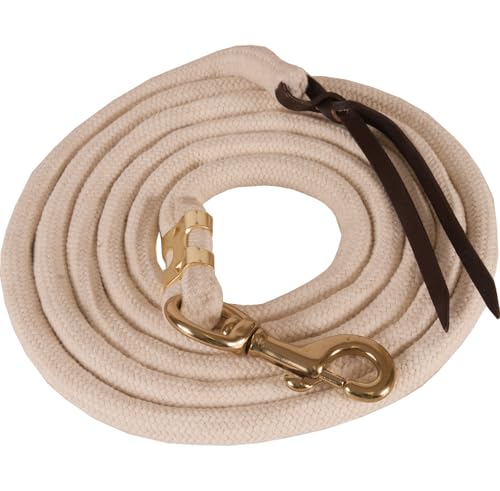
Mustang Manufacturing Cotton Lead Rope with Bolt Snap
Mustang Manufacturing keeps this cotton lead priced for barns that need several at once. Half-inch webbing suits ponies and smaller horses along with full-size animals. Nickel plating on the bolt snap resists rust in wet wash-rack conditions.
Pros
- Low cost suits barns needing multiple leads
- Nickel-plated snap resists rust over time
- Lightweight webbing coils and stores easily
Cons
- Narrower 1/2-inch width gives less grip than wider leads
- Cotton frays faster under heavy daily pulling

Hamilton 5/8-Inch Nylon Lead Rope with Bull Snap
Hamilton fits this nylon lead with a heavy bull snap built for daily turnout and catching pastured horses. Nylon webbing outlasts cotton under repeated pulling and wet weather. Wide 5/8-inch webbing gives larger hands a secure grip.
Pros
- Bull snap withstands frequent daily catching
- Nylon resists fraying longer than cotton
- Wide webbing is easy to grip firmly
Cons
- Feels rough until the nylon softens with use
- Bull snap adds noticeable weight near the halter
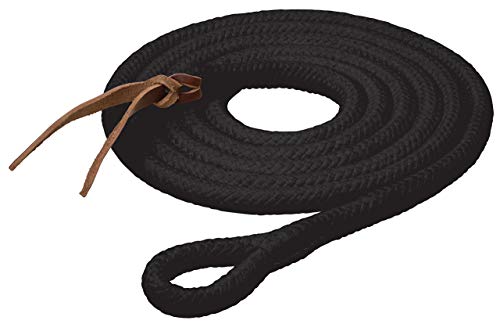
Professional’s Choice Cotton Lead Rope, 10-Foot
Professional’s Choice uses a thicker, softer cotton favored in natural horsemanship training. Extra length and 3/4-inch width give handlers room to work at a distance during groundwork. Trainers reach for it during lunging cues and desensitizing exercises.
Pros
- Extra length suits lunging and groundwork cues
- Thick cotton stays comfortable through long handling sessions
- Wide webbing lowers the risk of rope burn
Cons
- Bulkier to coil and store than thinner leads
- Costs more than basic cotton leads

Kensington Leather Lead Rope with Solid Brass Snap
Kensington pairs oiled leather with solid brass hardware for a classic show-ring look. Leather molds to a handler’s grip over time, unlike synthetic webbing. Regular conditioning keeps the leather from cracking, according to owner reports.
Pros
- Solid brass hardware resists tarnishing
- Leather softens and molds to the hand with use
- Classic look suits show and lead-line classes
Cons
- Needs regular leather conditioning to stay supple
- Not machine washable like cotton or nylon leads
Compared at a glance
| # | Model | Material | Best for | Score | Price |
|---|---|---|---|---|---|
| 1 | Weaver Leather Flat Cotton Lead Rope, 8-Foot | Cotton | Best Overall | 9.4 | Check price |
| 2 | Tough-1 Braided Poly Lead Rope with Panic Snap | Braided polypropylene | Best for Trailer Loading | 9.2 | Check price |
| 3 | Weaver Leather Poly Lead Rope with Chain, 10-Foot | Poly rope with steel chain | Best for Extra Control with Chain | 9.0 | Check price |
| 4 | Mustang Manufacturing Cotton Lead Rope with Bolt Snap | Cotton | Best Budget | 8.7 | Check price |
| 5 | Hamilton 5/8-Inch Nylon Lead Rope with Bull Snap | Nylon | Best for Daily Turnout and Catching | 8.5 | Check price |
| 6 | Professional’s Choice Cotton Lead Rope, 10-Foot | Soft cotton | Best for Lunging and Groundwork Cues | 8.2 | Check price |
| 7 | Kensington Leather Lead Rope with Solid Brass Snap | Leather | Best Premium Leather | 8.0 | Check price |
Before you buy
What Makes a Horse Lead Rope Safe for Large Horses Material, length and snap hardware decide how a lead rope performs under real pressure. Cotton feels soft against the hands but soaks up water and dries slowly. Nylon and poly shed moisture and hold up better to daily catching. An 8-foot lead suits basic leading and tying, while a 10-foot lead gives more room for groundwork. Snap hardware ranges from a simple bolt snap to a chain or panic-release mechanism, and that choice affects how the lead behaves if a horse pulls back hard.
How Snap Hardware Changes What a Lead Rope Can Handle Bolt snaps suit calm horses and routine tying around the barn. Bull snaps add strength for daily turnout and catching pastured animals. Panic snaps release instantly when a horse pulls back hard, a common need near trailers. Chain attachments give handlers leverage over the nose or chin for stronger or younger horses. Picking the wrong snap can turn a minor spook into a real safety issue.
Cotton, Nylon or Leather: Matching Material to the Task Trail riders often reach for nylon or poly because both resist rain and mud. Ground work trainers prefer thicker cotton since it stays gentler during hand-over-hand cues. Leather appeals to show handlers who want a polished look in the ring. Weight matters on long trail rides, where a lighter poly lead cuts down on fatigue when tied to a saddle. Owners managing several horses often keep a nylon lead for chores and a separate cotton lead for training.
Choosing a Lead Rope for Young Horses, Stallions and Trailer Loading Young horses and stallions benefit from a chain lead for added control during handling. Trailer loading calls for a panic snap so a handler can release a horse instantly if it panics. Ponies and smaller horses do fine with a narrower, lighter lead than full-size warmbloods need. Multi-rider barns often standardize on one snap type to avoid confusion during an emergency. Matching the lead to the specific task lowers injury risk for horse and handler alike.
Common questions
What length lead rope works best for a large horse?
Most handlers use an 8 to 10 foot lead for daily leading and tying. Trainers doing groundwork often choose a 12 to 14 foot lead for extra distance during exercises.
Cotton vs nylon lead rope: which holds up better?
Cotton feels softer on the hands and suits training work, while nylon resists fraying and handles wet or muddy conditions better. Many barns keep one of each for different jobs.
How does a panic snap work on a horse lead?
A panic snap releases with a quick pull or lever action, even under tension. It lets a handler free a horse instantly during a trailer emergency or a spook.
Can a chain lead rope hurt a horse?
A chain can cause injury if fitted incorrectly or used with excessive force. Proper placement over the nose or under the chin, with light pressure, keeps it safe.
Which lead rope works best for trailer loading?
A braided poly or nylon lead with a panic snap is common for trailer loading. The quick-release snap lets a handler act fast if a horse pulls back.
Is a bull snap stronger than a bolt snap?
Bull snaps generally handle more daily wear and pulling force than lighter bolt snaps. Bolt snaps still work fine for calm horses and routine tying.
How wide should a horse lead rope be?
Most leads range from 1/2 inch to 3/4 inch wide. Wider webbing spreads pressure across the hand and reduces rope burn during a pull.
What is the best lead rope for a young horse or foal?
A soft cotton lead with a lightweight snap works well for foals still learning to lead. Trainers often add a chain only once a horse needs more direction.
Is leather or cotton better for a show horse lead?
Leather gives a polished look for the show ring and molds to the hand over time, but it needs regular conditioning. Cotton costs less and machine washes clean, though it lacks leather’s finished appearance.
Our pick
No single lead rope covers every barn task, since material and snap hardware change how each one performs under pressure. Cotton suits training and everyday handling, nylon and poly hold up to daily chores and wet weather, and leather fits owners who show. Matching length and hardware to the job at hand, from trailer loading to groundwork, keeps both horse and handler safer.