Which Ice Skates Fit Hockey, Figure and Rec Skating?
Jackson Ultima Softec Vista ST3200 skates top our list for all round recreational comfort and ankle support. Hockey players get more from the heat mouldable Bauer Vapor X3.5, while the Lake Placid Summit suits anyone skating just a few times a year.
Most people skating a handful of times a season do best in the Jackson Ultima Softec Vista ST3200, which balances warmth, support and out of the box comfort. Hockey players should look at the heat mouldable Bauer Vapor X3.5, and anyone skating twice a year will be fine in the Lake Placid Summit.
Skate buying gets confusing because three different boot designs share the same aisle, sizing rarely matches street shoe size, and a boot that feels roomy in the shop lets ankles fold over on the ice. We ranked these seven based on published specifications, boot construction and what owners report about fit, break in time and blade quality out of the box.
The shortlist, ranked

Jackson Ultima Softec Vista ST3200 Skates
This recreational boot pairs soft insulation with a moulded support frame, keeping feet warm without letting the ankle collapse the way pure soft boots do. Its stainless blade holds a decent edge for casual sessions. Lace plus ankle strap closure makes fit adjustment straightforward for beginners.
Pros
- Comfortable from the first session, with no break in period
- Warmer than traditional leather figure boots
- Support frame limits ankle roll for most skaters
Cons
- Not stiff enough for advanced figure jumps
- Blade needs sharpening more often than premium steel

Bauer Vapor X3.5 Ice Hockey Skates
Bauer’s tapered fit line suits narrower feet, and this boot is heat mouldable so a shop can bake it to your foot shape. That single feature removes most of the painful break in period stiff hockey boots usually demand. Replaceable steel runners sit in a holder rather than a fixed blade.
Pros
- Heat moulding shortens break in dramatically
- Stiff enough for real edge work and quick turns
- Replaceable steel runners in the holder
Cons
- Tapered fit does not suit wide feet
- Stiff boot feels uncomfortable for casual public sessions

CCM Tacks AS-550 Ice Hockey Skates
CCM’s Tacks line runs wider through the forefoot than Bauer’s tapered profile, making it the sensible hockey option for broader feet. Heat moulding shapes the boot to the foot, and generous ankle padding suits players returning after time away from the ice.
Pros
- Wider fit suits feet that hurt in tapered boots
- Heat mouldable for a custom shape
- Comfortable padding for longer sessions
Cons
- Less responsive than higher end hockey skates
- Heavier than premium composite boots
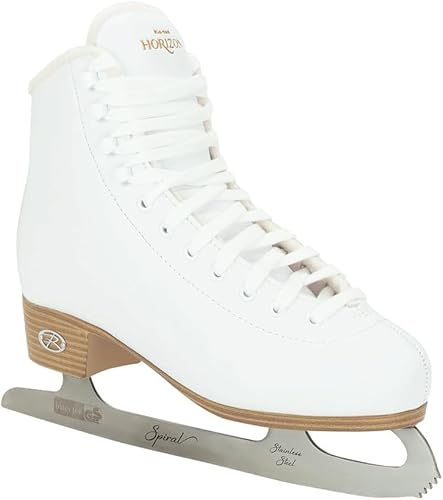
Riedell Model 10 Opal Figure Skates
Leather lining moulds to the foot over time in this entry level figure skate, and a proper toe pick handles basic jumps and spins. Stiffness sits above a recreational soft boot, which suits a skater starting lessons. Nickel plated blades hold an edge reasonably well for beginners.
Pros
- Proper figure boot stiffness for lessons
- Leather lining moulds to the foot over time
- Blade shape suits early freestyle elements
Cons
- Needs a real break in period
- Colder than insulated recreational boots

K2 Alexis Ice Pro Skates
K2 borrows its inline skate softboot design for the ice, so the Alexis Ice Pro feels like a supportive trainer with a blade underneath. Owners report it as the easiest skate here to wear through a long public session. Rigid edge control suffers compared with a stiffer boot, though.
Pros
- Exceptionally comfortable for long sessions
- Three point closure makes fit adjustment easy
- No break in period at all
Cons
- Softer boot limits advanced edge work
- Padding compresses over a season of heavy use

American Athletic Shoe Cougar Soft Boot Skates
A padded soft boot with strap closure and a basic stainless blade makes the Cougar the standard budget rink skate. It offers a reasonable way to stop paying rental fees. Built for gentle forward skating, it is not designed for technique work.
Pros
- Cheapest route out of rental skates
- Comfortable straight out of the box
- Light enough for children and teens
Cons
- Limited ankle support for heavier skaters
- Blade quality means frequent sharpening

Lake Placid Summit Ice Skates
A moulded outer shell over a padded liner gives the Summit more support than a plain soft boot at a similar price point. Family skating trips suit it well, since the skates come out only a handful of times each winter. Buckle plus lace closure keeps fitting simple.
Pros
- Moulded shell adds support over plain soft boots
- Liner stays warm for outdoor rinks
- Simple buckle and lace closure
Cons
- Shell fit is less adjustable than lace only boots
- Not intended for regular technique practice
Before you buy
What separates figure, hockey and recreational skates Figure skates carry a longer blade with a toe pick for jumps and spins, paired with a stiff boot and a heel. Hockey skates use a shorter, curved blade for quick turns and stops, skip the toe pick, and wrap the foot in a boot built to survive impacts. Recreational models borrow the figure shape but soften the boot for comfort over performance. Picking the wrong category, not the wrong brand, is the most common mistake buyers make.
Getting the fit right, since sizing is not your shoe size Skate sizing typically runs one to one and a half sizes below street shoes, and width profiles vary between brands. Toes should just brush the end while standing, then pull back slightly when the knees bend, with the heel locked so it cannot lift. A skate that feels roomy while standing still is almost always too big. That extra slack is what causes ankle roll and blisters later.
How boot stiffness controls ankle support Lacing tighter is the instinctive fix for a floppy boot, but it mainly cuts off circulation. Real support comes from the boot’s own structure, which is why moulded shells and composite hockey boots hold an ankle upright while thin padded fabric cannot. Heavier or more advanced skaters need stiffer boots. Children generally need less stiffness than adults at the same skill level.
Blade care and how often sharpening is needed New skates usually ship with a factory edge that works but is not great, so many skaters book a proper sharpening before the first session. Sharpening frequency depends on hours on the ice and how abrasive the rink surface is. Drying blades after every session and storing them in soft guards matters, since rust dulls an edge faster than skating does.
How they compare
| # | Model | Type | Best for | Score | Price |
|---|---|---|---|---|---|
| 1 | Jackson Ultima Softec Vista ST3200 Skates | Recreational figure style | Best overall | 9.4 | Check price |
| 2 | Bauer Vapor X3.5 Ice Hockey Skates | Ice hockey | Best for hockey | 9.2 | Check price |
| 3 | CCM Tacks AS-550 Ice Hockey Skates | Ice hockey | Best for wider feet | 9.0 | Check price |
| 4 | Riedell Model 10 Opal Figure Skates | Figure skate | Best for figure skating | 8.8 | Check price |
| 5 | K2 Alexis Ice Pro Skates | Recreational softboot | Best for comfort | 8.6 | Check price |
| 6 | American Athletic Shoe Cougar Soft Boot Skates | Recreational soft boot | Best budget | 8.3 | Check price |
| 7 | Lake Placid Summit Ice Skates | Recreational moulded | Best value | 8.0 | Check price |
Good to know
What size ice skates should I buy?
Most brands run about one to one and a half sizes below street shoe size, though this varies by model. Measure feet in centimetres against the manufacturer’s own chart rather than guessing, and factor in width, since it differs between brands too.
Should a beginner get figure skates or hockey skates?
Recreational or figure style skates work better for general public sessions, since the longer blade stays stable front to back. Hockey skates make sense only if hockey is the goal, because the shorter rockered blade favours quick turns over stability.
Do new skates come sharpened?
Factory edges are usually functional but far from ideal. Many skaters book a proper sharpening before their first outing at a rink pro shop. A dull blade slides sideways and makes learning noticeably harder.
How tight should skates be laced?
Snug through the midfoot and firm around the ankle, looser over the toes, is the general rule. The heel should not lift when knees bend. Painfully tight lacing usually means the boot itself is too big or too soft.
What is heat moulding and do I need it?
Heat moulding warms a composite boot so it shapes itself to the foot as it cools. Hockey skates commonly offer this feature, and it shortens the break in period considerably. Recreational soft boots cannot be moulded and do not need it.
How do I stop my ankles rolling over?
A boot that is too big or too soft for the skater’s weight and ability is almost always the cause. Checking fit comes first, since a loose heel lets the ankle shift inside the boot. If fit is correct, a stiffer boot fixes the problem, not tighter laces.
How often do skate blades need sharpening?
Recreational skaters often go a full season between sharpenings, while regular hockey players may need one every few weeks. Sliding sideways on a stop or poor grip on turns signals it is time. Rust from damp storage dulls edges faster than actual use.
How should I store ice skates?
Drying blades thoroughly with a cloth after each session comes first. Soft absorbent guards suit storage, while hard guards are only for walking between the locker room and rink. Trapped moisture inside hard guards or a damp bag rusts steel quickly.
Are hockey skates good for casual rink skating?
Hockey skates work for casual rink time, but the stiff boot and shorter blade feel less stable for a beginner than a recreational skate. Comfort during long public sessions usually favours a softer recreational or figure style boot instead.
Our pick
Comfort and ankle support out of the box make the Jackson Ultima Softec Vista ST3200 the safest first pair for most skaters. Narrower footed hockey players should get the Bauer Vapor X3.5 baked to shape, while the Lake Placid Summit handles occasional family rink trips without overspending.


