How to Choose Jewelry Wire for Wrapping and Beading
Beadalon Artistic Wire tops the list for consistent temper and a wide color range. The Beadsmith Wire Elements is the value pick for tarnish resistant work. BENECREAT Copper Wire suits practice and high volume wrapping where cost per foot matters most.
Beadalon Artistic Wire takes the top spot here, with The Beadsmith Wire Elements and BENECREAT Copper Wire close behind for tarnish resistance and practice work. All seven spools below are currently sold on Amazon and cover wrapping, weaving, coiling and structural work.
Wire is deceptively hard to shop for, since two spools labeled the same gauge can behave completely differently depending on temper, core metal and coating thickness. We compared published specifications, coating types and what makers report about kinking, color flaking and how well each wire holds a formed shape.
The best picks, ranked

Beadalon Artistic Wire
Artistic Wire is the reference point most tutorials assume, built around a copper core, a permanently colored enamel coating and a consistent dead soft to half hard temper. Its coating resists scratching from nylon jaw pliers better than most rivals. A wide spread of gauges means a single brand can cover ear wires, wraps and frames.
Pros
- Very consistent temper spool to spool
- Coating survives repeated plier work
- Widest gauge and color selection here
Cons
- Costs more per foot than plain copper
- Coating can still mark under serrated jaws

The Beadsmith Wire Elements Craft Wire
Wire Elements pairs a tarnish resistant coating with a copper core, keeping silver and gold tones looking clean far longer than bare wire. Its dead soft temper stays forgiving through weaving and coiling. Makers report it takes tight bends without the coating cracking at the corners.
Pros
- Holds silver and gold tone finish longer
- Soft temper eases long weaving sessions
- Bends cleanly without coating cracks
Cons
- Ships dead soft only, so pieces need hardening
- Offers fewer bright colors than Artistic Wire

BENECREAT Copper Wire
Long copper spools in common wrapping gauges make this the sensible choice for learning a new technique before committing better stock. Quality runs respectable rather than exceptional, with a thinner coating than premium brands. Buy it for drills, jigs and prototypes rather than finished pieces.
Pros
- Generous spool length for the price
- Available in every common wrapping gauge
- Well suited to jigs and prototypes
Cons
- Thinner coating scratches more easily
- Temper varies slightly between batches
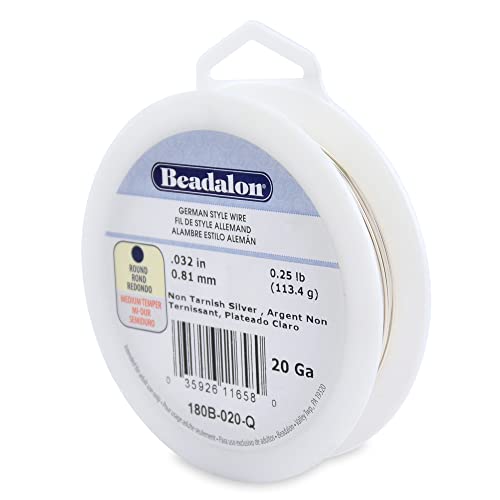
Beadalon German Style Wire
German style wire draws to a stiffer temper than standard craft wire, holding its shape in bangles, frames and cages that would sag in dead soft stock. It comes in round, square and half round profiles. The trade off is that it resists forming very tight coils.
Pros
- Holds structural shapes without extra hardening
- Square and half round profiles suit banding
- Delivers a bright, even surface finish
Cons
- Feels harder on hands and plier jaws
- Forgives reworked bends less easily
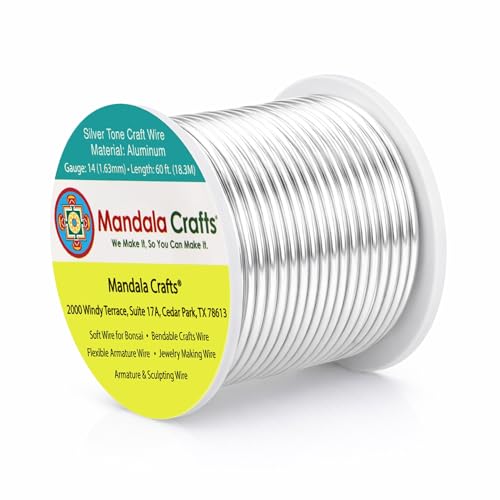
Mandala Crafts Anodized Aluminum Wire
Anodized aluminum wire weighs dramatically less than copper at the same gauge, which is why it dominates statement necklaces, hair pieces and armature work. Its color runs through the anodized surface rather than sitting on top as enamel. Soft enough to shape by hand, it keeps heavy pieces wearable.
Pros
- Keeps large pieces light enough to wear
- Shapes by hand for sculptural forms
- Color resists chipping unlike enamel
Cons
- Runs too soft for clasps or load bearing joints
- Shows surface scuffs on polished finishes
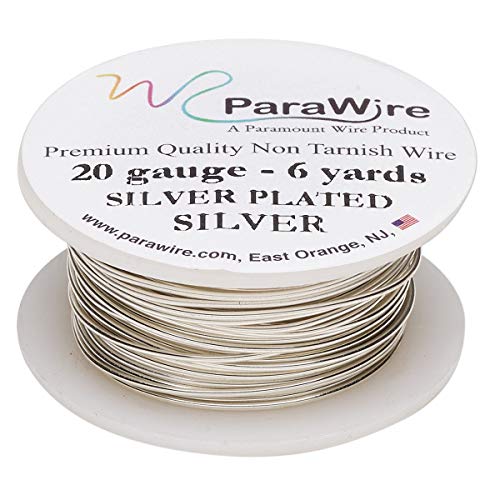
ParaWire Silver Plated Copper Wire
ParaWire plates a silver layer over a copper core and finishes it with a protective coat, giving a convincing precious metal look without sterling stock. It is made in the United States, with even plating along the spool. Makers report it polishes back nicely after light handling marks.
Pros
- Delivers a convincing silver appearance
- Plating stays even with no bare patches
- Buffs clean after handling marks
Cons
- Plating wears through at high friction points
- Unsuitable for people with copper sensitivities

Darice Craft Wire
Darice serves as the utility option, sold in simple colors and generous lengths for school projects, floristry and mixed media work. Finish quality stays basic, with a thin coating unsuited to heirloom pieces. For volume craft use where wire stays partly hidden, it gets the job done.
Pros
- Very economical for classroom quantities
- Bends easily for beginners to shape
- Widely stocked in common gauges
Cons
- Thin coating marks quickly
- Color consistency varies between spools
How to pick the right one
What does wire gauge actually determine? Wire gauge runs backwards, so the higher the number, the thinner the wire. Sixteen to eighteen gauge suits bangles, frames and clasps. Twenty to twenty two gauge covers everyday wrapping for pendants and links, twenty four to twenty eight gauge handles weaving and fine binding, and anything above twenty eight snaps under firm tension.
Why does wire temper matter as much as thickness? Dead soft wire bends easily and forgives mistakes, making it ideal for weaving and for anyone still learning. Half hard wire resists deformation and holds a formed shape, suiting ear wires, jump rings and structural frames. Wire also hardens as you work it, which is why a dead soft piece often ends up firm enough once wrapping finishes.
How do coating and core metal affect how wire ages? Most craft wire uses a copper core under colored enamel, an anti tarnish coating or a plated precious metal layer. Enamel offers the widest color range but can scratch under serrated pliers. Anti tarnish coatings keep silver and gold tones bright, while anodized aluminum wire skips the issue entirely by carrying its color in the surface itself, at the cost of strength.
How do you protect wire’s finish while working with it? Nylon jaw pliers are the single best investment for keeping coated wire looking new, since steel serrations bite straight through enamel. Pull wire through a soft cloth to straighten it instead of running it over a hard edge, and cut with flush cutters so ends need no aggressive filing. Store spools away from humidity to slow tarnishing on plated and bare copper stock.
The lineup, side by side
| # | Model | Core metal | Best for | Score | Price |
|---|---|---|---|---|---|
| 1 | Beadalon Artistic Wire | Copper | Best overall | 9.4 | Check price |
| 2 | The Beadsmith Wire Elements Craft Wire | Copper | Best value | 9.2 | Check price |
| 3 | BENECREAT Copper Wire | Copper | Best budget | 9.0 | Check price |
| 4 | Beadalon German Style Wire | Half hard, springy | Best for structural frames | 8.8 | Check price |
| 5 | Mandala Crafts Anodized Aluminum Wire | Anodized aluminium | Best for large sculptural work | 8.6 | Check price |
| 6 | ParaWire Silver Plated Copper Wire | Copper with silver plating | Best for a precious metal look | 8.3 | Check price |
| 7 | Darice Craft Wire | Copper | Best for crafts and classrooms | 8.0 | Check price |
Frequently asked questions
What gauge wire works best for wire wrapping beginners?
Twenty gauge is the most forgiving starting point, thick enough to hold a shape yet still bendable by hand, and it fits through the holes of most standard beads. Keep a spool of twenty six gauge alongside it for binding wraps and decorative coils.
What’s the difference between dead soft and half hard wire?
Dead soft wire has been annealed so it bends with minimal force, suiting weaving and complex shaping. Half hard wire has been drawn to a stiffer state and springs back, which is what ear wires, clasps and frames need to keep their form.
Does craft wire tarnish?
Bare copper tarnishes readily. Wire with a permanent enamel coating or an anti tarnish finish, such as Artistic Wire or Wire Elements, resists it far longer. Silver plated wire sits in between, since the protective coat can wear through at points of repeated friction.
Can you use copper wire for earrings?
You can, but many people react to copper against the skin over time. Use a hypoallergenic ear wire, such as surgical steel, niobium or sterling silver, for the part passing through the piercing, and save copper for the decorative section.
How do you stop wire from kinking?
Kinks come from pulling wire against a sharp angle or working it repeatedly in the same spot. Straighten it by drawing it through a folded cloth or nylon jaw pliers, work in smooth continuous motions, and cut off any section that has already kinked instead of trying to rescue it.
What tools do you need alongside wire?
Three pliers cover almost everything: round nose for loops, chain nose for gripping and tucking, and flush cutters for clean ends. Nylon jaw pliers are worth adding immediately if you buy coated wire, since they straighten and grip without scratching the color.
Is aluminum wire strong enough for jewelry?
Aluminum works well for large decorative pieces where light weight matters, such as statement collars and hair ornaments. It runs too soft for clasps, hooks, jump rings or any load bearing joint, so pair it with a stronger wire for functional parts.
How much wire does a typical project use?
A simple wrapped bead link takes roughly six to eight inches of twenty gauge wire, while a woven pendant can consume several feet of fine gauge. Buy longer spools of the gauges you use most, and keep short spools of specialty colors so unused stock does not sit around tarnishing.
Which jewelry wire suits beginners on a budget?
BENECREAT Copper Wire offers long practice spools in common gauges at a low cost per foot, which makes it the sensible choice for learning a technique before committing better stock. Darice Craft Wire works similarly for classroom or high volume craft use.
Our take
Beadalon Artistic Wire is the safest single purchase, since its temper stays consistent and the coating survives real plier work. The Beadsmith Wire Elements is the better buy for silver and gold tones that stay bright, and BENECREAT Copper Wire is the spool to practice on before committing good stock. For large sculptural pieces, Mandala Crafts aluminum wire solves a weight problem nothing else here can.


