Top Kids Headphones for Safe Listening and Fun
The Puro Sound Labs BT2200s are our top pick for kids headphones, offering studio-grade sound with a volume cap at 85 dB to protect young ears. They are ideal for home and travel, but they are not fully waterproof, so they may not survive poolside splashes.
Kids headphones have evolved far beyond simple audio devices. Today, they must balance sound quality, safety features like volume limiting, and ruggedness to withstand daily drops and tugs.
Our roundup focuses on models that deliver on these fronts, with options for different ages and uses, from wired school-friendly pairs to wireless Bluetooth for travel.
The best picks, ranked
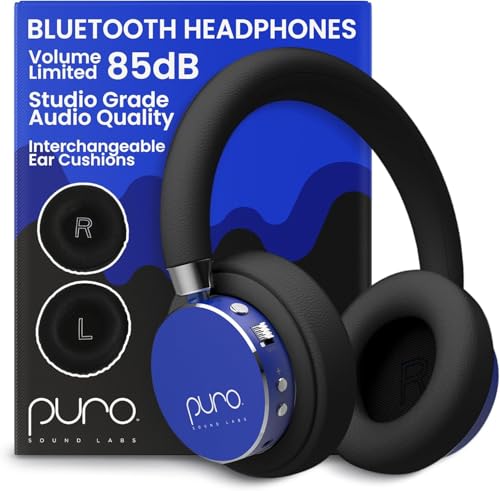
Puro Sound Labs BT2200s
These wireless headphones cap volume at 85 dB, which is the recommended safe level for children. They feature a sturdy build, plush ear cushions, and a built-in microphone for calls. Parents appreciate the 30-hour battery life and the ability to switch to wired mode if the battery dies.
Pros
- Excellent sound quality with clear mids and highs
- Long battery life for extended use
- Comfortable for long listening sessions
Cons
- Not foldable, takes up more space
- Higher price than some competitors

BuddyPhones Explore+
Designed with a flexible and unbreakable headband, these wired headphones are built to withstand rough handling. They have a volume limiter at 85 dB and come with a built-in microphone for school or video calls. The ear cushions are soft and removable for cleaning.
Pros
- Nearly indestructible construction
- Removable and washable ear cushions
- Includes a sharing splitter for two kids
Cons
- Wired only, no Bluetooth
- Sound is not as rich as over-the-ear premium models

JBL Kids Headphones
These wired headphones from JBL offer a comfortable fit with a padded headband and ear cushions. They feature a built-in volume limiter that keeps sound at 85 dB, and they fold flat for easy storage. The detachable cable is a thoughtful touch for safety.
Pros
- Affordable price point
- Folds flat for backpack storage
- Detachable cable prevents yanking injuries
Cons
- No wireless option
- Ear pads are not replaceable

Belkin SoundForm Inspire Kids
These wireless headphones feature a rugged design with reinforced headband and ear cups that can handle drops and bends. They offer three volume modes (75, 85, and 94 dB) for flexibility, and a 30-hour battery life. They are also sweat and splash resistant.
Pros
- Adjustable volume limit for different environments
- Splash resistant for outdoor play
- Comfortable fit with soft ear pads
Cons
- No wired mode if battery dies
- Heavier than some wired models
iClever Boostcare IC-02
iClever’s Boostcare headphones are an affordable wired choice with a volume limiter at 85 dB. They have a foldable design and a built-in microphone. The ear cushions are plush and the headband is adjustable for growing kids.
Pros
- Very low price, great for tight budgets
- Folds up for travel
- Soft ear pads for comfort
Cons
- Build quality is not as robust
- No volume control on the ear cup

LilGadgets Connect+
These wired headphones come with a built-in share port that allows two kids to plug into one device. They have a volume limiter, adjustable headband, and a tangle-free flat cable. The ear cushions are comfortable for long listens.
Pros
- Share port for sibling or friend listening
- Flat cable reduces tangles
- Comfortable padded headband
Cons
- No wireless option
- Cable is not detachable

Sony MDR-2220KD
Sony’s kids headphones are ultra-lightweight at just 3.5 ounces, making them barely noticeable for small heads. They have a volume limiter set to 85 dB and a flexible headband. They come in fun colors and are simple to use with any 3.5mm device.
Pros
- Very lightweight for young children
- Flexible and durable headband
- Affordable price
Cons
- Basic sound quality
- Ear pads are thin
How to pick the right one
How they compare
| # | Model | Volume Limit | Best for | Score | Price |
|---|---|---|---|---|---|
| 1 | Puro Sound Labs BT2200s | 85 dB | Best Overall for Volume-Limited Sound | 9.4 | Check price |
| 2 | BuddyPhones Explore+ | 85 dB | Best for Toddlers and Young Kids | 9.1 | Check price |
| 3 | JBL Kids Headphones | 85 dB | Best for School and Home Use | 8.8 | Check price |
| 4 | Belkin SoundForm Inspire Kids | 75, 85, 94 dB | Best for Active Kids Who Need Durability | 8.7 | Check price |
| 5 | iClever Boostcare IC-02 | 85 dB | Best Budget Option | 8.4 | Check price |
| 6 | LilGadgets Connect+ | 85 dB | Best for Sharing Music | 8.2 | Check price |
| 7 | Sony MDR-2220KD | 85 dB | Best Lightweight Option | 8.0 | Check price |
Good to know
Are kids headphones with volume limits safe?
Yes, they are designed to keep the sound level at or below 85 dB, which is the recommended safe listening level for children according to health organizations. This prevents hearing damage from prolonged exposure to loud sounds.
At what age should kids start using headphones?
Children can start using headphones as early as 2 years old, but always under adult supervision. Choose lightweight, well-fitting models with volume limits to ensure safety and comfort.
What is the recommended volume limit for kids headphones?
The American Academy of Pediatrics recommends a maximum of 75 dB for children, but most headphones use a limit of 85 dB, which is also accepted. Some models offer multiple settings, allowing you to choose a lower limit for younger kids.
Can kids headphones connect to tablets and smartphones?
Yes, most kids headphones use a standard 3.5mm audio jack or Bluetooth, making them compatible with tablets, smartphones, laptops, and other devices that support these connections.
How do I clean kids headphones?
Most headphones with removable ear cushions can be wiped with a damp cloth. For deeper cleaning, remove the cushions and wash them with mild soap and water. The headband can be wiped down with a disinfectant wipe. Always check the manufacturer’s instructions.
What is the best type of headphones for school use?
Wired headphones are often preferred for school because they do not require charging and are less likely to be lost. Models with a volume limiter and a durable build are ideal. Some schools have specific requirements, so check with them.
Are wireless kids headphones worth the extra cost?
Wireless headphones offer freedom from cords and are great for travel, but they are more expensive and require charging. If your child will use them for long periods or on the go, the convenience may be worth it. For home and school use, wired models are often sufficient.
How do I know if headphones fit my child?
Check the adjustable headband and ear cup size. Most headphones are designed to fit a range of head sizes. Ensure that the headband rests comfortably on the top of the head and ear cups completely cover the ears. Some models come in small sizes for toddlers.
Can kids headphones be used for gaming?
Yes, many kids headphones have built-in microphones that work for online games or video chats. However, for console gaming, you may need a headset that is compatible with the console’s controller. Check the specifications.
What should I do if my child complains about discomfort?
If your child complains about discomfort, check the fit and adjust the headband. If the ear cups are too small, consider a larger size. Also, take regular breaks from listening to prevent fatigue. Some kids may prefer on-ear style over over-ear.
The bottom line
For most families, the Puro Sound Labs BT2200s are the best choice because they combine safe volume limiting with excellent sound quality and wireless convenience. If you have a toddler or want a budget-friendly wired option, the BuddyPhones Explore+ offer unbeatable durability at a lower price.


