6 Kids Scooters Parents Trust for First Rides
Micro Kickboard Maxi Deluxe Scooter is the top overall pick for lean-to-steer stability and a durable build. Razor A5 Lux Kick Scooter suits older, bigger kids with large wheels and a folding frame, and Gotrax KX5 Kick Scooter rides smoothly for confident tweens.
Micro Kickboard Maxi Deluxe Scooter fits most families thanks to steady lean-to-steer handling and a long-lasting build. Razor A5 Lux Kick Scooter and Gotrax KX5 Kick Scooter follow close behind for older riders who want bigger wheels and a smoother roll.
Age, balance and confidence decide which scooter actually gets ridden, and one that tips easily or gets outgrown fast ends up parked in the garage. To sort the sturdy options from the wobbly ones, we compared deck stability, wheel size, frame materials, weight limits and stated age ranges across three-wheel and two-wheel designs, then weighed those specs against durability patterns owners report after years of outdoor use.
What we recommend

Micro Kickboard Maxi Deluxe Scooter
A lean-to-steer front deck helps kids carve turns while staying balanced, and the build is made to survive years of daily use. Smooth, quiet wheels and a solid deck hold up well according to owners, which is why this pair costs more than basic scooters and still tops the list.
Pros
- Lean-to-steer builds balance and control
- Durable deck holds up to daily use
- Adjustable bar grows with the child
Cons
- Higher price than basic scooters
- Non-folding frame is bulkier to store

Razor A5 Lux Kick Scooter
A wide aluminum deck pairs with large urethane wheels that roll smoothly over cracks and paths. Owners appreciate the folding frame for easy carrying and storage. Two wheels suit confident older kids more than young beginners who are still finding their balance.
Pros
- Large wheels roll smoothly over cracks
- Folds down for easy carrying
- High weight limit fits older kids and teens
Cons
- Two wheels less stable for beginners
- Heavier than smaller kids scooters

Gotrax KX5 Kick Scooter
An adjustable-height bar and cushioned wheels target older kids ready for longer neighborhood rides. Based on specifications, the folding aluminum frame keeps it portable, and owners note the responsive rear brake as a plus. Confident riders get more from this scooter than first-timers.
Pros
- Adjustable bar suits growing tweens
- Folding frame is easy to transport
- Responsive rear brake
Cons
- Best for confident, experienced riders
- Two-wheel setup needs good balance

Hurtle 3-Wheel Scooter
A wide, low deck sits over three wheels so the youngest riders can push along with confidence. Owners report the light frame is easy for small kids to manage. Softer plastic parts suit gentle use rather than aggressive riding.
Pros
- Wide three-wheel base is very stable
- Light enough for small children
- Low deck is easy to step onto
Cons
- Softer plastic suits gentle use
- Kids outgrow it within a few years

LaScoota Premium Scooter
A folding two-wheel design with a height-adjustable bar comes at an approachable price, making this a sensible middle-ground pick. Owners find the aluminum frame sturdy for the cost. Standard wheels handle smooth pavement better than rough or gravelly surfaces.
Pros
- Sturdy aluminum frame for the price
- Folds and adjusts for easy fit
- Good all-round pick for school-age kids
Cons
- Standard wheels prefer smooth surfaces
- Not built for aggressive tricks

Fzz Scooter for Kids
A three-wheel layout and light-up wheels make first rides fun and steady for new scooter riders. Owners like the simple, forgiving handling for young beginners. Stronger, faster kids may quickly outgrow it and want a larger two-wheel model.
Pros
- Three wheels keep beginners steady
- Light-up wheels add fun
- Easy for young kids to control
Cons
- Faster kids outgrow it quickly
- Lighter build for gentle riding
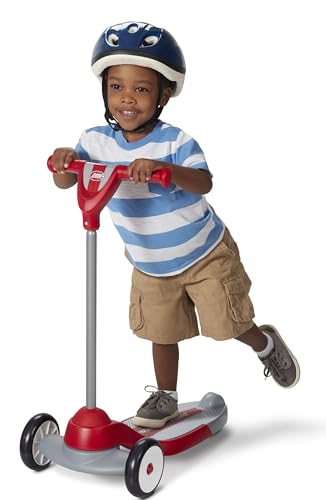
Radio Flyer My 1st Scooter
A stable three-wheel base and familiar, friendly design keep things simple for the youngest riders. Owners report it is an easy, dependable first scooter. Modest size and fixed proportions mean children move on from it as they grow.
Pros
- Simple, stable first scooter
- Friendly proportions for toddlers
- Trusted, familiar brand design
Cons
- Limited to the youngest riders
- Fixed size is quickly outgrown
How to pick the right one
How to match a scooter to your child’s age Age is the biggest factor in picking a kids scooter, since a toddler needs a wide, stable base while an older child wants speed and bigger wheels. Three-wheel models suit younger riders still building balance, and two-wheel scooters make sense once a child rides confidently. Reading the stated age range and weight limit before buying saves you from a scooter that is too tippy or too small.
Three wheels or two, which is right for your child? Three-wheel scooters spread the rider’s weight across a wider base, keeping beginners upright while they learn to push and steer. Two-wheel scooters roll faster and more smoothly but demand balance, so they fit older, surer kids. Lean-to-steer three-wheel designs bridge the two by teaching balance in a stable format, which is why the top pick here uses that layout.
What build quality and wheel size to look for A reinforced deck and quality wheels separate a scooter that lasts for years from one that cracks or seizes after a season. Larger urethane wheels roll more smoothly over sidewalk cracks and rough paths, while small hard wheels feel bumpier. Daily riders or kids on uneven ground benefit from a sturdier frame and bigger wheels, even at a higher price.
Adjustability, folding and storage for growing kids An adjustable handlebar lets a scooter grow with your child, adding several more years of use. Folding frames make scooters far easier to carry to the park or tuck into a car trunk, while non-folding models trade portability for rigidity. Where the scooter will be stored, and how often it travels, should guide how much folding and adjustment you need.
The lineup, side by side
| # | Model | Wheels | Best for | Score | Price |
|---|---|---|---|---|---|
| 1 | Micro Kickboard Maxi Deluxe Scooter | Three, lean-to-steer | Best overall | 9.4 | Check price |
| 2 | Razor A5 Lux Kick Scooter | Two, large urethane | Best for big kids | 9.2 | Check price |
| 3 | Gotrax KX5 Kick Scooter | Two, cushioned urethane | Best for tweens | 9.0 | Check price |
| 4 | Hurtle 3-Wheel Scooter | Three, wide stance | Best for toddlers | 8.8 | Check price |
| 5 | LaScoota Premium Scooter | Two, urethane | Best value | 8.6 | Check price |
| 6 | Fzz Scooter for Kids | Three, light-up | Best for beginners | 8.3 | Check price |
| 7 | Radio Flyer My 1st Scooter | Three, wide front | Best for young riders | 8.1 | Check price |
Good to know
What age is a kids scooter for?
Scooters suit a wide range of ages, from around age two on stable three-wheel models to eight and up on larger two-wheel scooters. Fit depends on your child’s balance and size, so check each scooter’s stated age range and weight limit rather than guessing.
Are three-wheel or two-wheel scooters better for kids?
Three-wheel scooters suit younger children and beginners better, since the wide base keeps them steady while learning. Two-wheel scooters suit confident, older kids who want more speed and a smoother roll, since they require good balance to ride safely.
What does lean-to-steer mean on a kids scooter?
Lean-to-steer means the child turns by leaning their body weight rather than twisting the handlebar. Many parents favor it because it builds balance in a stable three-wheel format while teaching control.
How do I choose the right scooter size for my child?
Look for a handlebar that sits between your child’s waist and chest when they stand on the deck, and choose an adjustable bar so it can grow with them. Check the weight limit too, to be sure the frame is rated for your child.
Do kids need a helmet when riding a scooter?
A properly fitted helmet is widely recommended for scooter riding, and many families add knee and elbow pads for beginners. Safety guidance varies by location, so follow local rules and your own judgment about protective gear.
Can kids scooters handle rough pavement?
Scooters with larger urethane wheels handle sidewalk cracks and rough paths far better than small hard wheels. Riders on uneven ground get a smoother, safer roll from a model with bigger wheels and a sturdy frame.
Are folding kids scooters sturdy enough for daily use?
Quality folding scooters use a locking mechanism that holds firm during normal riding, so they hold up fine for everyday use. Check that the fold latch clicks fully into place before each ride, since a loose latch is the main thing to watch on any folding model.
How much weight can a kids scooter hold?
Weight limits vary widely, from around 50 pounds on toddler scooters to over 200 pounds on larger two-wheel models built for older kids and teens. Always confirm the stated limit fits your child, especially on lighter scooters aimed at young riders.
When should my child move up to a two-wheel scooter?
Most children are ready once they ride a three-wheel model confidently and can balance without wobbling, often around age six to eight. Let your child’s balance and comfort guide the switch rather than a fixed age.
Kids scooter vs a balance bike, which teaches balance better?
A balance bike builds core cycling balance more directly, since there is no deck to stand on. A lean-to-steer scooter like the Micro Kickboard teaches similar weight-shifting skills while staying easier for a child to stop and dismount.
The bottom line
Micro Kickboard Maxi Deluxe Scooter is the kids scooter to choose first for most families, combining stable lean-to-steer handling with a build made to last through years of daily riding. Razor A5 Lux Kick Scooter is a dependable step up for an older child who wants bigger wheels, while Hurtle 3-Wheel Scooter starts the youngest riders off steady and confident.


