Which Laminator Suits Home, Office or Classroom Use?
The Scotch Thermal Laminator TL901X is our overall pick for reliable everyday laminating, the Fellowes Saturn 3i 125 handles busy office volume best, and the Amazon Basics 9-Inch Thermal Laminator covers occasional home use for very little outlay.
For most homes and small offices the Scotch Thermal Laminator TL901X is the right buy, because it warms quickly, handles common pouch thicknesses and rarely jams. The Fellowes Saturn 3i 125 suits offices running long batches, and the Amazon Basics 9-Inch model is the sensible budget option for occasional projects.
Laminator listings all promise fast, bubble free results, yet the real differences are in warm up time, supported pouch thickness and whether there is a working jam release. We compared published specifications, feed widths and what owners report about roller wear and clouding, then ranked these seven by how they hold up in regular use.
The shortlist, ranked

Scotch Thermal Laminator TL901X
A two roller machine that takes documents up to about nine inches wide and warms up in a few minutes. It handles the common three and five mil pouch thicknesses with a simple selector, and the release lever clears misfeeds without disassembly. This is the model most home offices settle on.
Pros
- Consistent bubble free output
- Simple thickness selector
- Effective jam release lever
Cons
- Only takes letter width documents
- Slower than four roller office machines

Fellowes Saturn 3i 125 Laminator
Warms up in about a minute and takes documents up to roughly twelve inches wide, which suits offices laminating batches of signage and reference sheets. An automatic sensing feature adjusts to pouch thickness, removing one setup step. Owners report it keeping pace with continuous feeding better than home machines.
Pros
- Very quick warm up
- Auto adjusts to pouch thickness
- Handles continuous batches well
Cons
- Larger desk footprint
- Costs more than home models
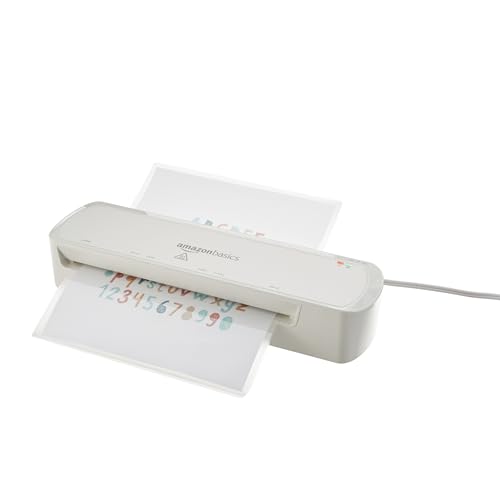
Amazon Basics 9-Inch Thermal Laminator
A basic two roller laminator for letter sized documents, aimed at people who laminate a handful of items a month. It takes longer to warm up than premium machines and prefers thinner pouches. For crafts, recipe cards and school work it delivers clean results at minimal cost.
Pros
- Very affordable entry point
- Compact and light
- Simple two button operation
Cons
- Slow warm up
- Struggles with thick pouches

Scotch Pro Thermal Laminator TL1302X
A wider version of the Scotch design that accepts documents up to about thirteen inches, which covers menus, posters and tabloid sheets. It supports thicker pouches than the standard model, and warm up is faster. The right choice if letter width has already been a limitation for you.
Pros
- Handles wide and tabloid documents
- Supports thicker pouches
- Faster than the standard Scotch model
Cons
- Takes noticeably more desk space
- Overkill for letter sized work
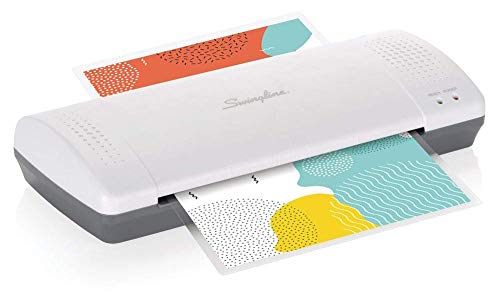
Swingline GBC Fusion 1100L Laminator
A compact office laminator with a fast heat up cycle and a jam release, sized for letter width work. It sits between home and heavy office machines in both speed and price. Owners report it running batches without the roller cooling issues cheaper units show.
Pros
- Quick to reach operating temperature
- Handles repeated sheets consistently
- Compact for an office unit
Cons
- Letter width only
- Fewer thickness options than premium units

Apache AL13P 13-Inch Laminator
This machine accepts pouches heavier than most home units, which matters for badges, luggage tags and durable signage. The thirteen inch feed also handles wide sheets. Settings are manual, so you choose the temperature to match pouch thickness rather than relying on auto sensing.
Pros
- Handles thick, rigid pouches
- Wide feed opening
- Manual control suits unusual materials
Cons
- Manual settings need some trial
- Bulky for a home desk

Blusmart Laminator Machine
An inexpensive letter width laminator usually bundled with a starter pack of pouches, which makes it an easy first machine for a classroom or craft room. It handles thin pouches well and thicker ones more slowly. Best suited to light, intermittent use rather than long batches.
Pros
- Bundled pouches get you started
- Low purchase cost
- Light enough to move between rooms
Cons
- Needs cooling breaks during long batches
- Build quality below office machines
Compared at a glance
| # | Model | Max width | Best for | Score | Price |
|---|---|---|---|---|---|
| 1 | Scotch Thermal Laminator TL901X | About 9 inches | Best overall | 9.4 | Check price |
| 2 | Fellowes Saturn 3i 125 Laminator | About 12.5 inches | Best for busy offices | 9.2 | Check price |
| 3 | Amazon Basics 9-Inch Thermal Laminator | 9 inches | Best budget | 9.0 | Check price |
| 4 | Scotch Pro Thermal Laminator TL1302X | About 13 inches | Best for wide formats | 8.8 | Check price |
| 5 | Swingline GBC Fusion 1100L Laminator | About 9 inches | Best value office machine | 8.6 | Check price |
| 6 | Apache AL13P 13-Inch Laminator | 13 inches | Best for thick pouches | 8.3 | Check price |
| 7 | Blusmart Laminator Machine | About 9 inches | Best for classrooms and crafts | 8.0 | Check price |
How to pick the right one
Match feed width to your largest document A nine inch machine covers letter and A4 sheets, which is most home use. Menus, posters and tabloid sheets need a thirteen inch feed. Buying narrow and then discovering you cannot laminate the item you bought the machine for is the most common regret owners describe.
Pouch thickness changes the machine you need Three mil pouches are for flexible items like recipe cards, five mil is the general purpose choice, and heavier gauges give rigid badges and signage. Not every laminator handles the thick ones, and forcing a heavy pouch through a light machine is a reliable way to cause a jam.
Warm up time matters more than laminating speed Most machines pass a sheet through in seconds, but warm up ranges from about a minute on office models to several minutes on budget ones. If you laminate one or two items at a time, that wait is the bulk of the job, so a fast heating machine genuinely saves time.
Look for a jam release before you need it Misfeeds happen, usually when a pouch enters crooked or a sealed edge goes in last. A release lever reverses or frees the rollers in seconds. Without one, clearing a jam means waiting for the machine to cool and prying at it, which is how rollers get damaged.
Good to know
What pouch thickness should I use?
Three mil suits flexible items you want to stay bendable, five mil is the general purpose choice for signs and reference sheets, and heavier gauges give a rigid card feel for badges and tags. Always confirm your machine supports the thickness before buying pouches in bulk.
Why does my laminated sheet come out cloudy?
Cloudiness usually means the pouch passed through before the machine reached full temperature, or the setting was too low for the pouch thickness. Waiting for the ready indicator and selecting the correct thickness resolves it in most cases.
Can I run a pouch through twice?
Yes, and it is the standard fix for a cloudy or incompletely sealed result. Let the sheet cool first, then feed it through again sealed edge first. Repeatedly running the same pouch can distort it, so two passes is a sensible limit.
Which edge of the pouch goes in first?
The sealed folded edge always enters first. Feeding the open edge first is the most common cause of jams, because the film layers separate and wrap around the rollers instead of passing through together.
Do laminators need a carrier sheet?
Many machines include one, and it protects the rollers from adhesive squeeze out on thicker pouches. Modern quality laminators often do not require it for standard pouches, but using one costs nothing and extends roller life on a machine you plan to keep.
Can I laminate photos?
Yes, though thermal lamination is permanent and the heat can affect some inkjet prints and older photographs. For irreplaceable images, use a copy rather than the original, or choose a cold laminating pouch that seals with adhesive instead of heat.
How do I clear a jam safely?
Use the release lever if the machine has one, which frees the rollers immediately. Otherwise switch off, let the unit cool fully, then withdraw the pouch gently. Never pull hard on a hot machine, since that is how roller surfaces get scored.
How long does a laminator last?
With light home use, many owners report years of service from mid range machines. The limiting factors are roller wear and heater consistency, both of which suffer from continuous batch work on units designed for occasional use. Match the machine to your volume and it will last.
The bottom line
The Scotch Thermal Laminator TL901X remains the sensible default for home and small office laminating, combining quick setup with output that rarely needs a second pass. Choose the Fellowes Saturn 3i 125 if you laminate in batches and want a machine ready in about a minute, or the Amazon Basics 9-Inch model if a few projects a month is all you need.


