Which Ergonomic Office Chair Suits Your Back?
The Herman Miller Aeron remains the reference for adjustment range and long term durability, while the Steelcase Series 1 offers most of the same support with a friendlier price. The Sihoo Doro C300 is the standout among newer arrivals for anyone who wants adjustable lumbar without a designer badge.
The Herman Miller Aeron is our overall pick, with the Steelcase Series 1 as the better value for most home offices and the Sihoo Doro C300 as the strongest of the newer, more affordable ergonomic chairs.
The word ergonomic gets attached to almost every office chair sold, which makes the listings nearly useless on their own. What actually helps is whether the chair adjusts to your body: seat height, seat depth, lumbar height and depth, armrest position and recline tension. We compared published adjustment ranges, materials and warranty terms, alongside what owners report about long sitting sessions and how the mechanisms hold up after a few years.
Our top picks
Herman Miller Aeron
The Aeron pairs a suspension mesh seat with a posture fit back support that adjusts both the sacral and lumbar regions independently. It comes in three shell sizes rather than one universal frame, which is the main reason it fits so many body types properly. The long warranty and available spare parts make it a chair you repair rather than replace.
Pros
- Three sizes rather than one universal frame
- Mesh stays cool through long days
- Repairable with available spare parts
Cons
- Highest price of any chair here
- Firm mesh seat is divisive for some sitters

Steelcase Series 1
A contract grade chair with a flexible back that adapts as you move, four way armrests and a weight activated recline that needs no tension dial. Build quality is clearly commercial, and it survives shared or heavy use. Owners report the seat cushion strikes a good middle ground between firm and plush.
Pros
- Commercial build quality
- Recline adapts without fiddling
- Good balance of cushion firmness
Cons
- Lumbar support is less adjustable than the Aeron
- Fabric options can be limited in stock

Sihoo Doro C300
A mesh chair with a dynamic lumbar system that moves with your spine and an unusually wide adjustment range for its bracket. Armrests move in multiple directions and the headrest tilts, which is rare below premium prices. Assembly is straightforward with the included tools.
Pros
- Wide adjustment range for the price
- Lumbar tracks spine movement
- Adjustable headrest included
Cons
- Shorter warranty than contract chairs
- Mesh seat edge can feel firm
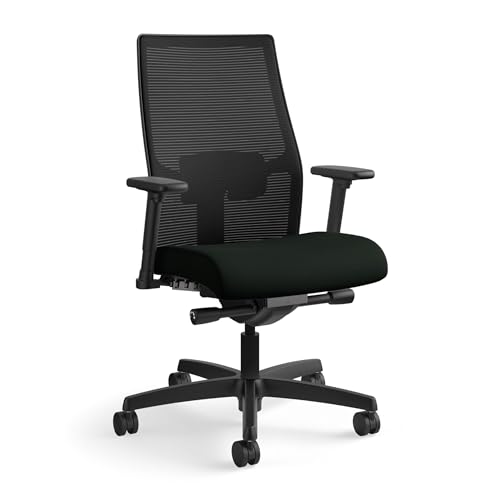
HON Ignition 2.0
A contract task chair with adjustable lumbar height, seat depth and four way arms at a price closer to consumer chairs. It is a common fixture in offices, which says something about how well it holds up to daily use. Styling is plain, and that is rather the point.
Pros
- Seat depth adjustment at a modest price
- Proven durability in office use
- Simple, reliable controls
Cons
- Plain office styling
- Foam seat can flatten over years

Branch Ergonomic Chair
A well specified chair with seven points of adjustment and a look designed for a home rather than a cubicle. Colours are muted and the frame avoids the aggressive gamer aesthetic. Owners report assembly takes about fifteen minutes with clear instructions.
Pros
- Looks right in a living space
- Genuinely useful adjustment set
- Quick, clear assembly
Cons
- Lumbar range is narrower than premium chairs
- Seat suits mid height users best
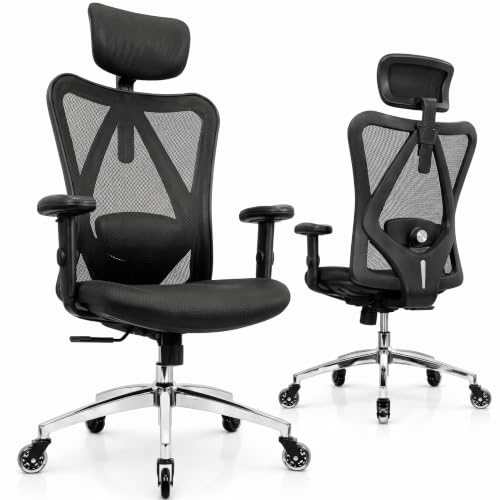
Duramont Ergonomic Adjustable Office Chair
A high back mesh chair with an adjustable headrest, lumbar dial and a deep seat that suits taller sitters who feel perched on standard chairs. The recline locks at several angles for reading or calls. Assembly is more involved than average but the parts fit well.
Pros
- Suits taller sitters
- Headrest and lumbar both adjust
- Solid recline lock positions
Cons
- Assembly takes longer than rivals
- Armrests adjust in fewer directions

Hbada E3 Ergonomic Office Chair
An affordable mesh chair with a flip up armrest option, adjustable lumbar and a footrest on some versions, aimed at part time desk use. It gives most of the basics without the refinement of contract chairs. Best for shorter sessions rather than eight hour days.
Pros
- Very affordable ergonomic basics
- Flip up arms tuck under a desk
- Light and easy to move
Cons
- Padding is thinner than premium chairs
- Less adjustment range overall
How to pick the right one
Adjustment range beats any single feature The chair that fits you is the one that adjusts to your leg length, torso height and desk height. Prioritise seat height, seat depth, lumbar height and armrest position over cushion claims. If a listing does not state the adjustment ranges, that usually means they are narrow.
Get the lumbar in the right place Lumbar support only works when the curve sits in the small of your back, which is why height adjustable lumbar matters more than the amount of padding. Fixed lumbar bumps help some people and dig into others. Adjustable depth lets you dial the pressure to something you stop noticing.
Seat depth and edge shape matter You want two to three finger widths between the front edge of the seat and the back of your knees. A seat that is too deep pushes you forward and away from the backrest, undoing the lumbar support entirely. A waterfall front edge reduces pressure behind the knees on long days.
Mesh versus foam is about heat, not support Mesh backs breathe better and suit warm rooms, while foam seats feel plusher initially and can compress over years. Suspension mesh seats such as the Aeron distribute weight evenly but feel firm to people used to padding. Neither is inherently more ergonomic, so choose on temperature and personal preference.
Compared at a glance
| # | Model | Sizes | Best for | Score | Price |
|---|---|---|---|---|---|
| 1 | Herman Miller Aeron | Three shell sizes | Best overall | 9.4 | Check price |
| 2 | Steelcase Series 1 | LiveBack flexing back | Best value premium chair | 9.2 | Check price |
| 3 | Sihoo Doro C300 | Dynamic adjustable lumbar | Best mid range pick | 9.0 | Check price |
| 4 | HON Ignition 2.0 | Height adjustable lumbar | Best for adjustability on a budget | 8.8 | Check price |
| 5 | Branch Ergonomic Chair | Seven points | Best for home offices | 8.6 | Check price |
| 6 | Duramont Ergonomic Adjustable Office Chair | High back with headrest | Best for tall users | 8.3 | Check price |
| 7 | Hbada E3 Ergonomic Office Chair | Mesh with lumbar support | Best budget | 8.0 | Check price |
Common questions
What actually makes a chair ergonomic?
Adjustability to your body, chiefly seat height, seat depth, lumbar position and armrest placement. A chair that fits one body shape and cannot adjust is not ergonomic for everyone.
Is an expensive chair worth it?
For full time desk work, higher end chairs offer wider adjustment, better materials and long warranties with spare parts. For occasional use, a mid range chair with adjustable lumbar covers most of the benefit.
Do I need a headrest?
Only if you recline regularly for calls or reading. When sitting upright at a desk, a headrest often pushes the neck forward rather than helping.
Mesh or fabric seat?
Mesh runs cooler and suits warm rooms, while fabric over foam feels softer at first. Suspension mesh spreads weight evenly but feels firm to some sitters.
How should armrests be set?
Low enough that your shoulders stay relaxed and positioned so your forearms rest lightly while typing. Armrests that force your shoulders up cause more problems than they solve.
What if the chair is too deep for me?
Look for seat depth adjustment or a sliding seat pan. Without it, shorter users end up perched away from the lumbar support, which defeats the purpose.
How long do good office chairs last?
Contract grade chairs from established makers commonly carry warranties of a decade or more, and owners report long service when parts are available. Budget chairs typically show gas lift or foam wear much sooner.
Does a standing desk remove the need for a good chair?
No, since most people alternate between sitting and standing. The chair still carries the majority of the working day for most desk workers.
Our take
If you sit at a desk full time and can stretch to it, the Herman Miller Aeron is still the chair to beat, mostly because it comes in three sizes and can be repaired rather than replaced. The Steelcase Series 1 gets you commercial quality for less, while the Sihoo Doro C300 and HON Ignition 2.0 deliver real adjustability at mid range prices. Skip anything that will not publish its adjustment ranges.