How to Pick a Life Jacket You’ll Actually Keep Wearing
Onyx MoveVent Dynamic balances buoyancy, ventilation and strap adjustment for most outdoor water use, based on published specifications. NRS cVest Mesh Back suits kayaking, since its low back panel clears a seat. Stohlquist Fisherman adds pocket storage anglers rely on for full days on the water.
Mesh side panels and four adjustable straps let Onyx MoveVent Dynamic fit small adults through extra large frames without trapping heat. NRS cVest Mesh Back drops its back panel low, so a tall kayak seat doesn’t push the vest toward the shoulders. Stohlquist Fisherman adds pockets sized for pliers and lures, while Stearns Puddle Jumper covers the smallest paddlers at 30 to 50 pounds.
Buoyancy alone does not decide comfort. Strap layout, back panel height and material stiffness decide whether a vest stays worn or ends up stuffed under a seat. We compared published buoyancy ratings, USCG approval type, strap counts and back panel designs across seven vests, then read what owners report about fit and chafing. A paddling vest and a towed watersports vest solve different problems, so selection favors vests matched to a specific activity.
The shortlist, ranked

Onyx MoveVent Dynamic Life Jacket
Mesh panels sit at the sides and back, cutting the heat buildup that makes some foam vests unbearable on a hot afternoon. Four adjustable straps pull the shell close without pinching, and sizing spans small adults through extra large frames. PE foam gives the shell enough structure to stay in place during a fall overboard.
Pros
- Mesh venting keeps the torso cooler than solid foam vests
- Size range fits most adult body types
- Straps stay adjusted after repeated wear
Cons
- Runs bulkier than paddling-specific vests
- Mesh panels trap sand at the beach

Full Throttle Rapid-Dry Flex-Back Life Vest
Flex foam panels bend at the torso instead of digging in, which matters on a boat seat for hours at a stretch. A mesh back panel dries fast after a splash, so the vest doesn’t stay soggy in a cooler bag. Three adjustable straps keep the price down compared to vests with four or five points of adjustment.
Pros
- Flex panels move with the body instead of resisting it
- Mesh back dries quickly between uses
- Priced below vests with similar comfort
Cons
- Fewer adjustment points than premium vests
- Color range is limited compared to competitors
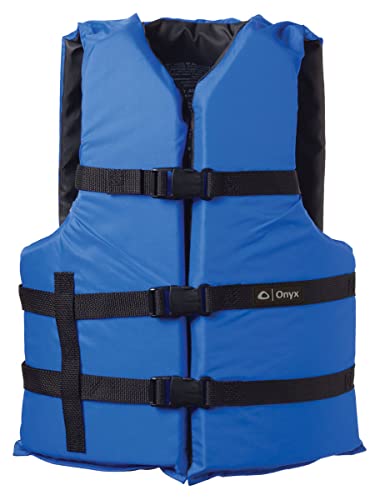
Onyx Universal Adult Boating Vest
One size covers most adult chest measurements, which suits a boat that needs spare vests for guests. Nylon shell and basic foam panels keep the build simple, without mesh venting or flex zones. Two side straps handle the adjustment, less than half of what the higher priced vests on this list offer.
Pros
- Low cost per vest for stocking a boat
- One size fits most adult chest ranges
- Simple design with nothing to break
Cons
- No mesh venting for warm weather comfort
- Bulkier collar than fitted foam vests

NRS cVest Mesh Back PFD
The lower back panel drops to mesh, so a tall kayak seat back doesn’t push the vest up around the shoulders. Front zip entry pairs with four adjustable straps for a close, low profile fit. Sizes run from small and medium through extra large, each with a different chest range.
Pros
- Mesh back panel clears high kayak seat backs
- Front zip speeds up putting the vest on
- Low profile fit does not restrict paddling motion
Cons
- Less torso coverage than bulkier boating vests
- Sizing runs snug, so check the chest chart first
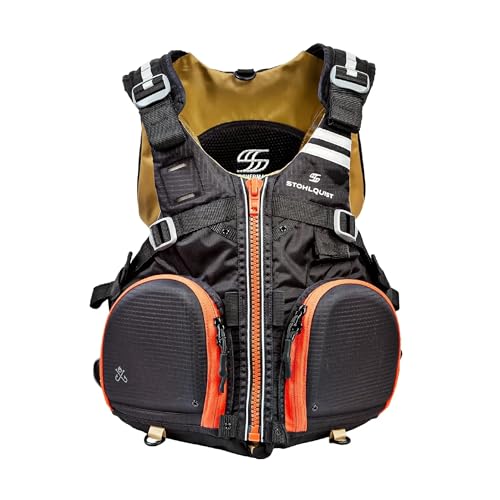
Stohlquist Fisherman PFD
A high back profile clears tall boat and kayak seats without riding up during a cast. Multiple pockets hold pliers, small lures and a phone within reach, cutting trips back to a tackle bag. Mesh lower back panel keeps the foam off the seat cushion during long days on the water.
Pros
- Pockets keep fishing tools within reach
- High back profile suits tall boat seats
- Mesh back stays comfortable during long sits
Cons
- Extra pockets add bulk over a plain vest
- Heavier than paddling-only PFDs once loaded

O’Neill Superlite USCG Life Vest
PE foam panels sit higher on the torso, built for the sudden impact of a fall at towed sport speed. Neoprene side panels flex during a turn without losing shape underwater. Three adjustable straps keep the fit snug enough that the vest doesn’t shift during a wakeboard fall.
Pros
- Higher foam placement suits impact at speed
- Neoprene panels flex without losing flotation
- Snug fit holds position during falls
Cons
- Less breathable than mesh-vented vests
- Tighter fit feels restrictive for casual boating
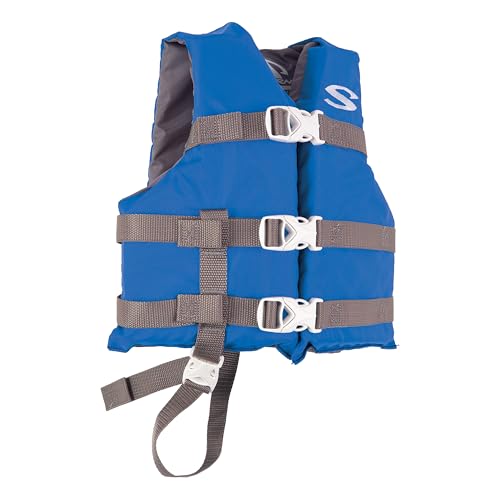
Stearns Puddle Jumper Kids Life Jacket
Foam-filled arm wings double as a swim aid while keeping the vest attached to the torso. A chest belt and leg strap stop the vest from riding up over a child’s head in the water. Sizing targets a narrow weight range, so it fits small kids rather than infants or older children.
Pros
- Arm wings double as a swim confidence aid
- Leg strap keeps the vest from riding up
- Bright colors make a child easy to spot
Cons
- Not approved for infants under 30 pounds
- Outgrown quickly as a child gains weight
Compared at a glance
| # | Model | USCG approval | Best for | Score | Price |
|---|---|---|---|---|---|
| 1 | Onyx MoveVent Dynamic Life Jacket | Type III wearable device | Best overall | 9.4 | Check price |
| 2 | Full Throttle Rapid-Dry Flex-Back Life Vest | Type III wearable device | Best value | 9.1 | Check price |
| 3 | Onyx Universal Adult Boating Vest | Type II nearshore vest | Best budget | 8.5 | Check price |
| 4 | NRS cVest Mesh Back PFD | Type III wearable device | Best for kayaking and paddling | 9.0 | Check price |
| 5 | Stohlquist Fisherman PFD | Type III wearable device | Best for fishing | 9.2 | Check price |
| 6 | O’Neill Superlite USCG Life Vest | Type III wearable device | Best for high buoyancy watersports | 8.8 | Check price |
| 7 | Stearns Puddle Jumper Kids Life Jacket | Type V hybrid, worn as a vest | Best for kids | 8.9 | Check price |
How to choose
What should you check before buying a life jacket for outdoor use? USCG approval type comes first, since Type II, Type III and Type V vests suit different activities. Check the buoyancy rating against body weight, not just the size label. Raise both arms overhead while wearing it, checking that it doesn’t ride up past the chin. Strap count matters too, since more adjustment points generally hold a closer fit through a fall.
Which life jacket suits kayaking and paddling best? A low or mesh back panel matters most, since a tall kayak seat pushes a standard vest up toward the shoulders. The NRS cVest and similar paddling vests trim foam from the lower back for this reason. Front zip or front buckle entry speeds up putting the vest on from a seated position. Torso mobility counts more here than in general boating, since paddling repeats the same shoulder motion for hours.
What makes a life jacket work for fishing? Pockets for pliers, lures and a phone cut down on trips to a tackle bag mid cast. A high back profile clears boat and kayak seats without bunching at the neck. Mesh lower panels reduce heat buildup during long, mostly stationary sessions. Anglers fishing from a kayak often prefer the same low back design paddlers use, since both activities share the seated posture problem.
How should you fit a child’s life jacket? Match the weight range printed on the label rather than guessing from age or height. Fasten every strap, then lift the vest by the shoulders; it shouldn’t slide up past the child’s ears or chin. A crotch or leg strap isn’t optional for younger kids, since it stops the vest riding up in water. No life jacket replaces active supervision near water, regardless of its approval type.
Common questions
What is the difference between Type II and Type III life jackets?
Type II is a nearshore vest built for calm, inland water where rescue is likely to arrive quickly. Type III covers general boating and watersports use, designed to keep an active, conscious person upright rather than face up. Most paddling, fishing and towed sport vests sold today carry a Type III rating.
Is a Type V life jacket safe for a young child?
A Type V hybrid device like a Puddle Jumper is USCG approved when worn and sized correctly for the labeled weight range. It isn’t a substitute for direct supervision, since young children can still tire or struggle even while floating. Check the weight range on the label before every use, since kids outgrow these quickly.
How much buoyancy does an adult life jacket need?
USCG standards set a minimum of 15.5 lb of buoyancy for adult Type II and Type III foam vests. That minimum applies regardless of body weight, so a heavier adult should still check fit and comfort rather than assume more buoyancy is available. Buoyancy rating and comfort are separate questions, and a well fitted vest matters just as much as the number.
Can you use a kayaking PFD for general boating?
Yes, since most kayak-specific vests carry the same Type III approval as general boating vests. The tradeoff is coverage, since paddling vests trim material from the lower back for seat clearance. That trimmed design offers slightly less torso coverage than a full boating vest built for open water.
Do life jackets expire or wear out?
Foam loses buoyancy over years of sun exposure, saltwater and compression, even without visible damage. Straps and buckles wear from repeated adjustment and UV exposure. Check for cracked foam, faded fabric or a buckle that no longer clicks shut before each season, and replace the vest if any of those show up.
What is the best life jacket for fishing from a kayak?
A high back profile with mesh paneling is the combination to look for, since it clears a kayak seat while adding storage. The Stohlquist Fisherman covers this need with multiple pockets sized for pliers and small lures. Anglers fishing from a bank rather than a kayak have more flexibility, since seat clearance matters less on foot.
Why do some life jackets cost more than others?
Extra cost usually buys more adjustment points, mesh venting, flex foam panels and activity-specific shaping like a low back for kayaking. A basic nylon vest with two straps meets the same USCG buoyancy standard as a premium mesh-back model. The premium price pays for comfort and fit, not for a higher safety rating.
Can you wear a life jacket over a wetsuit for watersports?
Yes, and towed watersports vests like the O’Neill Superlite are built with that layering in mind. Neoprene side panels flex over a wetsuit without bunching, and straps have enough range to fit over extra thickness. Check the fit again once the wetsuit is on, since strap length that felt loose over a t-shirt can run short over neoprene.
What life jacket works best for a family with mixed ages on one boat?
A boat with kids and adults needs at least one Type V hybrid like the Stearns Puddle Jumper sized for small children, plus adult vests such as the Onyx MoveVent Dynamic. Stocking a spare Onyx Universal Adult vest covers unexpected guests without buying a full set of premium vests. Every vest on board still needs its own weight-range check before the trip.
Our pick
Onyx MoveVent Dynamic covers the widest range of outdoor water use, pairing mesh ventilation with a size range that fits most adults. NRS cVest Mesh Back and Stohlquist Fisherman solve specific seat clearance problems for paddlers and anglers, while Stearns Puddle Jumper fits the youngest paddlers in the group. Match the vest to the activity and the weight range on the label, since fit decides whether a life jacket gets worn at all.
You might also need
How to Keep Your Exercise Bike Running Smoothly

What Cycling Accessories Actually Keep Kids Safe on Bikes?
Lightweight Road Bikes That Climb Without Wearing You Out
