How to Pick a Youth Life Jacket by Weight and Activity
Stohlquist Youth Life Jacket leads for its secure multi buckle fit and Coast Guard approval. O’Neill Superlite delivers the same protection for less. Active kids on boards or tubes do best in the Onyx MoveVent Dynamic, which allows fuller arm motion during swimming and paddling.
A jacket that rides up over a child’s chin during a fall has already failed at its one job. Stohlquist Youth Life Jacket uses multiple adjustable straps that hold position in the water, earning it the top spot. Kids who need to paddle, swim or move freely fare better in the flexible Onyx MoveVent Dynamic. O’Neill Superlite delivers similar Coast Guard approved protection at a lower cost.
Weight range is the first filter, since an undersized or oversized jacket cannot keep a child’s head above water reliably. We compared Coast Guard approval type, rated weight range, foam placement and how each closure system holds under a real fall into water.
How to choose
What should you look for in a youth life jacket? Coast Guard approval type comes first, since it confirms tested buoyancy and safety for the stated weight range. Weight range matters more than age, because kids the same age vary widely in size. Closure system, whether zipper, buckles or both, determines how securely a vest stays on during an actual fall. Foam placement affects whether a child floats face up automatically.
Type II vs Type III life jackets for kids, what is the difference? Type II vests turn an unconscious wearer face up automatically and suit less confident swimmers or younger children. Type III vests offer more freedom of movement for swimming and paddling but do not guarantee the same automatic turn. Most youth vests sold for general boating and swimming fall under Type III, while some infant and toddler vests use Type II.
Best life jacket for swimming vs boating Active swimmers and paddlers benefit from flexible, segmented foam like the Onyx MoveVent Dynamic, which allows fuller arm movement. Kids seated on a boat for long stretches do better with a flexible back panel, like the Full Throttle Rapid Dry design, that bends around a seat instead of pushing them forward. Beginner swimmers with less water confidence benefit from extra foam volume for higher flotation.
How do you properly size and fit check a youth life jacket? Check the manufacturer’s weight range first, since that number matters more than age or height alone. Fasten every strap and buckle, then have the child raise both arms overhead while an adult gently pulls up on the shoulders. If the jacket rides up past the chin or ears, it is too large and needs a smaller size or tighter adjustment. Recheck fit each season, since kids grow quickly between summers.
The shortlist, ranked

Stohlquist Youth Life Jacket
Three adjustable buckles across the chest and waist stop the jacket from riding up during a fall, a common failure point on single strap designs. Coast Guard approved foam panels sit positioned to turn a face upright in the water. Parents report it staying put through dock jumping and swim lessons alike.
Pros
- Multiple buckles resist riding up during a fall
- Foam placement supports face up flotation
- Holds fit through active swimming
Cons
- More buckles take longer to put on than simple designs
- Runs snug at the top of its weight range

O’Neill Superlite USCG Youth Vest
Thinner foam panels cut bulk without dropping below Coast Guard buoyancy requirements, so kids move more naturally in the water. A side zip plus two straps balances quick on and off with a secure fit. Parents note it works equally well for pool days and boat trips.
Pros
- Lower bulk allows more natural movement
- Quick side zip speeds up putting it on
- Balances comfort with Coast Guard approval
Cons
- Fewer adjustment points than premium multi buckle vests
- Foam is thinner than some parents prefer

Onyx MoveVent Dynamic Youth Life Vest
Segmented foam panels flex with the shoulders and torso, useful for kids paddling, tubing or swimming laps instead of sitting still on a boat. Mesh side panels improve airflow and drainage after getting wet. Parents of active swimmers cite less bunching around the arms compared to solid panel vests.
Pros
- Segmented panels allow a fuller range of motion
- Mesh sides improve drainage and airflow
- Less bunching during active swimming or paddling
Cons
- Segmented design costs more than solid panel vests
- Slightly less rigid support than stiffer designs

Airhead Youth Life Vest
A basic Coast Guard approved design covers the core safety requirement without extra features to pay for. Two adjustable straps plus a front zipper let a child put it on with minimal help. Parents outfitting several kids for a family boat day cite the price as the main draw.
Pros
- Affordable enough to buy several at once
- Easy for a child to put on independently
- Meets standard Coast Guard requirements
Cons
- Bulkier fit than premium low profile vests
- Fewer adjustment points for a precise fit

Full Throttle Youth Rapid Dry Flex-Back Vest
A flexible back panel bends around a boat seat instead of pushing a child forward, a common complaint with stiff foam vests on long rides. Rapid dry foam sheds water faster than standard closed cell foam. Parents on frequent boat trips note fewer comfort complaints over long outings.
Pros
- Flexible back panel suits boat seating
- Rapid dry foam sheds water quickly
- Comfortable for long duration wear
Cons
- Costs more than basic entry level vests
- Flex back offers slightly less rigid support
MTI Youth Life Jacket
A shorter torso cut and higher armholes avoid interference with paddle strokes, unlike bulkier boating vests. Reflective trim adds visibility on open water. Parents whose kids kayak or canoe regularly note fewer complaints about the vest riding up during repeated paddling.
Pros
- Higher armholes reduce paddle stroke interference
- Reflective trim aids visibility on the water
- Shorter torso cut suits kayaking and canoeing
Cons
- Less padding at the waist than boating focused vests
- Narrower use case than general purpose designs
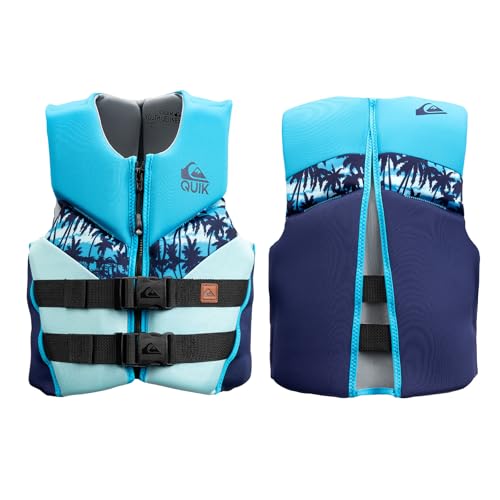
Body Glove Paddler Youth Life Vest
Extra foam through the torso gives beginner swimmers more confidence and higher flotation in the water. A grab handle on the collar lets an adult lift a child quickly if needed. Parents of new swimmers report it keeps a child’s head clearly above the waterline even when they stop kicking.
Pros
- Extra foam gives beginner swimmers more support
- Collar grab handle allows quick adult assistance
- Keeps the head well above water at rest
Cons
- Bulkier fit limits free arm movement
- Less suited to strong swimmers wanting mobility
How they stack up
| # | Model | USCG approval | Best for | Score | Price |
|---|---|---|---|---|---|
| 1 | Stohlquist Youth Life Jacket | Type III, Coast Guard approved | Best overall | 9.4 | Check price |
| 2 | O’Neill Superlite USCG Youth Vest | Type III, Coast Guard approved | Best value | 9.0 | Check price |
| 3 | Onyx MoveVent Dynamic Youth Life Vest | Type III, Coast Guard approved | Best for active water sports | 8.8 | Check price |
| 4 | Airhead Youth Life Vest | Type III, Coast Guard approved | Best budget | 8.5 | Check price |
| 5 | Full Throttle Youth Rapid Dry Flex-Back Vest | Type III, Coast Guard approved | Best for comfort in boats | 8.3 | Check price |
| 6 | MTI Youth Life Jacket | Type III, Coast Guard approved | Best for paddling and kayaking | 8.1 | Check price |
| 7 | Body Glove Paddler Youth Life Vest | Type III, Coast Guard approved | Best for beginner swimmers | 8.0 | Check price |
Questions worth asking
What size life jacket does my child need?
Match the vest to a child’s current weight, not their age, since manufacturers rate jackets by weight range. Most youth vests cover roughly 50 to 90 pounds, with separate infant, child and adult sizes outside that range.
Is Type II or Type III better for kids?
Type II suits younger or less confident swimmers, since it is designed to turn a wearer face up automatically. Type III suits active swimmers and paddlers who want more freedom of movement, though it relies more on the wearer’s own effort to stay face up.
Are youth life jackets required by law?
Most states require children under a certain age, commonly under 13, to wear a Coast Guard approved life jacket on a moving boat. Requirements vary by state, so check local boating regulations for the exact age cutoff and vessel type covered.
How do you check if a life jacket fits properly?
Fasten every strap and buckle, then lift gently at the shoulders while the child raises their arms. A properly fitted jacket will not ride up past the chin or ears. One that slides up easily is too large for that child.
Can a life jacket be too big?
Yes, an oversized jacket can ride up over a child’s face during a fall into water, defeating its purpose. Always size to the manufacturer’s weight range rather than buying large for a child to grow into.
What is the weight range for youth life jackets?
Most youth specific life jackets cover roughly 50 to 90 pounds. Children below that range need child or infant sized vests, and those above it should move up to a junior or adult size.
Do life jackets expire?
Life jackets do not carry a strict expiration date, but foam degrades over years of sun, salt water and general wear, which reduces buoyancy. Replace any vest with cracked foam, torn straps or a faded, brittle shell rather than trusting an old jacket in an emergency.
What is the difference between a life jacket and a swim vest?
A Coast Guard approved life jacket meets tested buoyancy standards for boating and open water safety. A swim vest or puddle jumper is a swim aid meant for supervised pool play and is not a substitute for an approved life jacket on a boat or in open water.
Which life jacket is best for a beginner swimmer?
Body Glove Paddler Youth Life Vest adds extra foam volume through the torso, which keeps a nervous or inexperienced swimmer’s head well above the water at rest. A grab handle on the collar also helps an adult lift a child out quickly.
Can kids wear the same life jacket for boating and kayaking?
A general boating vest works for casual paddling, but frequent kayakers benefit from a shorter torso cut and higher armholes, like the MTI Youth Life Jacket, that avoid interference with paddle strokes.
Our take
Weight range and a secure closure system matter more than any single feature on a youth life jacket. Stohlquist Youth Life Jacket holds its fit best during an actual fall, while active kids benefit from the freer movement of the Onyx MoveVent Dynamic. Airhead Youth Life Vest covers basic Coast Guard protection for families outfitting several kids at once.


