Lighter Basketball Sizes for Youth Leagues and Drills
Wilson’s NCAA Evolution Intermediate Basketball wins overall for its grip and consistent bounce in youth and recreational leagues. Younger children control the smaller Spalding TF-250 Youth Basketball more easily. Dribbling drills benefit from the compact, lighter Nike Skills Basketball, built specifically for ball handling reps rather than game play.
Full size regulation basketballs overwhelm smaller hands and slow down proper shooting form. Wilson’s NCAA Evolution Intermediate Basketball scales down for middle school and recreational leagues without losing grip quality. Younger players get better control from the smaller Spalding TF-250 Youth Basketball, while dribbling drills call for the compact Nike Skills Basketball.
Basketball sizing spans official size 7 down through intermediate, youth and mini training balls, and each step changes both circumference and weight. Picking the wrong size slows skill development more than most parents expect. We compared size, weight, material and intended use across seven current lightweight basketballs.
What we recommend

Wilson NCAA Evolution Intermediate Basketball
Microfiber composite leather grips more reliably than rubber at this size, giving a truer catch and release. Sized at 28.5 inches (size 6), it fits middle school, women’s and recreational adult leagues using intermediate regulation. Bounce feels close to a full size ball, according to owner feedback, just easier to palm.
Pros
- Composite cover grips reliably indoors
- Bounce consistency close to full size balls
- Standard intermediate size for league play
Cons
- Indoor-only cover wears faster on asphalt
- Too large for younger children’s hands

Spalding TF-250 Youth Basketball
Composite rubber handles gym floors and driveway courts equally well, useful for players practicing wherever space allows. Weight drops noticeably below intermediate size 6 balls, matching youth league standards at 27.5 inches. Owners report it holds air pressure well through months of regular outdoor use.
Pros
- Works on both indoor and outdoor courts
- Holds air pressure well over time
- Sized appropriately for youth leagues
Cons
- Grip is grippier than leather but less premium feeling
- Not sized for older or taller youth players

Under Armour 495 Youth Basketball
Rubber composite construction keeps cost low while covering the basics of durability for park and driveway play. Dimensions match standard youth size 5, the norm across most recreational leagues. Parents buying a first basketball for a child mention it as a low-risk starting point.
Pros
- Lower cost than premium youth balls
- Durable enough for outdoor courts
- Standard youth sizing for league compatibility
Cons
- Grip texture less refined than composite leather
- Colors fade faster with heavy outdoor use

Molten BG4500 Indoor Composite Basketball
Deep surface channels, carried over from Molten’s official game balls, improve grip during fast indoor play. Intermediate size 6 dimensions suit competitive youth and women’s league games. Club program owners note the feel matches game-day equipment closely.
Pros
- Deep channels aid grip during fast play
- Matches official game ball feel at a smaller size
- Consistent quality across units
Cons
- Indoor-focused cover degrades outdoors
- Costs more than basic youth balls

Baden Perfection Youth Composite Basketball
Reinforced bladder construction resists slow deflation better than typical youth balls left in a garage or trunk. Composite leather covers both gym floors and rougher outdoor surfaces at size 5. Fewer pump trips over a season, owners say, compared to cheaper alternatives.
Pros
- Resists slow deflation over time
- Composite cover suits mixed indoor and outdoor use
- Holds shape after repeated impacts
Cons
- Heavier feel than some rubber-only youth balls
- Fewer color options than competitors
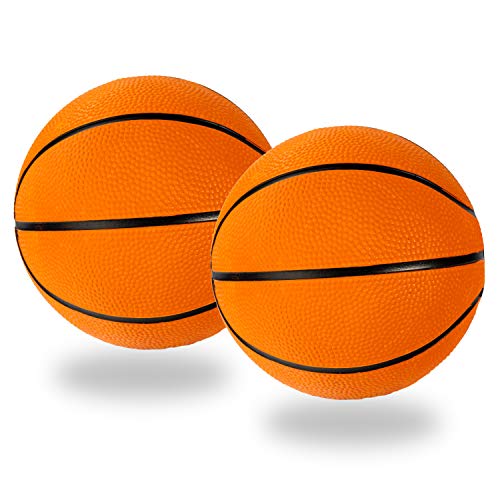
Franklin Sports Youth Mini Basketball
Mini circumference, about 22 inches, fits small hands better than a standard youth size 5 ball. Rubber construction survives drops and repeated bouncing indoors. Parents of early elementary age kids use it for backyard hoops set at lower heights.
Pros
- Small size suits young children’s hands
- Durable rubber survives rough indoor play
- Affordable for a first basketball
Cons
- Too small for standard youth league play
- Bounce differs from regulation-size balls

Nike Skills Basketball
Reduced size and light weight let players move through dribbling drills at faster hand speed than a full size ball allows. Rubber construction tolerates constant floor contact during repetitive ball handling work. Coaches use it specifically as a skills trainer, not a game ball.
Pros
- Small size speeds up dribbling drill reps
- Durable for repetitive floor contact
- Compact for travel to practice
Cons
- Not intended for actual game play
- Bounce feel differs noticeably from full size balls
Before you buy
What basketball size fits which age group? Basketball sizing runs from mini training balls through youth size 5, intermediate size 6, and official size 7. Ages 5 to 8 generally use size 5, ages 9 to 11 move to size 6, and most women’s and some men’s recreational leagues stay with size 6 into adulthood. High school and college play requires official size 7. Choosing a ball too large for a young player slows control and shooting form development.
How much does basketball weight affect a young player’s shot? Lighter balls reduce strain on developing wrists, letting kids shoot with proper form instead of pushing the ball from the chest. Composite leather covers grip better than rubber at any given size, which helps during passing and dribbling. Weight and material together decide how a ball feels in play, not the size number by itself. A size 5 in rubber can feel heavier in the hand than a size 5 in composite leather.
Indoor or outdoor: which basketball material lasts longer? Composite leather performs best on smooth gym floors and wears down faster against rough asphalt. Rubber covers tolerate outdoor concrete and pavement better, trading some grip refinement for toughness. Checking the listed use case before buying matters most when driveway or park courts make up most of the play time.
Are training balls different from game balls? Mini or skills-training balls are built to speed up dribbling reps, not to replace a regulation ball in an actual game. League play and scrimmages require standard youth or intermediate size balls with regulation proportions. Treat a training ball as a supplement to practice, not a substitute for game-appropriate equipment.
How they compare
| # | Model | Size | Best for | Score | Price |
|---|---|---|---|---|---|
| 1 | Wilson NCAA Evolution Intermediate Basketball | 28.5 inches (size 6) | Best overall | 9.3 | Check price |
| 2 | Spalding TF-250 Youth Basketball | 27.5 inches (size 5) | Best value | 9.0 | Check price |
| 3 | Under Armour 495 Youth Basketball | 27.5 inches (size 5) | Best budget | 8.7 | Check price |
| 4 | Molten BG4500 Indoor Composite Basketball | 28.5 inches (size 6) | Best for indoor competitive play | 8.5 | Check price |
| 5 | Baden Perfection Youth Composite Basketball | 27.5 inches (size 5) | Best all-weather durability | 8.3 | Check price |
| 6 | Franklin Sports Youth Mini Basketball | Mini, approximately 22 inches | Best for young kids | 8.1 | Check price |
| 7 | Nike Skills Basketball | Mini training size | Best for dribbling practice | 8.0 | Check price |
Questions worth asking
What size basketball is considered lightweight?
Youth size 5 and intermediate size 6 basketballs weigh less and measure smaller than the official size 7 used in men’s high school, college and professional play. Smaller circumference means less mass overall, making both sizes easier for younger or smaller hands to control.
What size basketball should a 10 year old use?
Most 10 year olds do well with an intermediate size 6 basketball. Many girls’ and women’s leagues also use size 6 as their standard, so the transition carries into adult play.
Is a size 6 basketball good for adults?
Yes. Size 6 is standard for women’s high school, college and professional basketball, and adult recreational players with smaller hands often prefer it over full size 7.
Do lightweight basketballs bounce differently than full size balls?
Slightly. Lower mass means smaller balls tend to bounce a bit higher relative to their size, though quality composite construction keeps the difference minor for practice purposes.
Can kids practice with a mini basketball indoors?
Yes. Mini basketballs suit indoor dribbling and ball handling drills specifically, but they should not replace a properly sized ball for actual games.
What is the difference between indoor and outdoor basketballs?
Indoor basketballs typically use composite or genuine leather covers that grip well on gym floors but wear faster outdoors. Outdoor balls use tougher rubber covers built to survive asphalt and concrete.
How do I know what basketball size my league requires?
League rulebooks or websites list required sizes, since youth, intermediate and official dimensions vary by age bracket and sometimes by gender across organizations.
Do heavier basketballs help with strength training?
Some training balls are intentionally weighted above regulation to build hand and wrist strength, which is the opposite goal of a lightweight youth or skills ball.
Which basketball is best for dribbling drills?
Mini training balls like the Nike Skills Basketball reduce size and weight so players can move through reps at faster hand speed than a regulation ball allows.
What basketball works best for a first time youth player?
A composite rubber youth size 5 ball, built for both indoor and outdoor courts, gives new players a durable, appropriately sized option without a steep learning curve.
The bottom line
Wilson’s NCAA Evolution Intermediate Basketball suits most youth and recreational league players who need a properly sized, grippy ball. Younger children get more control from the smaller Spalding TF-250 Youth Basketball. Dribbling-focused players should add the Nike Skills Basketball as a training supplement rather than a full replacement.


