How Much Should a 2-Person Backpacking Tent Weigh?
Big Agnes Copper Spur HV UL2 wins this comparison at 3 pounds 2 ounces trail weight, still pitching freestanding with two doors. Nemo Hornet Elite OSMO 2P drops even lighter for solo minimalists chasing every spare ounce. Naturehike Cloud Up 2 costs far less than either and keeps a 3-season rating most trips need.
Big Agnes Copper Spur HV UL2 leads this comparison at 3 pounds 2 ounces trail weight, the lightest full-featured freestanding design here. Long-distance backpackers gain the most from that number, more than car campers who rarely carry a tent far. Two doors and two vestibules keep that weight savings from costing storage space, though the 3-season build skips snow load entirely.
Packed weight and trail weight rarely match on a spec sheet, and that gap catches first-time buyers off guard. Packed weight bundles in stuff sacks and stakes many hikers leave at home, while trail weight counts only the body, poles, and rainfly actually carried. We compared trail weight, fabric denier, freestanding versus staked pitching, and vestibule area, then checked season ratings against owner reports of wind and rain.
How to choose
Trail weight versus packed weight Trail weight counts only the tent body, poles, and rainfly a hiker actually carries down the trail. Packed weight adds stuff sacks, stakes, and sometimes a footprint, numbers that look better on a box but rarely match real pack weight. Manufacturers list both, so comparing trail weight across brands avoids getting misled by a lighter-looking packed figure. Splitting the tent body and poles between two hikers cuts what each person carries roughly in half.
3-season versus 4-season tents Every tent on this list carries a 3-season rating, built for spring through fall in most climates. That rating means more mesh for airflow and lighter poles that will not hold up under heavy snow load. Four-season tents add sturdier poles and less mesh, at a real weight penalty most three-season hikers do not need. Winter camping or high-altitude snow is the only reason to reach for a 4-season design instead.
Tent capacity for solo hikers versus pairs A 2-person tent gives one hiker room to spread out gear, a trade many solo hikers make for comfort. Kelty’s Late Start 1 instead sizes its floor for exactly one person, saving weight a 2-person tent cannot match. Couples hiking together should look at the Copper Spur or Hornet Elite for two full sleeping pads. Groups of three or more need a dedicated larger tent, since nothing here rates above 2-person plus.
Pitching in wind and rain Freestanding tents, including the Copper Spur, Hornet Elite, and Half Dome, pitch without stakes on rock or sand where staking fails. Wind still demands stakes and guylines on any freestanding design, since an empty unstaked tent can blow away. Seam sealing quality varies between brands, and owners report the Naturehike needs a periodic reseal that pricier tents skip. Setting up the rainfly before rain starts keeps gear dry, rather than scrambling once the inside is already wet.
What we recommend
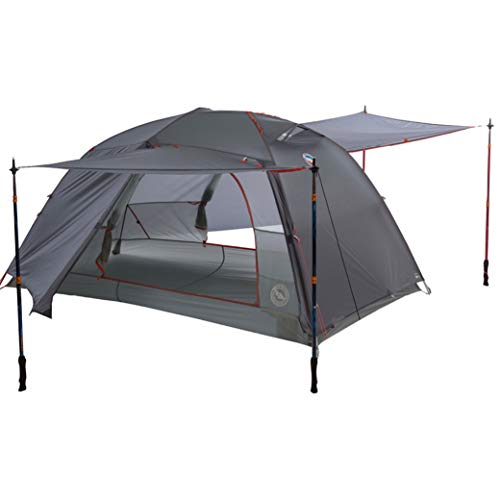
Big Agnes Copper Spur HV UL2
A single hubbed pole lets the Copper Spur pitch freestanding in under five minutes on rock, sand, or a wood platform. High-volume wall geometry adds headroom rare at this weight class. Two doors mean neither sleeper climbs over the other at night, and the DAC pole set holds up across repeated seasons of owner use.
Pros
- 3 lb 2 oz trail weight rivals single-wall shelters
- Two doors and vestibules on a full-featured 2-person layout
- Freestanding pitch works on rock, sand, or platforms
Cons
- 3-season rating only, not built for snow load
- Thin floor fabric needs a footprint on rough ground

Nemo Hornet Elite OSMO 2P
Nemo trims weight past the Copper Spur using OSMO fabric, a PFAS-free coating that resists sag when wet. Volumizing pole patterns push the walls outward for more shoulder room than the ounce count suggests. Two people fit inside, though gear storage gets tight once packs come in from the rain.
Pros
- Lightest 2-person tent on this list at 2 lb 3 oz
- OSMO coating resists water sag without PFAS chemicals
- Volumizing geometry adds shoulder room despite the low weight
Cons
- Thinner fabric trades some durability for weight savings
- Vestibule space runs smaller than the Copper Spur’s

REI Co-op Half Dome SL 2+
Extra length and headroom set the Half Dome SL 2+ apart from standard 2-person tents, the plus in its name. That comfort adds nearly two pounds over the Copper Spur. Two large vestibules swallow boots and packs, handy when weather keeps gear outside the tent body.
Pros
- Extra length and headroom beat standard 2-person tents
- Two large vestibules fit boots and packs easily
- Costs less than the ultralight options on this list
Cons
- Trail weight near 5 lbs is heavy for long trail miles
- Aluminum poles weigh more than the Copper Spur’s

MSR Hubba Hubba NX 2-Person
A thicker floor sets the Hubba Hubba apart from most ultralight tents, surviving gravel and rocky sites without a footprint. Color-coded poles speed up setup once daylight fades. Weight lands between the Copper Spur and the Half Dome, favoring durability over the lowest possible number.
Pros
- Thicker floor fabric handles rough or rocky ground
- Color-coded poles simplify setup in low light
- Balances weight against durability better than ultralight rivals
Cons
- Heavier than the Copper Spur at the same capacity
- Vestibules run narrower than the Half Dome’s
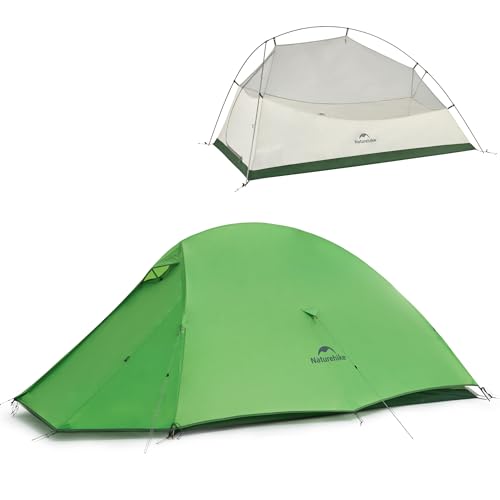
Naturehike Cloud Up 2
Naturehike undercuts every tent here on cost while staying close to the Copper Spur on weight. Owners report the rainfly holds up through steady rain, though factory seam sealing can vary between batches. Occasional backpackers testing the sport before spending on premium gear fit this tent best.
Pros
- Trail weight competes with tents costing far more
- Two doors and vestibules at a budget price point
- Solid entry point for new backpackers
Cons
- Seam sealing quality varies between production batches
- Pole material falls short of DAC or Easton poles

Marmot Tungsten 2P
Steep walls give the Tungsten 2P headroom most backpacking tents skip, trading weight for livable space. Two large doors ease entry and exit for taller campers. Car camping trips and short backpacking routes suit it better than thru-hiking, given the weight.
Pros
- Steep walls add real sitting headroom
- Large doors suit taller campers
- Priced below most ultralight competitors here
Cons
- Heaviest 2-person tent on this list at 5 lb 13 oz
- Bulkier packed size takes up more pack space

Kelty Late Start 1
Kelty sizes the Late Start for a single hiker who wants lower weight without an ultralight price tag. A single door and vestibule keep the design simple. Fast-moving solo hikers on multi-day routes give up little by choosing this over a 2-person tent.
Pros
- Purpose-built 1-person weight and floor size
- Single vestibule keeps a pack out of the rain
- Costs less than most ultralight solo tents
Cons
- No room for a second person or large dog
- Single door means stepping past gear to exit
How they compare
| # | Model | Capacity | Best for | Score | Price |
|---|---|---|---|---|---|
| 1 | Big Agnes Copper Spur HV UL2 | 2-person | Best overall | 9.4 | Check price |
| 2 | Nemo Hornet Elite OSMO 2P | 2-person | Best ultralight | 9.2 | Check price |
| 3 | REI Co-op Half Dome SL 2+ | 2-person plus | Best for extra space | 8.9 | Check price |
| 4 | MSR Hubba Hubba NX 2-Person | 2-person | Best for rough terrain | 8.7 | Check price |
| 5 | Naturehike Cloud Up 2 | 2-person | Best budget | 8.5 | Check price |
| 6 | Marmot Tungsten 2P | 2-person | Best for beginners wanting headroom | 8.2 | Check price |
| 7 | Kelty Late Start 1 | 1-person | Best for solo hikers | 8.0 | Check price |
Good to know
What is a good trail weight for a 2-person tent?
Under 4 pounds counts as lightweight for a 2-person backpacking tent, with ultralight models like the Nemo Hornet Elite OSMO dropping near 2 pounds. Tents built for comfort over weight, such as the Marmot Tungsten 2P, can run close to 6 pounds. Compare trail weight rather than packed weight when judging numbers between brands.
Is a 3-season tent warm enough for early spring camping?
Yes, in most regions, since 3-season tents handle temperatures above freezing with occasional light frost. Heavy snow load or sustained sub-freezing nights call for a 4-season tent with sturdier poles instead. Every tent on this list carries a 3-season rating suited to spring through fall trips.
How does trail weight differ from packed weight?
Trail weight counts only the tent body, poles, and rainfly a hiker carries down the trail. Packed weight adds stuff sacks, stakes, and sometimes a footprint, inflating the figure printed on retail packaging. Comparing trail weight across brands gives a more accurate sense of what you will actually carry.
Can one person carry a 2-person tent alone?
Yes, every tent on this list weighs under 6 pounds, light enough for one hiker to manage solo. Splitting the tent body and poles between two hikers cuts that weight further still. Solo hikers chasing the lowest possible number should instead consider a dedicated 1-person tent like the Kelty Late Start 1.
Are freestanding tents better than staked-only designs?
Freestanding tents, including the Copper Spur and Hornet Elite, pitch without stakes on rock, sand, or a tent platform. Real wind still demands stakes and guylines, since an empty unstaked tent can blow away regardless of design. Staked-only tents usually weigh less but need ground that actually holds a stake.
How much floor space does a 2-person tent need?
Most 2-person backpacking tents measure between 27 and 31 square feet of floor space, enough for two sleeping pads side by side. REI’s Half Dome SL 2+ adds extra length beyond that baseline for taller campers. Less floor space usually means a lighter tent, the trade ultralight models make on purpose.
Do ultralight tents last as long as heavier tents?
Ultralight tents use thinner fabric that trades durability for weight, so they show wear sooner under rough handling. A footprint under the floor and careful site selection extend an ultralight tent’s life considerably. Heavier tents like the Marmot Tungsten 2P use thicker fabric that tolerates rockier ground without one.
Which tent handles backpacking in the rain best?
MSR’s Hubba Hubba NX handles wet, rocky sites well thanks to its thicker floor fabric and dependable seam sealing. Setting up the rainfly first on any tent keeps the interior dry during pitching. Budget tents like the Naturehike Cloud Up 2 need a seam check, since owners report occasional resealing is needed.
1-person tent versus 2-person tent for solo backpacking, which is better?
A 1-person tent like the Kelty Late Start 1 saves weight over any 2-person option built here. A 2-person tent instead gives a solo hiker room to spread gear inside, a comfort trade some prefer. Pick the 1-person build for the lowest pack weight, or a 2-person tent for extra elbow room.
Our pick
Choose the Big Agnes Copper Spur HV UL2 for the strongest balance of low weight and full features on multi-day trips. Solo hikers chasing the lightest possible pack should reach for the Kelty Late Start 1 instead, sized for one person rather than two. New backpackers worried about durability more than ounces will find better value in the Naturehike Cloud Up 2, priced well under the ultralight tents here.


