Livestock Waterers for Clean, Ice Free Drinking
The RentACoop Chicken Waterer leads for poultry thanks to horizontal nipples that keep water genuinely clean. The Farm Innovators HB-60 Heated Flat Back Bucket is the most practical freeze proof option for small stock, and the Behlen Country Poly Stock Tank is the durable choice for cattle and horses.
For poultry the RentACoop nipple waterer is the strongest pick, the Farm Innovators HB-60 heated bucket is the simplest answer to winter freezing for small stock, and the Behlen Country Poly Stock Tank is the durable option for cattle and horses.
Watering equipment is easy to get wrong because the cheapest open troughs fill with droppings, algae and ice within days, and animals drink less when the water is fouled or cold. We compared freeze protection method, how effectively each design keeps contamination out, usable capacity against herd or flock size, and cleaning access, weighing those against what owners report about cracking, element failure and nipples freezing shut.
The shortlist, ranked

RentACoop Chicken Waterer with Horizontal Nipples
Horizontal nipples mounted in the side of a sealed bucket mean birds peck for water rather than standing in it, so bedding, droppings and algae never get in. A single fill lasts a small flock several days, which changes the daily routine considerably. Owners report a short training period, usually helped by tapping the nipple to show the first few birds.
Pros
- Water stays genuinely clean between fills
- Several days of capacity for a small flock
- Nipples can be retrofitted to other buckets
Cons
- Birds need a short training period
- Nipples freeze in hard frost without a heater
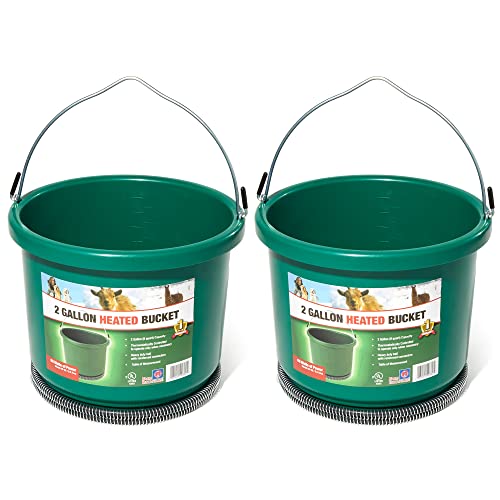
Farm Innovators HB-60 Heated Flat Back Bucket
A thermostatically controlled element keeps this bucket above freezing without cooking the water, drawing power only when temperatures demand it. The flat back sits neatly against a wall or fence rail and the handle takes a standard bucket hook. It is the most straightforward way to keep water available to goats, sheep or a few horses through winter.
Pros
- Thermostat means it only draws power when needed
- Flat back mounts securely against a wall
- Protected cord resists chewing
Cons
- Requires a safe outdoor rated power supply
- Element eventually fails and is not replaceable
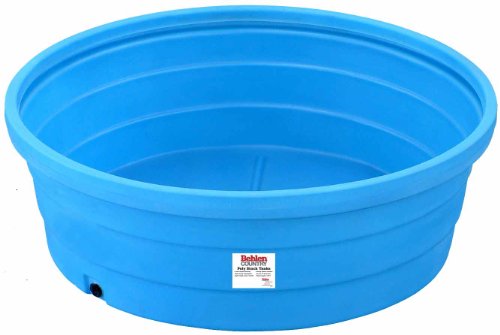
Behlen Country Poly Round Stock Tank
Rotomoulded polyethylene handles freeze and thaw cycles far better than galvanised steel, which splits at the seams over time. The large capacity means a herd can drink without the tank running dry between fills, and a drain plug makes cleaning practical rather than a chore. It accepts a submersible de icer for winter use.
Pros
- Survives freeze and thaw without splitting
- Drain plug makes regular cleaning realistic
- No sharp edges or rusting seams
Cons
- Open design collects debris and algae
- Awkward to move once positioned

Farm Innovators HPF-100 Heated Poultry Drinker
This drinker builds the heating element into the base of a conventional poultry fount, so water stays liquid through cold nights without a separate heated base. A thermostat keeps power draw sensible. It is the simplest winter solution for a flock that is already used to a traditional fount rather than nipples.
Pros
- No separate heated base to buy or store
- Familiar fount design needs no bird training
- Thermostat limits electricity use
Cons
- Open trough still collects bedding and droppings
- Needs power run safely into the coop

API Heated Flat-Back Bucket
API’s heated bucket is sized and shaped for stall use, hanging flat against a wall where a horse can drink without knocking it loose. The element is thermostatically controlled and the cord is armoured against chewing, which matters in a stall. Capacity is enough for overnight for a single horse in cold weather.
Pros
- Designed specifically for stall mounting
- Armoured cord suited to horses
- Keeps water drinkable through hard frost
Cons
- Capacity is limited for more than one horse
- Cord routing needs care to stay out of reach

Harris Farms Free Range Poultry Drinker
A large gravity fed fount that holds enough for a mid sized flock across several days, with a wide base that resists being knocked over. It is easy to fill and easy to see the level at a glance. Like all open founts it will collect bedding, so hanging it slightly above back height helps considerably.
Pros
- Large capacity reduces refill frequency
- Wide base is hard for birds to tip
- Simple design with nothing to fail
Cons
- Open trough needs cleaning every few days
- Freezes solid without a heated base

Little Giant Stock Tank Float Valve
Fitting a float valve to a tank you already own turns it into an automatic waterer for a small outlay, so the tank refills as stock drink rather than running dry between visits. Installation needs a hose connection and a hole in the tank wall. It is the cheapest meaningful improvement to any existing trough setup.
Pros
- Cheapest way to automate an existing tank
- Keeps the level constant so tanks never run dry
- Adjustable to suit different tank depths
Cons
- Needs a permanent water supply run to the tank
- Supply line must be drained or heated in winter
Before you buy
Winter is what separates good waterers from bad ones Any container holds water in July. The question is what happens at minus ten, when an unheated trough freezes solid overnight and stock go without. Heated buckets, submersible de icers and insulated tanks all solve this, but each needs a safe outdoor rated power supply. Plan the electricity before choosing the waterer, because that constraint often decides the answer.
Closed systems stay far cleaner than open ones Nipple and cup waterers keep droppings, bedding and algae out entirely, which means less cleaning and better intake. Open troughs are simpler and suit larger stock that cannot use nipples, but they need scrubbing every few days in warm weather. For poultry in particular, a closed system is the single biggest quality of life improvement.
Size capacity around refill frequency and weather Animals drink far more in heat and while lactating, sometimes double their normal intake. Size the waterer so it still holds a day’s supply on the hottest day, not the average one. At the same time, avoid tanks so large that water sits stagnant for weeks in cooler months, since that is where algae takes hold.
Cleaning access matters more than it seems A waterer you cannot easily scrub will not get scrubbed, and biofilm on the walls reduces intake and spreads disease. Drain plugs, wide openings and smooth interiors all make routine cleaning realistic. Check how a design comes apart before buying, particularly on heated units where the element can complicate access.
How they compare
| # | Model | Type | Best for | Score | Price |
|---|---|---|---|---|---|
| 1 | RentACoop Chicken Waterer with Horizontal Nipples | Sealed bucket with horizontal nipples | Best overall for poultry | 9.4 | Check price |
| 2 | Farm Innovators HB-60 Heated Flat Back Bucket | Around 5 gallons | Best for freezing weather | 9.2 | Check price |
| 3 | Behlen Country Poly Round Stock Tank | Rotomoulded polyethylene | Best for cattle and horses | 9.0 | Check price |
| 4 | Farm Innovators HPF-100 Heated Poultry Drinker | Heated poultry fount | Best heated poultry option | 8.7 | Check price |
| 5 | API Heated Flat-Back Bucket | Around 5 gallons | Best for horses | 8.5 | Check price |
| 6 | Harris Farms Free Range Poultry Drinker | Gravity fed fount | Best value for poultry | 8.3 | Check price |
| 7 | Little Giant Stock Tank Float Valve | Automatic float controlled refill | Best budget upgrade | 8.0 | Check price |
Good to know
How much water does livestock need per day?
It varies widely by species, size and weather. As a rough guide a laying hen drinks around a pint a day, a sheep or goat one to three gallons, and a cow can take twenty gallons or more in hot weather. Lactating animals and hot conditions can double these figures, so always size for the peak.
Do heated waterers use a lot of electricity?
Thermostatically controlled units only draw power when the temperature approaches freezing, so consumption is far lower than the rated wattage suggests over a season. Non thermostatic heaters run constantly and cost considerably more. Always use an outdoor rated circuit with ground fault protection for anything heated in a barn.
Are nipple waterers suitable for all poultry?
Most chickens, including hens and growers, take to them within a day or two, especially if you tap the nipple to release a drop. Very young chicks and some ducks manage less well, since ducks need to dip their bills. Keep an open source available during the transition and watch that every bird is drinking.
How do I stop algae growing in a stock tank?
Site the tank in shade where possible, scrub it out regularly and keep the water turning over rather than sitting. Some producers add a few goldfish to graze algae in larger tanks. Avoid chemical treatments unless they are specifically labelled as safe for livestock drinking water.
Can I use a de icer in a plastic stock tank?
Only if the de icer is specifically rated for use in plastic tanks, since some models get hot enough to melt or distort poly walls. Floating and sinking de icers each have their own ratings printed on the packaging. Check the label rather than assuming, and inspect the cord for damage each season.
How often should waterers be cleaned?
Open founts and troughs need rinsing every few days and a proper scrub weekly in warm weather. Closed nipple systems can go considerably longer, though the bucket should still be emptied and cleaned monthly. Any waterer with a slippery film on the inside is overdue.
What is the best way to keep water from freezing without electricity?
Options are limited but real: insulated tank covers, siting tanks in sun and out of wind, using large volumes that freeze more slowly, and breaking ice manually twice a day. Black tanks in sunlight gain useful heat. In genuinely hard climates, electricity is usually the only reliable answer.
Is an automatic float valve worth fitting?
For any tank you top up daily, yes. It keeps the level constant, prevents tanks running dry when you are delayed and reduces the labour of hauling water. The main considerations are running a supply line to the tank and protecting that line from freezing in winter.
Our pick
The RentACoop nipple waterer is the strongest poultry choice because clean water needs no scrubbing and birds drink more of it. For winter, the Farm Innovators HB-60 heated bucket is the most practical small stock solution, and the Behlen Country Poly Stock Tank handles cattle and horses with a durability that galvanised tanks cannot match.


